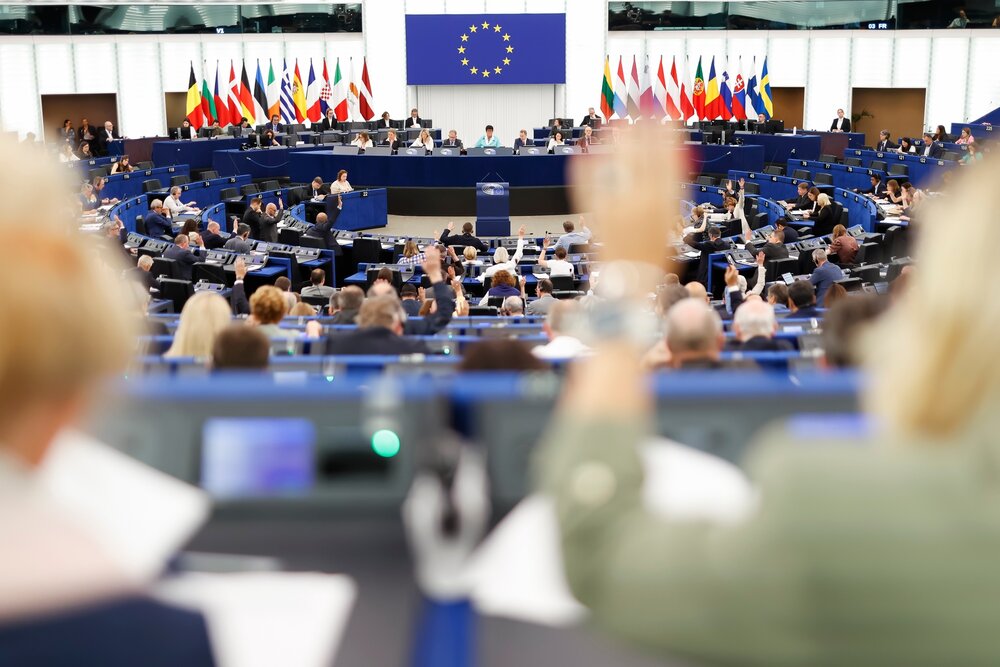
Parliament's final plenary session before the summer recess will see Members discuss the priorities of the Irish EU Council Presidency alongside key decisions on enlargement, foreign affairs, passenger rights, agriculture, competitiveness, environmental crime and the EU budget.
As Members gather for the last plenary session before the summer recess, their agenda covers enlargement, foreign affairs, competitiveness, the EU budget, agriculture, social security and the environment. On Tuesday morning, a debate will follow a presentation of the programme of activities of the Irish Presidency of the Council of the European Union , which began on 1 July. On Wednesday morning, Members will hear Council and European Commission statements on the conclusions of the European Council meeting of 18 19 June 2026.
EU-Mexico relations
Bilateral relations between the EU and Mexico have been bolstered by the current framework since 2000. On Tuesday, Parliament is due to decide whether to give its consent to the conclusion of two instruments to update this framework, the EU-Mexico Political, Economic and Cooperation Strategic Partnership Agreement (Modernised Global Agreement, MGA) and an interim Trade Agreement (iTA), both of which were signed by the EU and Mexico in May 2026. Parliament remains in favour of modernising the MGA, with a joint report by the International Trade (INTA) and AFET committees welcoming it as a step towards further economic expansion that could benefit EU companies and farmers. The INTA committee is due to vote on a draft recommendation on the conclusion of the iTA before the plenary vote.
Passenger rights
Lower ticket prices and a wider choice of routes are not the only results of air transport liberalisation. On Monday, Members are expected to discuss an agreement to revise the air passenger rights framework to better protect passengers during increasingly common travel disruption. Delayed in the Council for over a decade, Parliament has shown consistent support for measures to protect air passengers and their rights. Parliament negotiators reached a political agreement in conciliation with the Council in June 2026. The agreement maintains the three-hour threshold for compensation for flight delays and strengthens passenger rights including on rerouting options, protection for missed connections and reimbursement for unused vouchers.
Social security when working abroad
A reform of EU social security rules aims to help citizens living or working in another EU country and better distribute responsibilities between EU countries. Members are set to vote on a provisional agreement on the move to modernise the rules on Monday. Parliament's negotiators maintained mandatory prior notifications for the construction sector in the agreed text, meaning that authorities of the home Member State would be notified if someone works in another Member State. Parliament's Committee on Employment and Social Affairs (EMPL) confirmed the agreement in April 2026 and Parliament and the Council now need to formally adopt the new social security rules.
East Asia relations
The geopolitical situation in East Asia has grown more volatile as the region experiences increased security challenges triggered by authoritarian regimes. On Monday evening, Members are expected to vote on an AFET committee recommendation, which affirms the need to deepen cooperation with partners in the region, including Japan, Korea, ASEAN and Taiwan. Parliament also recommends establishing a comprehensive EU-Taiwan cooperation framework, in addition to strengthening EU engagement with regional security initiatives and diplomatic efforts to prevent further escalation in East Asia.
Fertiliser prices
The crisis in the Middle East and the closure of the Strait of Hormuz has caused an increase in fertiliser prices, placing a significant financial burden on farmers. On Tuesday, Members are set to vote on a proposal for a regulation to provide temporary common agricultural policy support, which would offer exceptional support to farmers most affected by the soaring prices, including the possibility of increased advances on direct payments through existing CAP envelopes. Given the urgency, Parliament decided to consider the proposal without preparing a report, to enable farmers to make prompt decisions on buying fertilisers for the year ahead.
28th tax regime
The EU's plans to allow companies to register as an 'EU Inc.', recognised across all Member States, under a '28th regime', are central to its competitiveness agenda, aimed at simplifying rules for companies to scale up in the single market. Complementing the legislative proposal already on the table, Members are expected to vote on an own-initiative report from the Committee on Economic and Monetary Affairs (ECON), on Thursday, on the feasibility of a 28th tax regime and its potential to support competitiveness by simplifying and harmonising corporate taxation.
Environmental crime
Environmental crimes can have a devastating impact, yet they are difficult to detect and prosecute. Parliament has repeatedly called for measures to combat such crimes. On Wednesday, Parliament is scheduled to vote on endorsement of the EU's ratification of the Council of Europe's new Convention on the Protection of the Environment through Criminal Law. A report from the Legal Affairs (JURI) Committee recommends ratification, concluding that the convention is consistent with the EU directive. The new convention establishes minimum requirements for the criminalisation of environmental offences related to activities such as pollution, destruction of biodiversity and improper handling of hazardous waste.
EU Budget
To enter a 2025 budget surplus of €2.1 billion as revenue in the 2026 budget, on Tuesday Parliament is set to consider the Council's position on draft amending budget No 1/2026 (DAB 1/2026). While endorsing the proposal, a report adopted by the Committee on Budgets (BUDG) welcomes that higher own resources are driving the surplus rather than underspending, but reiterates its long-standing view that revenue from fines and fees should strengthen the EU budget instead of lowering national contributions, and calls for more sustainable EU own resources in the next multiannual financial framework.
Annual enlargement reports
Enlargement remains a prominent topic at this plenary session. On Tuesday, Members are expected to debate separately three reports prepared by the Committee on Foreign Affairs (AFET), on Ukraine, Moldova and Serbia . The report on Ukraine stresses the need for a 'sustainable' ceasefire and a peace agreement reached with the participation of the EU, while also recognising Ukraine's European integration as a strategic priority for the Union.
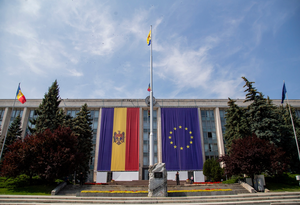
AFET’s report on Moldova commends the country's commitment to EU accession, condemning attempts by Russian efforts to destabilise Moldova's path to accession through interference campaigns.
As a result of political instability in the country, Serbia's EU accession process remains at an impasse. The AFET report recalls that accession is conditional on respect for EU values and democracy, reiterating the need for Serbia to affirm its geopolitical orientation towards the EU, particularly in the context of Russia's war of aggression against Ukraine.