
Article page checkbox is not checked in page info.
2025 Commission report on Serbia
2025 Commission report on Serbia
Branislav Stanicek, Members' Research Service
Summary
During its July 2026 plenary session, the European Parliament is due to vote on an own-initiative resolution on the European Commission's 2025 report on Serbia. A report by the Committee on Foreign Affairs (AFET), of 3 June, reaffirms Parliament's full support for Serbia's EU integration but concludes that its progress towards EU membership has halted due to democratic backsliding and its failure to implement rule-of-law reforms.
Statement of purpose
Own-initiative report: 2025/2255(INI); Committee responsible: AFET; Rapporteur: Tonino Picula (S&D, Croatia).
Background
In November 2025, the High Representative Kaja Kallas and Enlargement Commissioner Marta Kos described the prospect of new countries joining the EU by 2030 as a 'realistic' goal for the leading candidate countries. Serbia's EU accession negotiations opened in June 2013. Since then, Serbia has completed the screening process, opened 22 chapters and provisionally closed two. The overall pace of negotiations will continue to depend on rule-of-law reforms and the country's normalisation of relations with Kosovo*. The dialogue between Belgrade and Pristina, launched in 2011 and facilitated by the EU, has achieved some initial success, such as the Brussels Agreement of 2013. In February 2023, the EU brokered a proposal for an agreement on the path to normalisation, which the parties tacitly agreed upon but did not formally sign. In March 2023, in Ohrid, Kosovo and Serbia agreed on the implementation annex to this agreement.
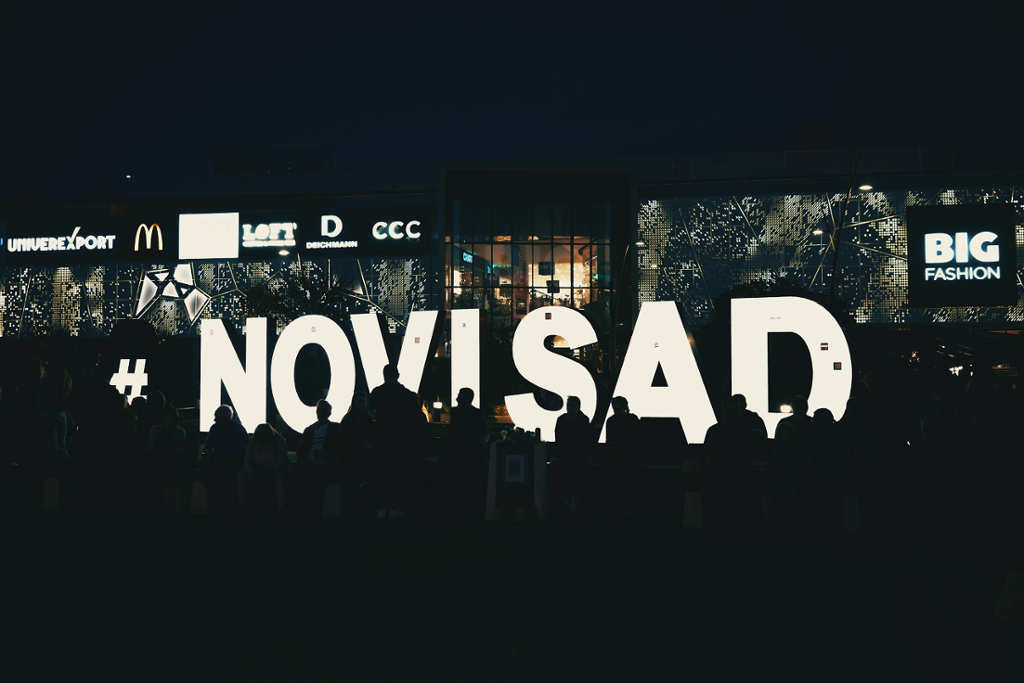
Serbia's internal political situation remains fragile, marked by high political polarisation and civil society protests following the November 2024 collapse of a concrete canopy at Novi Sad railway station, which claimed 16 lives. The student protests forced the resignations of Prime Minister Miloš Vučević, Construction Minister Goran Vesić and the Mayor of Novi Sad. A key demand of the student protesters is snap elections. Recently, Milenko Jovanov, head of the 'Aleksandar Vučić – Serbia Must Not Stop' parliamentary group, stated that 'Elections will happen when the time is right', and advised students to 'be patient.' President Aleksandar Vučić has floated different dates for snap elections but has not clarified whether presidential and parliamentary elections would be held simultaneously. Presidential elections are due by 1 May 2027, and parliamentary elections by 31 December 2027.
The European Commission's 2025 report points out that 'the Serbian government has continued to declare EU membership its strategic goal, and it set a new, more ambitious target date of the end of 2026 to meet technical criteria for membership'. The report recalls that 'meeting Serbia's objectives for EU accession negotiations requires strong political will, a whole-of-society approach, effective policy planning and coordination, along with sufficient human and financial resources for EU accession across all institutions involved'. It also notes that while Serbia has not aligned with EU sanctions on Russia, it continues to cooperate with the EU on countering sanctions circumvention and providing support to Ukraine.
European Parliament position
The AFET committee adopted its report on Serbia on 3 June 2026. The report recalls that the accession process 'is conditional on full respect for EU values and adherence to democracy, the rule of law and fundamental rights, all of which are enshrined in the Copenhagen criteria.' It points out that stated commitments of the Serbian authorities 'are not often mirrored in practice'. It also reiterates 'the need for Serbia to clearly and consistently demonstrate its geopolitical orientation towards the EU, including by fully aligning with the EU's common foreign and security policy, in particular the restrictive measures taken by the EU in the context of Russia's war of aggression against Ukraine'.
* This designation is without prejudice to positions on status and is in line with UNSCR 1244/1999 and the ICJ Opinion on Kosovo's declaration of independence.
Classification
Policy areas: Foreign Affairs
Regions: Non-EU Europe and the North
Committees: Foreign Affairs (AFET)
Statement on the use of AI
Any AI-generated content in this text has been reviewed by the author(s).
Disclaimer
This document is prepared for, and addressed to, the Members and staff of the European Parliament as background material to assist them in their parliamentary work. The content of the document is the sole responsibility of its author(s) and any opinions expressed herein should not be taken to represent an official position of the Parliament.
Copyright
© European Union.
The reuse of this document is authorised under a Creative Commons Attribution 4.0 International (CC-BY 4.0) licence.

https://creativecommons.org/licenses/by/4.0/deed.en
To use or reproduce elements that are not owned by the European Union, permission may need to be sought directly from the respective rightsholders.