
Article page checkbox is not checked in page info.
What if satellite re-entries lead to more pollution?
What if satellite re-entries lead to more pollution?
António Vale with Jordan Donat, Scientific Foresight Unit (STOA)
Summary
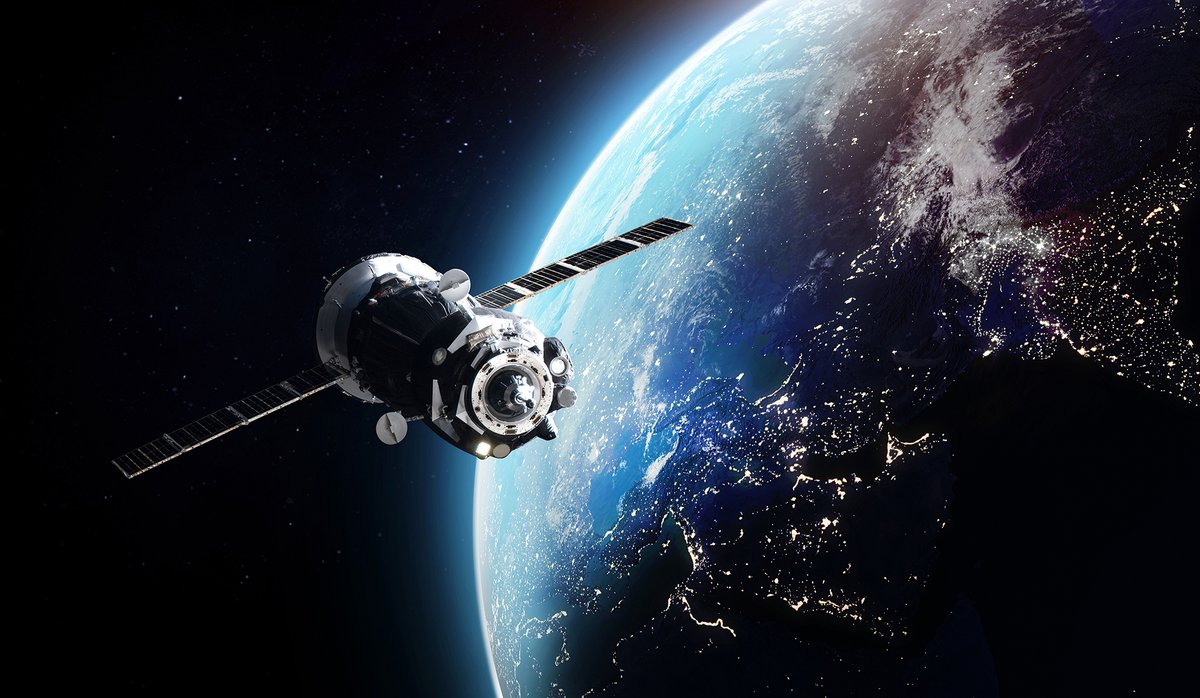
The rapid expansion of satellite launches, driven largely by commercial mega-constellations, is transforming Earth's orbital environment. As these satellites reach the end of their operational lives, burn‑up during atmospheric re-entry has emerged as a key disposal solution. While this approach helps limit the accumulation of space debris in orbit, it also releases metallic particles and other compounds into the upper atmosphere. Scientists are beginning to investigate whether these emissions could affect atmospheric chemistry, air quality, or climate, and significant uncertainty remains. As satellite traffic continues to grow, understanding these potential environmental impacts is becoming an important consideration for sustainable space activities.
Purpose statement
What ifs are short publications about new or emerging technologies aiming to accurately summarise the scientific state-of-the art in an accessible and engaging manner. They further consider the impacts such technologies may have – on society, the environment and the economy, among others – and how the European Parliament may react to them. As such, they do not aim to be and cannot be prescriptive, but serve primarily as background material for the Members and staff of the European Parliament to assist them in their parliamentary work.
Introduction
Space activities are known to cause pollution due to gases released during launches, material waste, and the re-entry of objects into the earth's atmosphere at the end of their lifetimes. Mega-constellations projects; such as SpaceX's Starlink, Amazon's Leo and the EU's IRIS² programme, are expected to deploy upwards of tens of thousands of satellites over the coming decade, leading to increased orbital congestion and potentially triggering a cascade of collisions known as the Kessler Syndrome. To mitigate this risk, the practice of disposing of end-of-life satellites via burn-up during atmospheric re-entry is widely regarded as one of the most practical solutions and is consistent with the European Space Agency's (ESA's) Zero Debris Approach. However, this means that a growing number of satellites launched (with recent estimates already projecting rates of 4 000 satellites per year) will eventually correspond to increased re-entries. The environmental consequences of releasing spacecraft materials into the atmosphere at such an unprecedented scale remain poorly understood. In 2025, the total object mass re-entering the atmosphere was almost 500 tonnes. With this rate expected to increase, it becomes critical to assess its effects on atmospheric chemistry and climate, to ensure the long-term sustainability of space activities.
Potential impacts and developments
Recent studies point out that pollution from launches alone has enough impact to affect ozone chemistry. Beyond CO2 pollution, the release of nitrogen oxides (NOₓ) and chlorine from some solid rocket fuels, together contribute to a measurable stratospheric ozone depletion. Satellite re-entry is responsible for the vaporisation of its materials in the upper atmosphere, which contributes to more pollution. As most satellites are largely composed of aluminium alloys, their combustions mostly produce aluminium oxides, alongside other metallic vapours. In 2022, the amount of aluminium deposited in the atmosphere due to satellite re-entry was estimated to exceed natural levels by almost 30 %. By 2033, vaporisation from satellite re-entry could reach 4 000 tonnes per year. Aluminium oxide is an issue for climate chemistry. It leads to ozone depletion and alters the radiative properties of the stratosphere by reflecting sunlight, leading to temperature changes. These temperature anomalies also impact wind speed, leading to a weaker springtime ozone hole. A concern is the scale and at which altitude that increased aluminium oxide pollution may happen. Researchers estimate that aluminium oxide particles released during re-entry can remain in the upper atmosphere for decades, and potentially for up to a century, raising the possibility of a cumulative effect, as emissions from successive generations of satellites build up over time. Yet, our understanding of the atmospheric consequences of such accumulation remains limited, particularly regarding the scale projected for future satellite constellations.
A potential approach would be to control burn-up altitude, so it occurs at an altitude of 20-30 km rather than the conventional 60-80 km, leading to a late and incomplete calcination (with the satellite not fully vaporising). This method would reduce the altitude at which particles remain suspended in the upper atmosphere. The DRACO mission, to be carried out by the ESA, primarily designed to collect data from re-entry destruction processes, will also study the effect of these re-entries on the atmosphere itself. This will enable scientists to learn more about environmental impacts, which in turn can lead to more sustainable designs for the future. The development of new materials, intended to enhance complete burn-up, impacts the quantity and the nature of chemical emissions released into the upper atmosphere. Future satellites are expected to incorporate a greater proportion of lightweight composite structures and advanced materials like polymers, engineering plastics, polycarbonates, or even wood. Redesigned structures with carbon fibre frames that fragment and vaporise more efficiently are under consideration as well.
These points are part of the 'design for demise' (D4D) approach, which aims to minimise ground risks by maximising re-entry burn-up. 'Design for non-demise' (D4ND) is the opposite way to address this problem. The goal of D4ND is to reduce high-altitude emissions by controlling re-entry descents. The passive thermal protection systems (TPS) that equip human transport vehicles, sample-return capsules, planetary landers and impactors could be implemented into the design of satellites to achieve this. This uses a technique known as magneto hydro-dynamic (MHD) flow control, by having ablative (protective) heat shields and heat-resistant materials designed to keep the structural integrity of the spacecraft. The system is effective if the magnitude of the entry velocity is adequate. This is what the UK Space Forge programme is already developing, using foldable heat shields to make satellites able to return to earth in a non-destructive way. These type of spacecrafts would be designed to be reusable.
Anticipatory policymaking
Space is a strategic domain and a global commons, meaning that environmental impacts arising from activities in orbit and during re-entry cannot be effectively addressed by a single country. In the same way as with orbital debris, mitigating negative environmental consequences of satellite re-entry requires not only action from concerned countries, but also international cooperation.
One priority is to improve scientific understanding and data collection. More studies are needed to determine the type and quantity of particles produced during burn-up, and their impact on atmospheric chemistry: how long they remain in the atmosphere and their potential effects on ozone and climate on a large scale. Better data would also allow researchers to develop more reliable models to assess how the cumulative effects of successive re-entries may evolve. The atmospheric impact of re-entered spacecraft (AIRS) initiative has been developed to address this data gap. It proposes enabling space operators and manufacturers to share non-proprietary spacecraft design information with academic researchers, to improve the accuracy of atmospheric modelling. Improved scientific knowledge could also inform regulatory action. The proposed EU Space Act includes environmental impact assessments, measures to minimise debris generation and ensure appropriate end-of-life disposal of satellites. However, it does not directly establish specific requirements for emissions generated during atmospheric re-entry. Possible future measures could include emission limits or criteria for the materials used in spacecraft, but such requirements would ideally be developed internationally to ensure a level playing field for the space industry. The current geopolitical climate makes such a multilateral approach difficult, but the proposed EU Space Act is designed to leverage EU market power to promote the adoption of its standards. In this regard, further cooperation with like-minded powers could help enhance its reach.
The number of satellites in orbit is growing rapidly, implying a future growth in re-entries as a critical tool to avoid debris build-up. As atmospheric disposal becomes a routine process occurring at an unprecedented frequency, its cumulative environmental effects may become more significant. Monitoring re-entry emissions and their atmospheric consequences could therefore become an important component of sustainable space traffic management, helping policymakers to respond before potential impacts become difficult to reverse. Ultimately, it may become necessary to regulate the number of satellites in orbit, as a critical step in addressing the issues raised by orbital congestion, including environmental concerns. However, there is currently no binding international agreement on how orbital space should be allocated, making this a potential critical aspect of future international space governance.
Classification
Policy areas: Environment | Digital | Global Governance
Committees: Industry, Research and Energy (ITRE), Environment, Climate and Food Safety (ENVI)
Statement on the use of AI
Any AI-generated content in this text has been reviewed by the authors. Claude was used to broaden the range of sources available and ChatGPT was used to improve the readability of the text.
Disclaimer
This document is prepared for, and addressed to, the Members and staff of the European Parliament as background material to assist them in their parliamentary work. The content of the document is the sole responsibility of its author(s) and any opinions expressed herein should not be taken to represent an official position of the Parliament.
Copyright
© European Union.
The reuse of this document is authorised under a Creative Commons Attribution 4.0 International (CC-BY 4.0) licence.

https://creativecommons.org/licenses/by/4.0/deed.en
To use or reproduce elements that are not owned by the European Union, permission may need to be sought directly from the respective rightsholders.