Article page checkbox is not checked in page info.
September 2026 Russian State Duma elections: Everything under control?
September 2026 Russian State Duma elections: Everything under control?
Anna Caprile, Members' Research Service
Summary
On 18-20 September 2026, Russia held its first State Duma elections since the start of its full-scale invasion of Ukraine in early 2022. The vote was also held in the temporarily occupied territories of Ukraine and took place in a tightly controlled and repressive environment, without recognised independent domestic or international observers.
The record figures for turnout and of support for the ruling United Russia party were portrayed as evidence of whole-of-society approval for Russia's war of aggression against Ukraine. However, independent analyses point to widespread manipulation of the results through voter coercion, manipulation of precinct reports and downright falsification of election district results. The last-minute exclusion of Yabloko, the only pro-peace party on the ballot, prevented voters from making even a limited choice. Protests have been announced in at least five Russian cities.
The bureaucratic machine has delivered the expected results, demonstrating top-down control over its own political elite and population. It remains to be seen whether these elections can fulfil one of the functions of ritual electoral processes in Putin's Russia: showcasing the regime's legitimacy to its own citizens.
Introduction
On 18-20 September 2026, the Russian Federation held elections for the ninth legislative term (2026-2031) of the State Duma (the lower house of parliament), which has 450 seats (225 allocated through party lists and 225 through single-mandate constituencies). In addition, gubernatorial elections were held in eight regions, while three regional parliaments elected their governors. Thirty-nine regions elected new regional parliaments, and nine regional capitals their new city councils. These were the first State Duma elections since the start of the full-scale invasion of Ukraine in 2022, and the second national poll – after the 2024 presidential elections – to be held in the four newly temporarily occupied Ukrainian territories (the occupied parts of the Donetsk, Luhansk, Zaporizhzhia and Kherson oblasts).
Official election results
The final results, announced (though not published in full) on 25 September, largely confirmed preliminary statements made by the Central Election Commission: a high turnout of 59.8 %, the highest since 2011, and the best results ever for United Russia, the ruling party, which obtained 349 out of 450 seats and close to 58 % of the party-list vote. United Russia therefore retains a constitutional majority in the chamber. All four remaining political parties represented in the 2021 State Duma, known as the 'systemic opposition' (i.e. supporters of the Kremlin's line on key issues) passed the 5 % threshold in the federal vote but remained far below United Russia. The Communist Party suffered a noticeable loss of 20 seats but maintained its position as the second force, while A Just Russia barely passed the 5 % threshold for the federal party-list vote.
Forty-six veterans of Russia's war against Ukraine have been elected to the State Duma, mostly on the United Russia list, representing over 10 % of all parliamentary mandates.
The 9th State Duma convened for its first meeting on 30 September, and United Russia is expected to head 20 committees out of 34 (in the previous term, it led 17 out of 32). Vyacheslav Volodin (United Russia) retained his post as Speaker, which he has held for the past 10 years.
| Party/faction | 2021, number of seats occupied/(won) | 2026, number of seats won | Change 2021-2026 |
| United Russia | 310 (324) | 349 | +25 |
|---|---|---|---|
| CPRF (Communist Party of the Russian Federation) | 56 (57) | 37 | -20 |
| LDPR (Liberal Democratic Party of Russia) | 22 | 23 | +1 |
| New People | 15 | 19 | +6 |
| A Just Russia | 27 | 17 | -10 |
| Rodina | 1 (merged with the A Just Russia faction) | 1 | 0 |
| Not affiliated/Independents | 4 | 4 | 0 |
| Vacant | 16 | – | – |
| Total | 450 | 450 |
Data source: State Duma, Interfax.
In the eight gubernatorial elections, United Russia's candidates won comfortably in seven.1 Chechen leader Ramzan Kadyrov won a striking 99.85 % of the vote. In Ulyanovsk Oblast, United Russia backed the incumbent governor, Alexey Russkih of the Communist Party, who won 76.65 % of the votes.
High stakes demand high results
United Russia's victory in the 2026 State Duma elections was a foregone conclusion. Elections in Putin's Russia, especially after the massive Bolotnaya square protests in 2011-2012, have been carefully designed ahead of the vote to deliver the expected results. They have played an important ritualistic role in the system, conferring a veneer of legitimacy on the government's course, both at home and abroad.
The stakes in 2026, the year of the first parliamentary elections since the start of Russia's full-scale invasion of Ukraine, were higher than usual. Russia's war against Ukraine has already lasted longer than the Great Patriotic War (1941-1945). A staggering, though undisclosed, number of Russian soldiers have been killed or wounded; the figure is estimated at 1.2 million, yet there is no palpable victory in sight. Ukrainian attacks on critical infrastructure have brought war uncomfortably close to home. Economic indicators are falling and prices are rising. Since the beginning of 2026, public polls, including those conducted by the Kremlin, have consistently shown a decline in Putin's approval rating, a rise in pessimistic views of the future among Russians and a growing desire for a cessation of hostilities, even without Russia gaining full control of the Ukrainian territories it demands.
These factors forced Kremlin political technologists to change the tone and discourse of the political campaign, which became a rally-around-the-flag (and around Putin) operation: a 'special electoral operation', as some Russian commentators and the popular Russian newspaper Moskovsky Komsomolets 2 described it.
For the first time since 2007, the United Russia Party formally claimed to be the party of President Putin, who used his speech at the party congress in June 2026 to underscore his resolve to achieve Russia's objectives militarily. Over the summer, Putin made at least seven trips to regions conveniently beyond the reach of Ukrainian drones, in an unusual display of activity and proximity to the people. In his solemn TV address (RU) to the nation two days ahead of the vote, Putin cast the upcoming 'decisive' elections as a test of national support for Russia's war on Ukraine. He urged citizens to fulfil their 'duties' and make 'responsible choices', concluding that: 'your choice … will once again demonstrate that millions of people stand behind our soldiers … This will be our collective response to those who seek to undermine Russia, slow down its development, or strip away our sovereignty or our right to determine our own future. Participation in the elections is our joint contribution to Russia's victory.'
Under these extraordinary circumstances, a simple victory for United Russia in the State Duma elections was not enough. The results had to be extraordinary, both in terms of turnout and support for United Russia.
Behind the official figures
According to the independent platform Russian Election Monitor (REM), a partner of the European platform for democratic elections (EPDE), the 2026 State Duma elections took place in a 'far more tightly controlled political environment' than previous ones, with virtually no political competition and severe wartime censorship restricting freedom of expression and access to independent information. Even in these conditions, the government machine had to resort to significant electoral manipulation to deliver the expected results.
In its statement on the elections, REM describes the mechanisms of electoral manipulation during the 2026 campaign, including voter coercion, turnout falsification, ballot stuffing and tampering, pressure on and restrictions against political party observers, and the presence of 'fake' international observers. For the third consecutive nationwide elections, Russia did not invite OSCE/ODIHR observers, while the Russian citizen-led election watchdog Golos movement was dismantled by the authorities in 2025 and its co-chair, Grigory Melkonyants, was sentenced to five years in prison.3
The reports published by the Election Atlas project, ('Preliminary assessment of the 2026 September elections' and 'Losing Control 2'), further document campaign restrictions and widespread election irregularities, drawing on field data and statistical analysis. According to its calculations, between 14 million and 25 million votes for United Russia were fabricated. Several data analysts estimate that actual turnout was below 40 % (rather than nearly 60 %), while support for United Russia was around 37 % (rather than over 58 %), a figure consistent with official polling ahead of the elections.
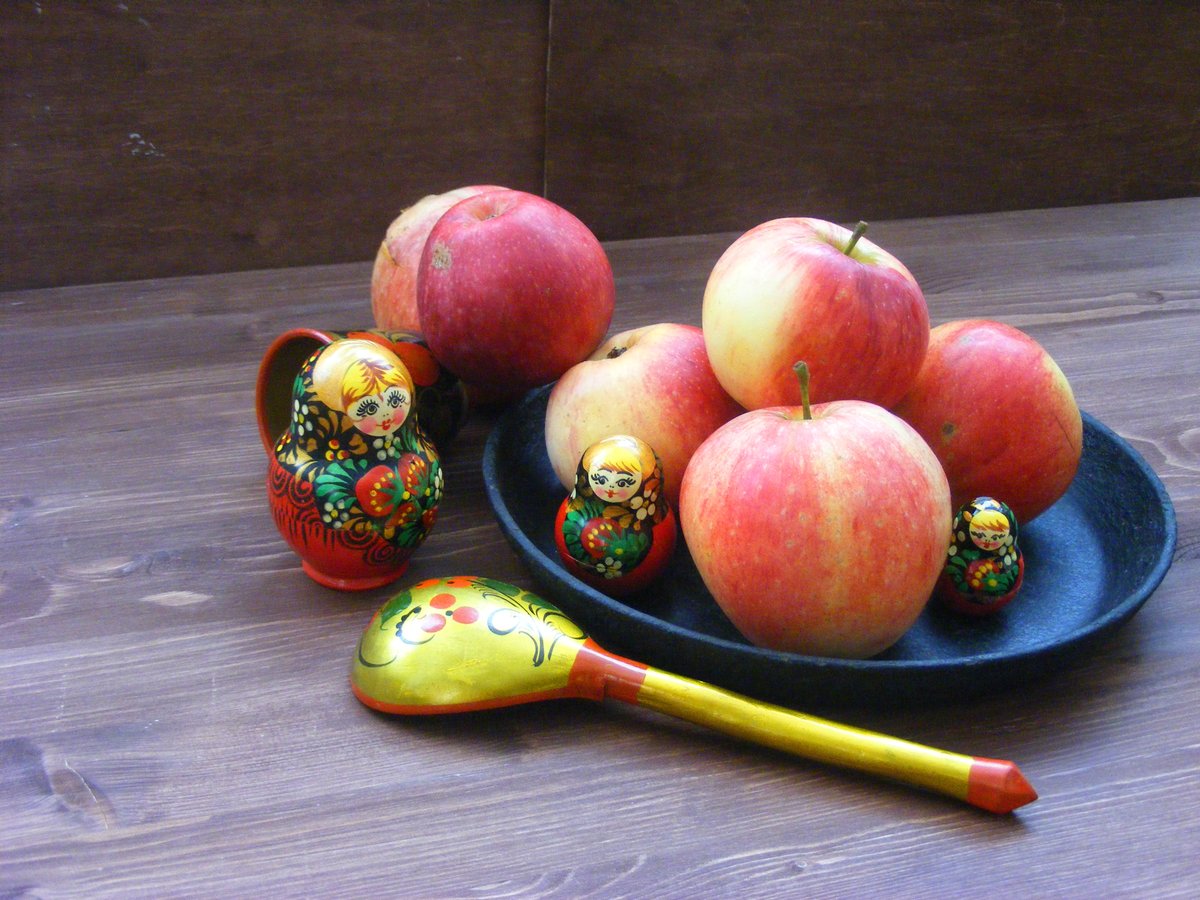
One of the most revealing moments in the electoral campaign was the case of Yabloko, the only registered party overtly campaigning for an end to Russia's war against Ukraine. Its electoral programme, titled 'For peace and freedom', was a record-short 43 words. The liberal Yabloko (the Russian word for 'apple') party last entered the State Duma in 1999 with just 6 % of the vote. Considered both inside and outside Russia to be a marginal force without a clear political posture, its registration was considered by the Kremlin to be a harmless and convenient way to display a veneer of political competition on the ballot.
However, as soon as Yabloko's registration was confirmed, its motto, 'For peace and freedom', and its symbol, an apple, started to register unusually high engagement on social media, especially among young people, and its polling figures surged above the 5 % threshold. The Russian opposition in exile publicly endorsed voting for Yabloko. The Supreme Court swiftly repaired the miscalculation and on 10 August removed Yabloko from the federal party list on spurious grounds (alleged copyright violations in its campaign), as well as from seven regional election lists. A week later, Yabloko deputy chair Lev Shlosberg was sentenced to 11 years and one month in prison. Another Yabloko deputy chair, Maxim Kruglov, had previously received a seven-year sentence, while several federal and regional Yabloko party leaders had been removed from electoral politics through criminal and administrative cases.
According to the independent pollster ExtremeScan, had Yabloko remained on the party list, it might have received up to 24 % of the vote. In Novgorod, the only regional election where Yabloko was allowed to compete, it received over 6 % of the vote and won seats in the Regional Duma.
EPDE condemned the staged elections in the temporarily occupied territories of Ukraine as 'illegal, Illegitimate, and a part of warfare, not of suffrage', in clear violation of international law. Elections in these territories were particularly opaque, specially in the occupied parts of Donetsk, Luhansk, Zaporizhzhia and Kherson oblasts. Early voting was conducted over several days through 'mobile teams'. Election commission members went door to door, accompanied by armed Russian servicemen. 'Voting' took place without up-to-date, verified voter lists, creating conditions for mass repeat voting and artificially inflated turnout, including by the unregistered local population and Russian military personnel. No detailed breakdowns by polling station or district were published for these territories. As a result, according to REM, 'virtually any figures could be presented as a result of the vote'. Russian authorities reported turnout of over 75 % in these territories and support for United Russia of between 74 % and 80 %, well above the nationwide average.
Western reactions
The European Union unequivocally condemned the Russian Federation's 'illegal organisation of so-called "elections" in the temporarily occupied territories of Ukraine' and characterised the State Duma elections as evidence of the 'continued and deepening erosion of democracy in Russia, taking place in an increasingly authoritarian political environment'. Albania, Andorra, Iceland, Liechtenstein, Moldova, Montenegro, North Macedonia, Norway, San Marino and Ukraine later aligned themselves with this statement. Members of the European Parliament chairing relevant parliamentary delegations issued a joint statement urging the EU and its Member States 'not to recognise the legality of these so-called elections' and 'to consider the results null and void'. They further demanded the immediate release of all political prisoners in Russia and occupied Ukraine. In a separate joint statement, Australia, Canada, New Zealand, Norway and the United Kingdom condemned Russia's sham elections in Ukraine's occupied territories, describing them as part of a wider system of occupation and a gross violation of Ukraine's sovereignty and the UN Charter.
The OSCE Office for Democratic Institutions and Human Rights (ODIHR) and the OSCE Parliamentary Assembly (OSCE PA) condemned the Russian Federation's decision to organise voting in the temporarily occupied territories of Ukraine, adding that 'the results of any such "elections" organised by the Russian Federation will have no validity under international law'. Furthermore, the OSCE/ODIHR expressed serious concern regarding the Russian Federation's decision not to invite OSCE observers to the State Duma elections, 'further demonstrating a pattern of disregard for commitments undertaken by all OSCE participating States'.
The statement by the PACE Platform for Dialogue with Russian Democratic Forces, Fake 'elections' to an illegitimate parliament, calls on the international community 'never to recognise the State Duma as a legitimate body, since so-called "elections" were held in the temporarily occupied territories of Ukraine'.
On 28 September, the Council imposed sanctions on 10 individuals for barring Yabloko from the State Duma elections.
What next?
The Kremlin is presenting the results as proof that the Russian people have rallied behind the President and his party. Putin believes he has received a national mandate to pursue, unchecked, future policies and make subsequent decisions on the course of the war.
The bureaucratic machine delivered the expected results, displaying top-down control over its political elite and population. The Kremlin prioritised the strength of the message over the credibility of the results. It remains to be seen whether the implausibility of the election results will lead to any meaningful societal reaction amidst an increasingly forceful repressive environment. Protests have been announced in at least five cities. Beyond immediate protests, cracks in legitimacy could widen as unpopular decisions inevitable arrive: tax increases and utility price surges appeared within days of the election, and rumours of an impending second wave of mobilisation continue to circulate.
The logic of escalation is embedded in Putin's thinking. According to A. Kolesnikov, 'for Putin, escalation has become a principal means for maintaining power ... For now, the Kremlin believes that it has both the time and the means to continue fighting for as long as it takes ... An unknown question is how far into the future Russians are prepared to grant this legitimacy'.
Main references
- Russian Election Monitor statement on the Russian elections 2026, 21 September 2026.
- Caprile, A. and Pichon, E., Russia under Vladimir Putin: His 26-Year Rule in Facts and Figures, EPRS, European Parliament, February 2026.
- Lukyanova, E. et al,
- Maximum Security Elections: How Russian Elections Became Non-Elections, and What to Do About It?
- , Free University Press, February 2024.
- Kolesnikov, A., How Putin Escalates: A New Stage in Russia's Confrontation With Ukraine – and the West, Foreign Affairs, 24 September 2026.
Endnotes
Statement on the use of AI
Any AI-generated content in this text has been reviewed by the authors.
Disclaimer
This document is prepared for, and addressed to, the Members and staff of the European Parliament as background material to assist them in their parliamentary work. The content of the document is the sole responsibility of its author(s) and any opinions expressed herein should not be taken to represent an official position of the Parliament.
Copyright
© European Union.
The reuse of this document is authorised under a Creative Commons Attribution 4.0 International (CC-BY 4.0) licence.
https://creativecommons.org/licenses/by/4.0/deed.en
To use or reproduce elements that are not owned by the European Union, permission may need to be sought directly from the respective rightsholders.