
Article page checkbox is not checked in page info.
Paving the way to EU enlargement: Assessing potential implications on security and defence
Paving the way to EU enlargement Assessing potential implications on security and defence
Isabelle Ioannides, Marco Centrone and Meenakshi Fernandes, Directorate for Impact Assessment and Evaluation
Summary
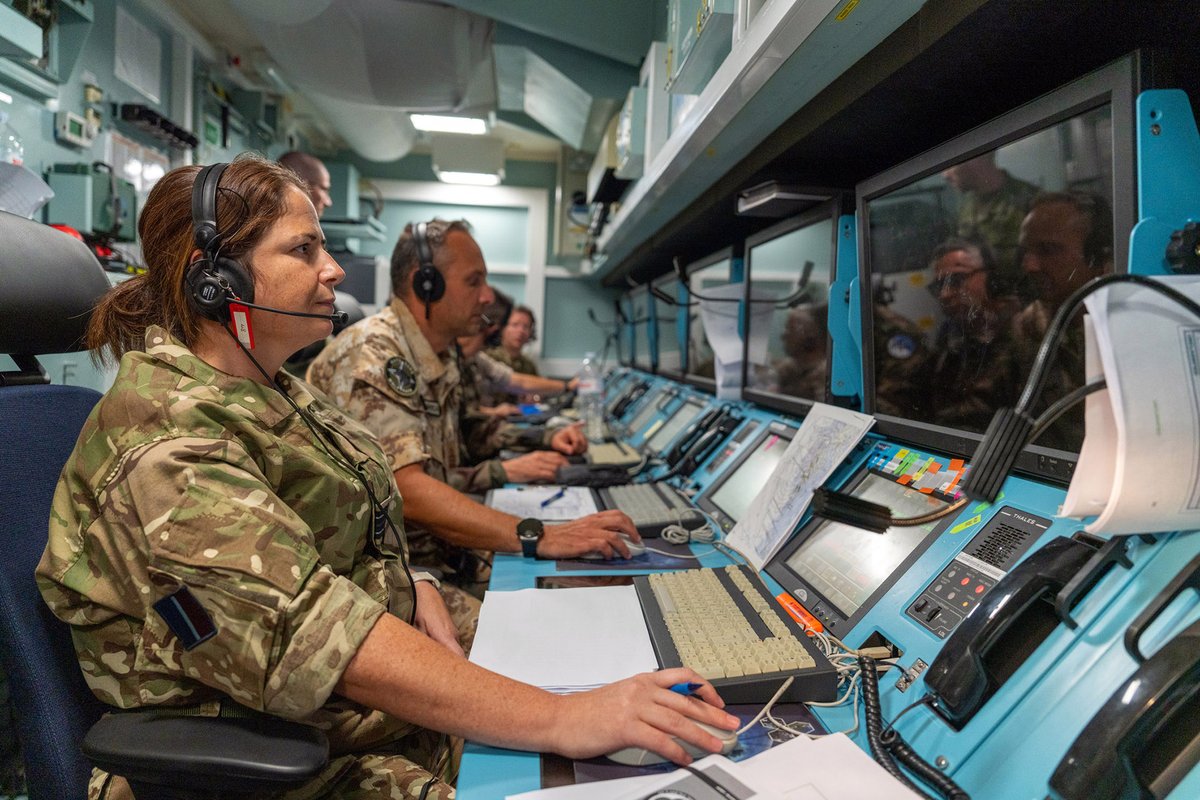
Security and defence have become central to European Union (EU) enlargement policy since Russia's invasion of Ukraine. Growing instability in the EU's neighbourhood has prompted the Western Balkans (Albania, Bosnia and Herzegovina, Kosovo, Montenegro, North Macedonia and Serbia) and the Eastern Trio (Georgia, Moldova and Ukraine) to invest in defence capabilities, mirroring a similar trend among EU Member States. In parallel, North Atlantic Treaty Organization (NATO) membership or prospective membership has supported those countries in advancing security and defence convergence with the EU. Nevertheless, challenges remain in those countries' accession process, particularly differing levels of their alignment with the EU's common foreign and security policy (CFSP), part of the EU acquis. The enlargement countries examined have become simultaneously security recipients and contributors at differing levels. All but Kosovo have moved from hosting EU missions to contributing to them. Countries have deepened defence cooperation with the EU and its Member States to varying degrees. Albania, Montenegro and North Macedonia have combined NATO membership with EU reforms to modernise their armies and strengthen interoperability. Ukraine has transformed its defence industrial capacity, developing military equipment domestically. Serbia and Georgia's failures to align with CFSP, their close ties with Russia, and Serbia's defence cooperation with China raise concerns.
Introduction
European Union (EU) enlargement and security became intricately linked in the wake of Russia's full scale invasion of Ukraine and the subsequent geopolitical uncertainty in the EU's neighbourhood. The December 2023 Council conclusions on enlargement underlined the 'crucial importance of further deepening the cooperation on foreign policy issues and the Union's expectations on partners to fully align with the EU Common Foreign and Security Policy (CFSP), including restrictive measures, a key aspect of the EU integration process and a strong expression of a partner's strategic choice and place in a community of values'. Since 2024, CFSP alignment is stricter in EU support programmes for enlargement countries.1
Beyond the direct threats to Ukraine's sovereignty, stability in Moldova and Georgia has been undermined, and deep-seated European fears revived, including in the Western Balkans. Russia wages an intense hybrid war against Moldova and maintains around 1 500 troops in the breakaway region of Transnistria.2 Around 20 % of Georgia's territory (Abkhazia and South Ossetia) is occupied by Russia.3 Unresolved disputes in the Western Balkans persist, including irredentist politics due to Bosnia and Herzegovina's constitutional conundrum and the stalled Belgrade–Pristina negotiations on the status of Kosovo*.4 Bosnia and Herzegovina and Serbia's non-recognition of Kosovo contributes to the 'fragmentation of the Western Balkans' shared security space into rival blocs'.5
In its 11 March 2026 resolution on the EU enlargement strategy, the European Parliament underlined enlargement as a 'strategic response to the new geopolitical reality and an investment of the utmost importance for the EU's security and stability'. This sense of global insecurity and European vulnerability, which has pushed the EU to promote its defence capability development, has increasingly made security and defence convergence with the EU a central component of the EU enlargement process.6 Against this backdrop, this analysis examines EU support for nine enlargement countries to meet the CFSP prerogatives, defence capability development and implications for those countries. They encompass:7
-
Western Balkans Six (WB6): Albania, Bosnia and Herzegovina, Kosovo, Montenegro, North Macedonia, Serbia
-
Eastern Trio: Georgia,8 Moldova, Ukraine.
Policy actions and tools to support EU alignment
The Stabilisation and Association Agreements (SAA), in force with all the WB6, create a legal basis for their alignment with the CFSP.9 Similarly, Association Agreements with the Eastern Trio countries aim to promote gradual convergence in foreign and security policy.10 Alignment with the EU's CFSP in the enlargement process is stipulated in Chapter 31 of the EU acquis (Foreign, Security and Defence Policy), which sits within Cluster 6 (External Relations) of the 2020 revised enlargement methodology. CFSP alignment requires enlargement countries to progressively adapt their foreign policies to match that of the EU, and apply agreed sanctions and restrictive measures. CFSP alignment represents a strong 'signal' of countries' commitment to core [European] values and strategic orientation.
The European Commission evaluates the implementation of Chapter 31 annually for each EU-aspirant country. The country reports publish estimated levels of alignment percentages, which remain 'a descriptive indicator that reflects general trends' rather than 'a definitive measure of progress', since they are based primarily on countries joining CFSP decisions, declarations, and restrictive measures. Albania and Montenegro, North Atlantic Treaty Organization (NATO) members since 2009 and 2017 respectively, have fully aligned (100 %) with the CFSP since the mid-2010s. North Macedonia followed suit in 2020, after the resolution of its name dispute and joining NATO. Bosnia and Herzegovina, a NATO-enhanced partner country,11 is fully CFSP aligned since 2024. Recognising the dire security consequences of Russia's invasion of Ukraine, in 2023, these four EU aspirants launched the '100 % Alignment with CFSP' platform, at their own initiative. Kosovo, which has not joined NATO because of the status question, voluntarily aligns to the CFSP.
By contrast, Serbia, which maintains a policy of military neutrality, 12 has systematically cherry-picked CFSP alignment, refusing to implement sanctions against Russia following the 2014 annexation of Crimea and 2022 invasion of Ukraine, or to align with EU restrictive measures.13 Serbia's limited CFSP alignment (63 % in May 2026) has stalled its accession negotiations while sparking intense debate over whether to freeze EU Growth Plan funds, for which CFSP alignment is a condition. Serbia's case has come to illustrate the limitations of EU conditionality in addressing 'the risk of state capture'.
On the Eastern Trio front, the Commission assessed that, as of October 2025, Ukraine was aligned at 99 % with the EU's CFSP, and that Moldova was highly aligned (88 %). It rated Georgia's CFSP alignment at 40 % in 2025, down from 53 % in 2024.
In 2024, the EU signed Security and Defence Partnerships (SDPs) with Albania, Moldova and North Macedonia.14 SDPs provide political frameworks for, among other things, intensified tailored dialogue, participation in the permanent structured cooperation (PESCO), the SAFE instrument and European Defence Agency (EDA) activities,15 cybersecurity and hybrid-threat cooperation, military training and exercises, and the European Peace Facility. SDPs with other enlargement countries could support their integration with the EU.
CSDP missions and operations
Historically, the EU's common security and defence policy missions in the WB6 were conceived as a stabilising mechanism in the aftermath of the 1990s Yugoslav wars. Over the subsequent decades, the WB6 countries have evolved from security recipients to security contributors, moving from hosting to routinely contributing personnel to CSDP missions globally (see Figure 1). At the time of writing, Bosnia and Herzegovina is hosting the military operation EUFOR Althea, which seeks to ensure security in the country and train the armed forces. Kosovo hosts a civilian rule-of-law mission (EULEX Kosovo), while four more EU missions are deployed on the continent's eastern borders. They comprise an advisory mission for civilian security sector reform in Ukraine (EUAM Ukraine), a civilian EU partnership mission to support resilience to hybrid threats and security sector reform in Moldova (EUPM Moldova), and an unarmed civilian monitoring mission in Georgia (EUMM Georgia). Moreover, a military assistance mission (EUMAM Ukraine), coordinated in Brussels, trains Ukrainian military across various EU Member States and at two main multinational operational commands in Germany and Poland.
EU-aspirant countries' participation in EU military exercises is limited and, in CSDP missions, usually symbolic (rarely exceeding a 10 % share of CSDP personnel),16 yet allows these countries to contribute to doctrinal convergence, interoperability, and training curricula. Albania and North Macedonia are active troop contributors to EUFOR Althea. Serbia has in the past supplied the Mission Chief Medical Officer to EUTM Somalia. Although today overwhelmingly a recipient, Ukraine has been a CSDP contributor since 2003, having sent security personnel to the EU's now closed police missions in Bosnia and Herzegovina and North Macedonia. In the past, Montenegro, Serbia and Ukraine contributed to the EU's naval mission in the Indian Ocean (EUNAVFOR Atalanta). Georgia, Moldova, Montenegro and Serbia have also participated in the EU military mission in Mali (EUTM), which closed in May 2024.
The enlargement countries are part of multinational military operations across the world beyond the EU CSDP missions and operations, to cover the United Nations (UN) and NATO, in particular (see Figure 1). According to data from the International Institute for Strategic Studies (IISS) The Military Balance 2026 , Albania is the largest contributor in terms of both numbers and diversity of missions (notably deploying around 250 armed personnel in NATO's KFOR military mission in Kosovo). Serbia is a key contributor to UN and other multilateral military missions (notably around 180 military personnel to UNIFIL, in Lebanon), and only tangentially to CSDP missions. North Macedonia, Montenegro and Moldova follow (in this order). Bosnia and Herzegovina and Kosovo are the least active in such missions.
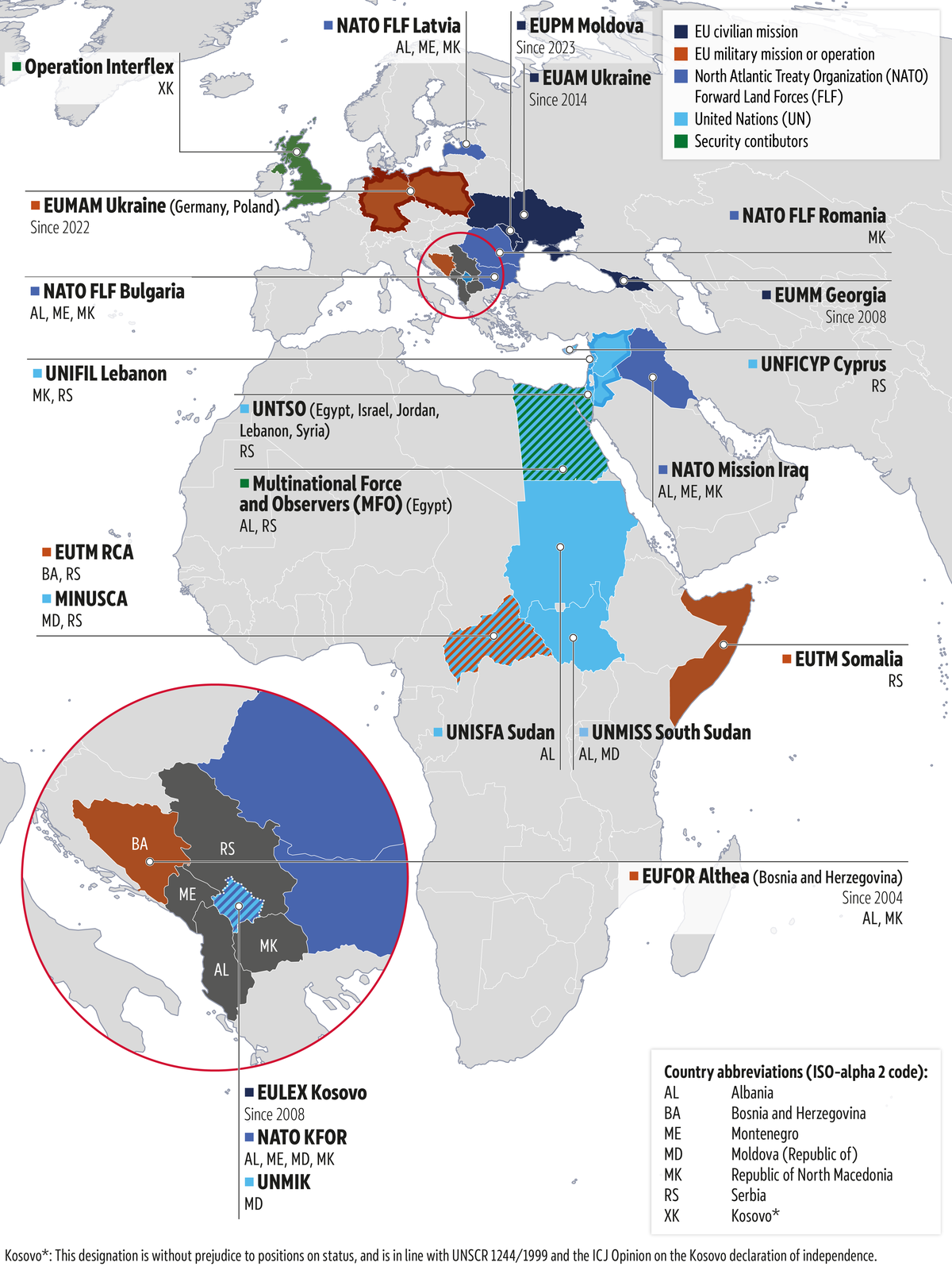
Sources: Centre for European Reform, M. Dobrescu, EEAS, IISS; graphic by Samy Chahri, EPRS, 2026.
EU tools and programmes
The off-budget European Peace Facility (EPF) has become a primary channel for EU security and defence support for the enlargement countries for the years 2021 to 2027. It finances the common costs of CSDP military missions and operations, while assisting partner countries (including enlargement countries) in strengthening their defence capabilities through training and the financing of non-lethal equipment. Strict safeguards regarding international humanitarian law and human rights apply.
Ukraine has been by far the largest recipient of EPF assistance, with €6.4 billion out of the overall €77 billion in military support that the EU and the Member States have provided to Ukraine since Russia's invasion in 2022. These funds have multidimensional aims in defence-related support for Ukraine, including training the Ukrainian army through the EUMAM Ukraine (over 95 000 military personnel by mid-2026). Unlike the other EU-aspirant countries examined, the EPF has financed lethal weapons in Ukraine. Difficulties to reach consensus in the European Council on military aid to Ukraine has led to the creation of new instruments to support Ukraine's urgent defence needs.17 Most recently, in April 2026, the EU Ukraine Support Loan (worth €90 billion) was launched for the 2026‑2027 period, of which €60 billion are allocated to strengthen Ukraine's defence capabilities and support the procurement of military equipment.
The other, smaller EU-aspirant countries have received less EPF bilateral funding, apart from Serbia that has not received any because of its divergence from CFSP alignment. 2021-2026 EPF assistance measures (€317 million) have supported the Moldovan army's operational effectiveness and 'compliance with EU standards and interoperability', while Georgia's deteriorating democratic trajectory and the Georgian Dream government's pause in its EU accession have resulted in the EU freezing EPF defence funding (€32 million), including on military mobility corridors. EPF assistance to Albania (€49 million), Bosnia and Herzegovina (€15 million in 2026, on top of €20 million in 2021 and 2022) and North Macedonia (€38 million) has focused on boosting these countries' military capacity to deploy rapidly and effectively, strengthening interoperability and increasing their contribution to CSDP missions. Montenegro received EPF assistance (€6 million in 2025) for support equipment, training and related supplies.
The WB6 (except Kosovo) also benefit from EPF regional assistance measure (€6 million) for the Balkan Medical Task Force (BMTF), a multinational military medical unit. It finances medical equipment for field hospitals, vehicles, information technology and communications systems and training, to upgrade the region's armed‑forces medical support and cooperation in crisis‑response operations, thus with limited direct impact on the WB6 countries' national defence industrial base.
The EU has increased its focus on military mobility in recent years to boost defence readiness. This has translated into higher ammunition and missile production and their timely delivery to Ukraine. Through its Connecting Europe Facility, the EU invested €600 million in 2025 in transport connections with Ukraine, including projects with dual-use potential that can strengthen military mobility. Nevertheless, a European Court of Auditors special report on the EU's Action Plan 2.0 on military mobility (from 2022 to 2026) finds that 'EU funded dual-use projects selected [were] not the most relevant from a military perspective'. Moreover, prioritising transport routes to Moldova and Ukraine has resulted in the underfunding of projects on the southern route (from Greece to the WB6). The European Investment Bank (EIB) is increasingly contributing to military mobility in enlargement countries through its support of dual-use transport infrastructure within the region's trans-European transport (TEN-T) network.
Ukraine is fully associated with the European Defence Industry Programme (EDIP) and the European Defence Fund (EDF). The EDIP, with its Ukraine support instrument (worth €300 million) 'contributes to the recovery, reconstruction and modernisation of the Ukrainian Defence Technological and Industrial Base (DTIB) with a view to increasing its defence industrial readiness, taking into account Ukraine's possible future integration into the European DTIB'. The 2025 EDF call (57 projects, €1.07 billion, 634 entities from 26 Member States plus Norway) admitted Ukrainian entities for the first time. Moreover, the EU–Ukraine drone deal and BraveTech EU channel Ukrainian combat-tested know-how and innovation capacity into European capability. WB6 countries, in contrast, have so far played a more limited role in the EU's new defence-industry and procurement instruments.
Military cyber defence
Military cyber-defence capabilities are critical for countering hybrid threats and the shifting global risk landscape, which has changed dramatically due to the rapid adoption of artificial intelligence (AI) and heightened geopolitical tensions. Military cyber defence is treated distinctly from civilian cybersecurity. In its 2022 policy on cyber defence, the EU recognised the need to offer capability-building support for enlargement countries.18 The European Commission's 2025 country reports make some reference to the advances made by enlargement countries on military cyber defence as part of their CFSP alignment. PESCO's Cyber Rapid Response Teams (CRRTs) have provided cyber-defence support for Moldova through several deployments to address vulnerabilities in the country's critical infrastructure.
The National Cybersecurity Index (NCSI) shows that shortfalls exist in the preparedness of enlargement countries, particularly regarding military cyber-defence doctrine.19 Some are moving towards setting up a national cyber command within the military structure, as is the case in a large majority of EU Member States. Albania set up a Cyber and Liaison Command in 2025, and Ukraine is preparing a cyber command and a space force.20
The EU Cybersecurity Reserve, a group of cybersecurity experts from the private sector that can be called on to address a large-scale cybersecurity attack, was made available to Moldova for the 2025 elections. In May 2026, the Council granted Ukraine access to the EU Cybersecurity Reserve, and access to the Digital Europe programme was adapted accordingly. The EU has reportedly also planned crisis simulation exercises, with the possible participation of Moldova, Ukraine and the WB6 countries, starting in June 2026, to promote resilience against large-scale cyberattacks.
Bilateral defence agreements
EU Member States and the enlargement countries have established a wide range of bilateral defence-related partnerships (see Figure 2). Among the WB6, Serbia stands out as having the highest number of bilateral defence agreements with EU Member States. Russia's invasion of Ukraine has resulted in several bilateral agreements concluded in recent years by Eastern Trio countries, in particular Moldova and Ukraine.
While bilateral partnerships can deepen trust, build interoperability, and speed up procurement, their proliferation can also produce duplication and a 'fragmented patchwork of commitments', reinforcing political fragmentation. This risk is particularly acute in the WB6, characterised by unresolved territorial disputes, rivalries, and competing strategic, geopolitical orientations. For example, Serbia perceives the March 2025 trilateral defence cooperation agreement between Albania, Croatia and Kosovo as a threat to its security. Soon thereafter, it concluded a defence cooperation agreement with Hungary. Thus, sub-regional defence-cooperation agreements risk institutionalising competing security alignments while constraining regional cooperation and harmonised, upward convergence with the EU.
Bilateral defence partnerships differ in terms of their degree of institutionalisation and areas of focus. Partnerships are formalised through treaties or structured around cooperation plans or intergovernmental mechanisms. In some cases (e.g. Czechia, Germany and France), bilateral defence partnerships with enlargement countries mostly centre on defence industry, procurement and capability development. Bilateral defence partnerships with a focus on interoperability and military mobility feature more prominently for Member States in closer proximity to the enlargement countries (e.g. Greece, Hungary and Slovenia). Cyber defence has also emerged as a key area of bilateral cooperation and exchange, in particular for the Baltic countries, that complements wider multilateral efforts.
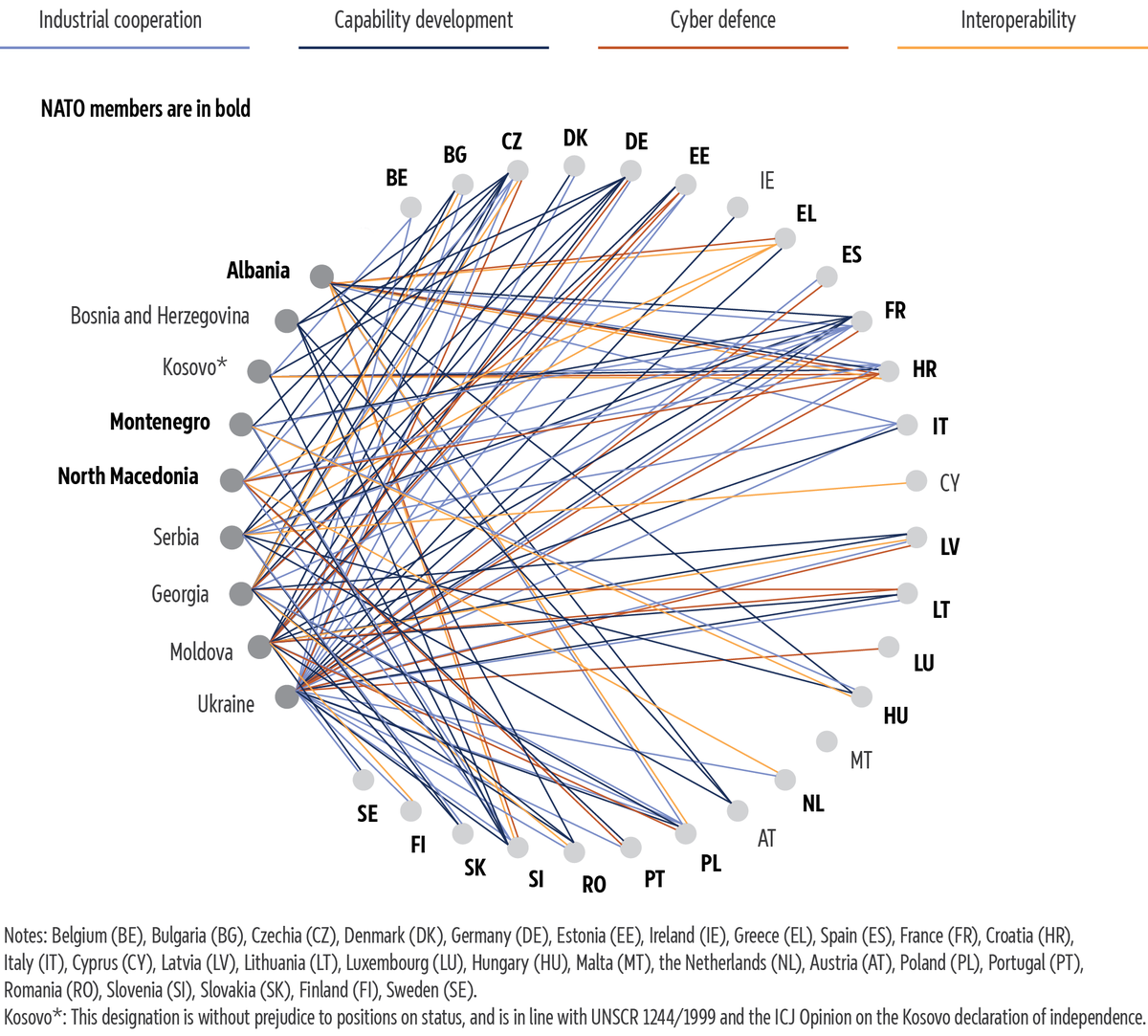
Source: Compiled by the authors, based on press releases primarily from national ministries of defence and national governments (the list may not be exhaustive and excludes partnerships that were not concluded at the time of writing); graphic by Györgyi Mácsai, EPRS, 2026.
Shifting defence investment in enlargement countries
Military expenditure
Over the past decade, military expenditure has risen across the enlargement countries examined (see Figure 3). Stockholm International Research Institute (SIPRI) data show that Ukraine's military expenditure reached an estimated US$84.1 billion in 2025, growing by 1 507 % from 2015.21 Military spending accounted for almost 40 % of Ukraine's gross domestic product (GDP), making the country the world's seventh largest spender in 2025. Georgia and Moldova have increased their military spending by around 64 % (US$657 million) and 104 % (US$113 million) respectively over the past decade. Nevertheless, military expenditure as a share of GDP in 2025 remained relatively modest, at around 0.5 % of Moldova's GDP and 1.7 % of Georgia's GDP, with the latter down from 2 % in 2015.
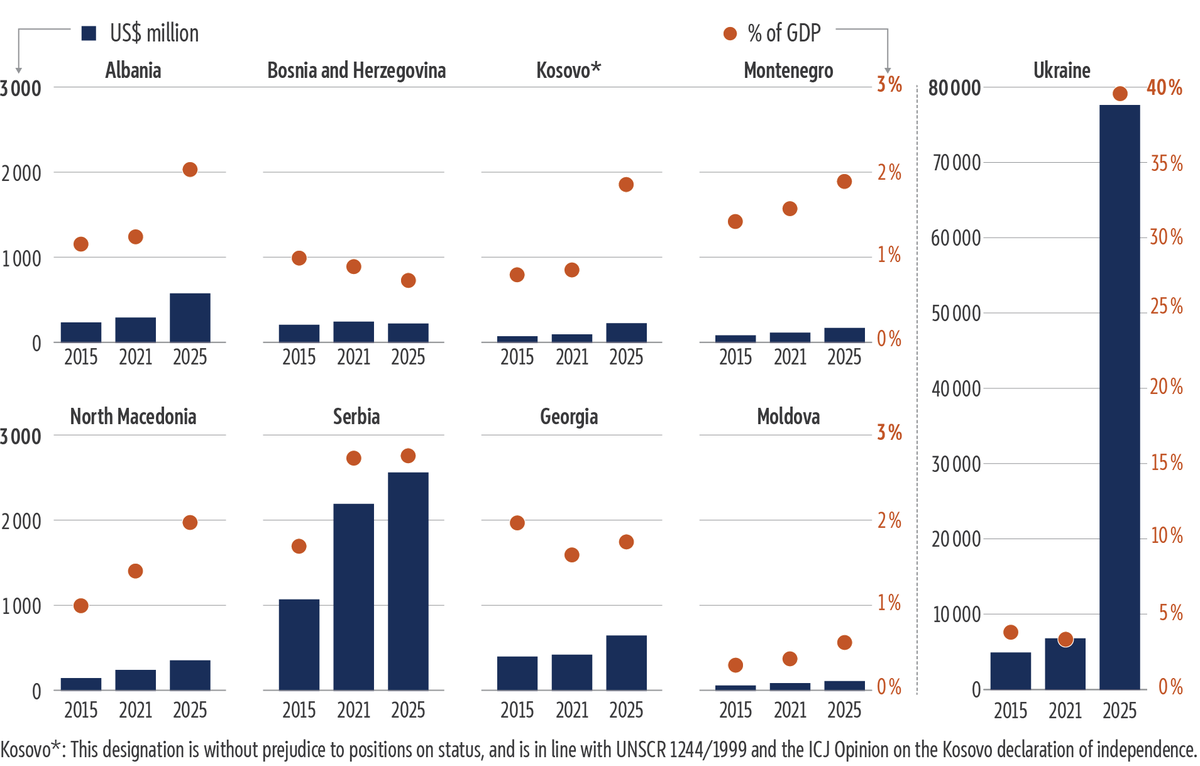
Data source: SIPRI; graphic by Györgyi Mácsai, EPRS.
Note: To compare military expenditure trends over time, figures in the chart are presented in constant prices. SIPRI data were preferred because they cover all enlargement countries, including non-NATO members.
The WB6 countries have also scaled up their defence ambition, with total military expenditure at US$4.4 billion in 2025. Serbia accounted for more than half of this total (around US$2.7 billion), by far the region's largest spender. Compared with 2015, Serbia's military expenditure has more than doubled (up by 141 %), which Belgrade has often framed as a response to deteriorating regional security, NATO's presence in the region, and ongoing tensions with Kosovo.
Kosovo, North Macedonia and Albania registered a stronger growth, up by 242 %, 154 % and 150 %, respectively from 2015 to 2025. Montenegro has also more than doubled its defence expenditure over the same period (115 %). By contrast, Bosnia and Herzegovina marginally increased military expenditure (8 %) during the same decade, around 0.7 % of its GDP in 2025, far below all neighbouring countries and NATO members.
While defence spending in the region has grown at varying rates, SIPRI data show that, among the three NATO members in the region, only Albania met NATO's guideline of investing at least 2 % of GDP annually in defence (agreed at the 2014 NATO Summit), and only did so in 2025. North Macedonia and Montenegro are both just under that threshold in 2025, respectively at 1.97 % and 1.89 %.22 NATO data released in 2026 differ, showing that, by the end of 2025, Albania did not meet the 2 % guideline, while North Macedonia and Montenegro did.23 At the 2025 NATO Summit, Albania, Montenegro and North Macedonia committed to investing 5 % of their GDP annually on defence over the next decade.
Active armed forces
Ukraine maintains by far the largest military among the enlargement countries, with active-duty military personnel at roughly 677 000 in 2025, up from 209 000 in 2021 (see Figure 4), although estimates vary.24 However, the prolonged conflict has created significant personnel-related challenges, particularly on recruitment rotation and troop management. Meanwhile, battleground conflicts have demonstrated that autonomous systems, such as aerial drones and land robots in which Ukraine excels, can minimise personnel exposure to immediate danger. A Ukrainian commander assesses that ground robots could replace one third of infantry in combat by the end of 2027.
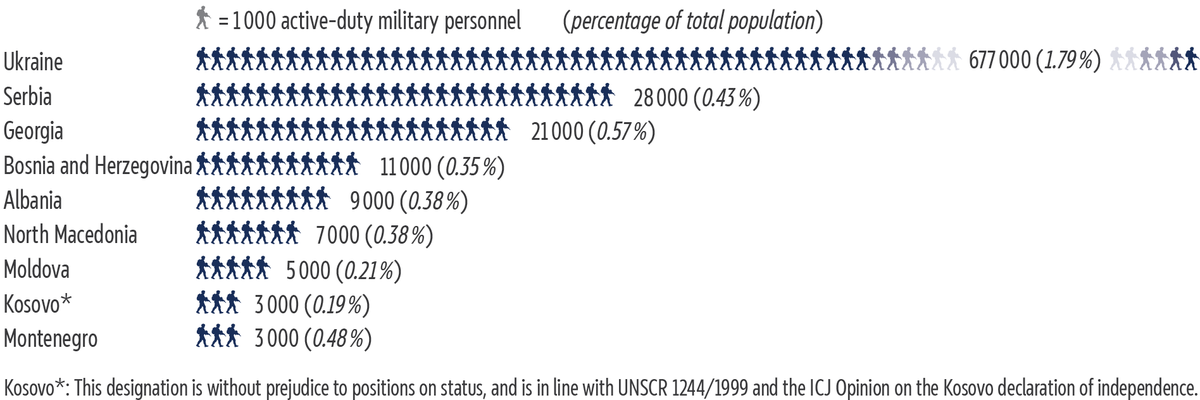
Source: IISS and World Bank; graphic by Györgyi Mácsai, EPRS.
Note: Data on military personnel are estimated, rounded IISS figures.
By contrast to most Western Balkan states, which have transitioned away from conscription, Serbia has announced reintroducing mandatory military service and invested in strengthening its armed forces and defence capabilities. Its forces consist of around 28 000 active personnel, plus 50 000 reservists. Serbia conducts military exercises with various partners. For instance, while still involved in exercises with United States (US) and EU actors, including hosting the recurring Platinum Wolf exercise, the Serbian Forces have also expanded military cooperation with China through joint military training activities, such as the 2025 Guardian of Peace exercise. In its resolution of 8 July 2026 on the 2025 Commission report on Serbia, the European Parliament raised concerns about this cooperation. From 2015 to 2021, Serbia participated in the Slavic Brotherhood trilateral exercise with Russian and Belarusian armed forces.
Albania, Montenegro and North Macedonia abolished mandatory military service between 2006 and 2009, continuing their alignment with the NATO defence-planning process, while strengthening civilian oversight over the armed forces. Bosnia and Herzegovina, despite long-standing ethnic-political divisions within its armed forces, is reforming its defence systems and modernising its equipment. Kosovo, whose security is still guaranteed by the NATO KFOR mission, never formally established a conscription system, and relies on its Kosovo Security Force (KSF), a lightly armed volunteer force predominantly tasked with civil defence and crisis response. The KSF's gradual transformation into a fully fledged professional army has been ongoing since 2018, despite Belgrade's opposition.
Arms transfers and defence procurement
Between 2021 and 2025, Ukraine was the largest global importer of major arms (including air defence systems, aircraft and armoured vehicles),27 accounting for 9.7 % of arms imports worldwide. Since the start of Russia's invasion in 2022, at least 22 Member States and three enlargement countries (Bosnia and Herzegovina, Montenegro and North Macedonia) have supplied major weapons systems to Ukraine.28
Serbia ranked 37th globally in terms of major arms imports between 2021 and 2025, well ahead of other actors in the region. Over the same period, China emerged as Serbia's main arms supplier, accounting for 61 % of its major weapons imports. Serbia has become the first European operator of several key Chinese military technologies (e.g. FK-3 air defence system, CM-400AKG air-to-ground ballistic missiles). By contrast, owing to international sanctions and logistical constraints, direct Russian arms exports to Serbia have largely ceased. Russia has been a major supplier for Serbia in the years prior to the war in Ukraine. The rest of the enlargement countries have maintained imports mainly from EU Member States, the US and Türkiye, although their volumes remained significantly lower compared with Ukraine's and Serbia's.The third largest importer among the countries examined is Albania, which ranked only 103rd.
The enlargement countries examined have also signed multiannual defence procurement contracts with EU defence companies. These agreements often encompass equipment delivery, logistics and training services, which favours knowledge exchange and alignment with EU and NATO standards. In some cases, these deals build on bilateral partnerships between governments. Such collaboration can support the European defence technological and industrial base (EDTIB) and strengthen interoperability, and by extension the convergence of enlargement countries' defence industrial sectors with the EU.
Albania, Montenegro and North Macedonia have signed procurement deals with EU companies to modernise their arsenal and boost interoperability in the NATO framework. Over the past two years, North Macedonia, for example, has acquired multipurpose helicopters from the Italian company Leonardo, while Albania and Montenegro have signed contracts with French companies Thales and Kership, respectively, to acquire air surveillance systems and offshore patrol vessels. In 2024, Serbia signed a deal with French Dassault to purchase Rafale combat aircraft to diversify its military arsenal with EU-made equipment. While France argued that this deal could 'anchor' Serbia to the EU, the contract raised concerns with potential technological leaks (despite Serbian reassurances) and the regional destabilising effect.
Defence technological and industrial base (DTIB)
Driven by domestic demand, skilled labour and close alignment between the public and private sectors, Ukraine's DTIB has proven its resilience in the face of Russia's war. Ukraine has drastically shifted procurement towards domestic companies over recent years. The share of Ukrainian-made weapons, equipment and ammunition contracted from Ukrainian manufacturers surged from 46 % to 82 % of total acquisitions between 2024 and 2025. It has also intensified defence industrial cooperation with EU Member States, including through joint ventures and co-production. Several EU defence firms have established industrial plants in Ukraine, with technologies already being tested in the battlefield, and have invested in Ukrainian defence tech start-ups. In February 2026, Kyiv announced 10 defence-export centres across Europe to produce Ukrainian military drones. Such action 'signals Ukraine's pivot from a recipient of aid to a supplier of strategic capability'. By contrast, Georgia's and Moldova's defence industrial sectors are relatively small but steadily growing.
The WB6's defence industrial sector is undergoing significant transformation, offering different opportunities for the EU to scale up cooperation with these countries. The industrial landscape has evolved into a strategic hub capable of producing ammunition, artillery systems and drones in a cost-effective and adaptable way. Some 200 defence companies operate in the region; however, production capacity differs substantially across countries. Serbia dominates the regional defence industrial landscape, backed by state-owned enterprises and an increasing number of small and medium-sized enterprises, specialised in equipment ranging from armoured vehicles, to drones, to missiles. Albania, Bosnia and Herzegovina, Kosovo, North Macedonia and Montenegro are increasingly specialising in specific production sectors, although they remain smaller in terms of volume and revenues.
Developing EU security contributors through EU enlargement?
At a time when Europe is under pressure to build up sufficient deterrence capacity to maintain peace on the continent, enlargement countries have substantially increased defence spending and strengthened capabilities, including through defence procurement and by reorganising their armed forces. In this context, enlargement countries are moving towards a situation where they can contribute to the EU's security, albeit to differing extents and in differing ways. However, domestic politics, regional security fragmentation and divergent levels of alignment with the CFSP (Georgia and Serbia being the least aligned), may hamper defence cooperation.
The analysis shows that there is a certain degree of security and defence convergence between the Western Balkans and the Eastern Trio countries, on the one hand, and the EU, on the other. Overall, the EU has facilitated defence capability development in all nine enlargement countries, albeit at different levels. In the Western Balkans, EU action focuses on non‑lethal capability upgrades, military medical and demining capacities, standard‑setting, training and CSDP participation, with limited direct influence on national defence industries. In the Eastern Trio, and particularly in Ukraine, the EU has taken on a much more transformative role. This spans from urgent military assistance to prospective reconstruction, the integration of the Ukrainian defence industrial innovation into the EDTIB and substantial capability upgrades for Moldova and, until the suspension of their accession talks with the EU, for Georgia.
At the same time, the analysis identifies cases where increased defence spending and bilateral cooperation agreements do not necessarily lead to greater convergence, but instead risk institutionalising competing security alignments and constraining the prospects for harmonised upward convergence with the EU. Some have called for more EU action to coordinate bilateral initiatives, foster joint planning, and set shared priorities.
In terms of the CSDP missions, the picture is mixed: the EU is present in the WB6, Moldova and Ukraine along other actors, given the geopolitical upheaval. In parallel, enlargement countries participate in EU missions, except for Georgia and Kosovo. Contributions are in small numbers (apart from Albania).
| Enlargement country | Level of contribution to EU security |
|---|---|
| Albania | Contributor, fully aligned with the CFSP, with substantive troop contribution to NATO's KFOR Kosovo |
| Bosnia and Herzegovina | Nascent contributor/outgoing recipient, constrained by internal politics and constitutional questions, with steadily growing DTIB |
| Georgia | Potential contributor, but accession frozen and CFSP alignment falling |
| Kosovo | Recipient, constrained by internal politics and status question, although voluntarily fully aligned with the CFSP |
| Moldova | Emerging contributor, with ambition to boost defence investment and contribute to regional cyber resilience |
| Montenegro | Contributor, fully aligned with the CFSP, with diverse deployments in CSDP missions and NATO operations |
| North Macedonia | Contributor, fully aligned with the CFSP, with diverse deployments in CSDP missions and NATO operations |
| Serbia | Potential contributor, contributor to multilateral military missions and defence exporter, but recurrent low CFSP alignment, close ties with Russia, and deep defence cooperation with China |
| Ukraine | Strongest EU security contributor and rising industrial contributor, but recipient by volume |
Source: Compiled by the authors, based on European Commission, NATO, IISS and B. Lippert.
Nevertheless, the EU enlargement process is only part of the support enlargement countries receive in transitioning to 'security contributors'. Some argue that the parallel NATO membership of Albania, Montenegro and North Macedonia 'plays a greater role' than the EU does in developing defence industrial and capability in the enlargement countries, by extension contributing to convergence with EU standards. Russia's war on Ukraine has also been an accelerator for the enlargement countries, in particular for Ukraine, which built its own defence capability quickly, while simultaneously developing a strong defence industrial and technological base within its borders and for export centres in the EU. Indicatively, in a foresight exercise on the geopolitical competition to EU democracy promotion, conducted in 2025, with government, experts and civil society from Georgia, North Macedonia, Serbia and Ukraine, only the Ukrainian participants saw their country 'playing an active role in the EU's defence architecture, outrightly calling for the Ukrainian Army to act as a cornerstone of EU capabilities'. The geopolitical realities have also forced Serbia – a country that has not aligned with the CFSP, does not seek NATO membership, and maintains relations with Russia and strong defence industrial cooperation with China – to contribute to supporting Ukraine.
Main references
- Bond, I., Scazzieri, L. and Aydın-Düzgit, S., EU foreign, security and defence policy co-operation with neighbours: Mapping diversity, Centre for European Reform, 2021.
- Dobrescu, M., 'Explaining third-country participation in CSDP missions: the case of the association trio – Ukraine, Georgia and Moldova', European Security, Volume 32(4), 2023.
- International Institute for Strategic Studies (IISS), The Military Balance 2026 , Routledge, 2026.
- Liang, X., Tian, N., Lopes da Silva, D., Scarazzato, L., Karim, Z. A. and Guiberteau Ricard, J.,
- Trends in World Military Expenditure, 2025, Stockholm International Peace Research Institute (SIPRI), April 2026.
- Lippert, B., From Marginal to Central: the Foreign and Security Dimension of EU Enlargement Policy, Swedish Institute for European Policy Studies, 2024.
- Zorić, B. and Gjoni, I., Defence readiness beyond the EU: How enlargement partners underpin European security, EU Institute for Security Studies, February 2026.
Endnotes
Classification
Policy areas: Foreign Affairs | European Added Value
Committees: Foreign Affairs (AFET)
Statement on the use of AI
Any AI-generated content in this text has been reviewed by the authors. ChatGPT was used to broaden the range of sources available to the authors.
Disclaimer
This document is prepared for, and addressed to, the Members and staff of the European Parliament as background material to assist them in their parliamentary work. The content of the document is the sole responsibility of its author(s) and any opinions expressed herein should not be taken to represent an official position of the Parliament.
Copyright
© European Union.
The reuse of this document is authorised under a Creative Commons Attribution 4.0 International (CC-BY 4.0) licence.

https://creativecommons.org/licenses/by/4.0/deed.en
To use or reproduce elements that are not owned by the European Union, permission may need to be sought directly from the respective rightsholders.