
Article page checkbox is not checked in page info.
Plenary round-up – September 2026
Plenary round-up – September 2026
Clare Ferguson, Katarzyna Sochacka and Marco Scipioni, EPRS
Summary
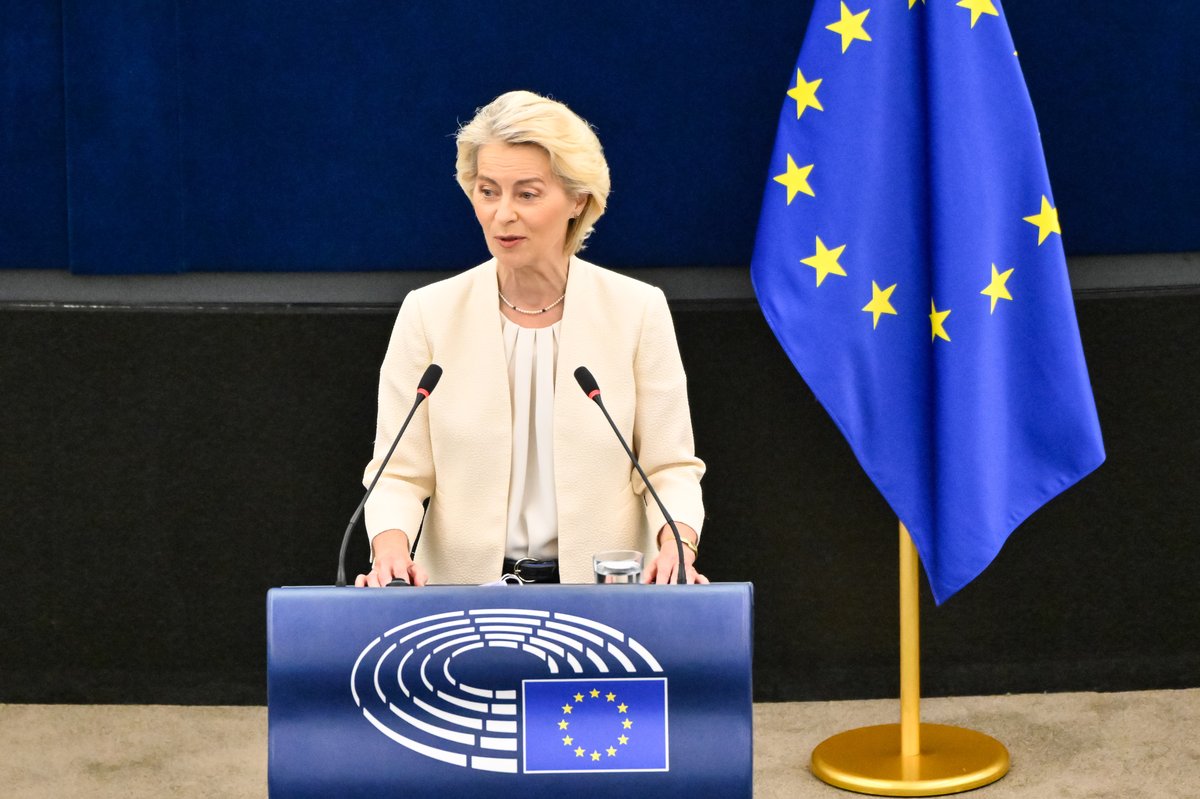
The highlight of the September 2026 plenary session was Commission President Ursula von der Leyen's 2026 State of the Union address, a reflection on the EU's work and priorities over the past year, and a signal of what lies ahead.
Other debates focused on European security and foreign policy, including Russia's hybrid attacks against Member States, EU support for Ukraine, the escalation in the Middle East, and a coordinated response to threats to European security and democracy. Debate also took place on public procurement and fair labour mobility.
Climate and environmental issues debated included the lessons from the 2026 heatwaves, wildfires and drought, as well as the impact of the Packaging and Packaging Waste Regulation.
Fundamental rights and the rule of law were addressed through discussions on the LGBTIQ+ community and non-discrimination in Türkiye, as well as the glorification of war crimes in Serbia following Ratko Mladić's funeral. Members also addressed the subject of the devastating floods in Nepal, which highlighted humanitarian needs and international solidarity.
Finally, Canadian Prime Minister Mark Carney addressed the European Parliament in a formal sitting.
State of the Union 2026
The President of the European Commission, Ursula von der Leyen, presented the 14th State of the Union address – a reflection on the EU's work and priorities over the past 12 months, and a signal of its next steps. The annual State of the Union address provides an opportunity for Parliament to hold the Commission to account and actively participate in shaping the EU's agenda. Von der Leyen's speech covered her seven overarching priorities for the 2024-2029 mandate, and set out the Commission's plans for the coming year on competitiveness, AI and social media, climate resilience, jobs, security and defence and Ukraine, and migration, among other things.
Emissions trading
The EU's carbon border adjustment mechanism (CBAM) aligns the price of imports with the carbon emissions they create. Members debated and adopted reports from the Committee on the Environment, Climate and Food Safety (ENVI) on two proposals: one to widen the scope of the CBAM and one to create a related, temporary decarbonisation fund. The latter would provide financial support to manufacturers whose competitiveness is particularly impacted by the CBAM. A further proposal, on adjusting the market stability reserve (MSR) for companies' carbon allowances aims to reverse the rule that allowances in the MSR above a specific threshold are invalidated, and cannot be put back into the market. These allowances would in future be able to be used during market fluctuations, whilst the integrity of the EU's emissions trading system would be maintained. The ENVI committee would like to see the proposed 180 additional downstream goods (products at a later stage in the supply chain) in the CBAM increased to 457. The committee also calls for the creation of two new categories in the temporary decarbonisation fund that are eligible for support (cement and cereal), and for remaining funding to go towards the EU's international climate contributions rather than returned to Member States. Regarding the MSR, the ENVI committee recommends that allowances in the reserve be invalidated once the 650 million threshold (currently 400) is passed, rather than abolishing the rule. The vote on the proposals sets Parliament's position for negotiations with the Council.
Defence – Omnibus V
Members debated and adopted the three legislative files that make up the Defence Readiness Omnibus package, aiming for a swifter, simpler, and therefore stronger EU defence industry. The changes would accelerate permit-granting, facilitate defence investment, and simplify intra-EU defence product transfers and procurement. Parliament has already shaped these files during interinstitutional negotiations, including reducing the administrative burden and increasing support for small and medium-sized enterprises, further simplifying implementation of the European Defence Fund.
Single market and customs union
Members adopted Parliament's position on the proposed single market and customs programme. This sectoral file under the proposed EU long-term budget for 2028-2034 (the multiannual financial framework) merges five current, standalone programmes into one instrument. The Committee on the Internal Market and Consumer Protection (IMCO) report suggests a number of amendments, such as an additional 10 % in the budget for the proposed programme. The IMCO report also seeks to reduce the Commission's proposed flexibility to reallocate funds between policy areas, preferring to allocate specific budgets to specific objectives.
In parallel, Members debated an early second-reading agreement on a law to replace the Union Customs Code. The report was approved without vote as no amendments were tabled. An interinstitutional agreement on the file seeks to establish an EU Customs Authority to oversee an EU customs data hub centralising analyses for Member States, to be functional from July 2028, and fully operational by 2034. The hub will initially be used for goods sold online from non-EU countries and then gradually expand its capacities.
European Democracy Shield
Parliament considered and adopted the own-initiative report drafted by Parliament's Special Committee on the European Democracy Shield (EUDS). The EUDS was established in 2024 to scrutinise and support development of the European Democracy Shield; a framework for addressing a wide range of threats (primarily foreign interference) and bolstering democratic resilience. The report backs the proposed EU centre for democratic resilience to gather expertise from different Member States, and advocates for a legal act and budget. The report stresses the dangers of foreign and hybrid interference (identifying Russia as the primary threat in this regard) as well as the importance of investigative journalism and media literacy.
2026 European Union budget
Parliament voted on the Council's position on the Commission's proposed amendments to the EU's budget for 2026 (DAB 2/2026). Parliament's Committee on Budgets (BUDG) recommended support forthe Commission's planned mid-year adjustments to expenditure based on the updated revenue forecast.
European Union–Switzerland cooperation
Members agreed to follow a recommendation from the Committee on Civil Liberties, Justice and Home Affairs (LIBE) that Parliament give its consent to the agreement between the EU and Switzerland to share passenger name records (PNR). The agreement enables PNR information (created when booking a flight) to be used in the detection and prevention of crime and terrorism. The agreement sets out rules for data processing and data protection, as well as strengthening communication between Swiss and Member State authorities, Europol and Eurojust.
Fisheries
The EU is a contracting party to 18 regional fisheries management organisations (RFMOs), which govern areas beyond national jurisdiction. It must therefore implement recommendations and decisions made by these RFMOs into EU law. Members adopted provisional agreements with the Council on two such regulations: one encompasses measures adopted in recent years by six RFMOs. The other relates specifically to General Fisheries Commission for the Mediterranean measures in areas beyond national jurisdiction in the Mediterranean and the Black Sea.
Opening of trilogue negotiations
Four decisions to enter into interinstitutional negotiations – from the Committee on Economic and Monetary Affairs (ECON), on non-financial commercial real estate statistics; from the Committee on Legal Affairs (JURI), on geographical indications: aligning EU rules with changes to the provisions under the Lisbon Agreement, from the Committee on Agriculture and Rural Development (AGRI) on amending certain production, labelling and certification rules and certain rules on trade with third countries; and from the Committee on Industry, Research and Energy (ITRE) on Trans-European energy infrastructure: guidelines (TEN-E Regulation) (the Grids Package) – were approved without votes.
Annex: Voting results for legislative files
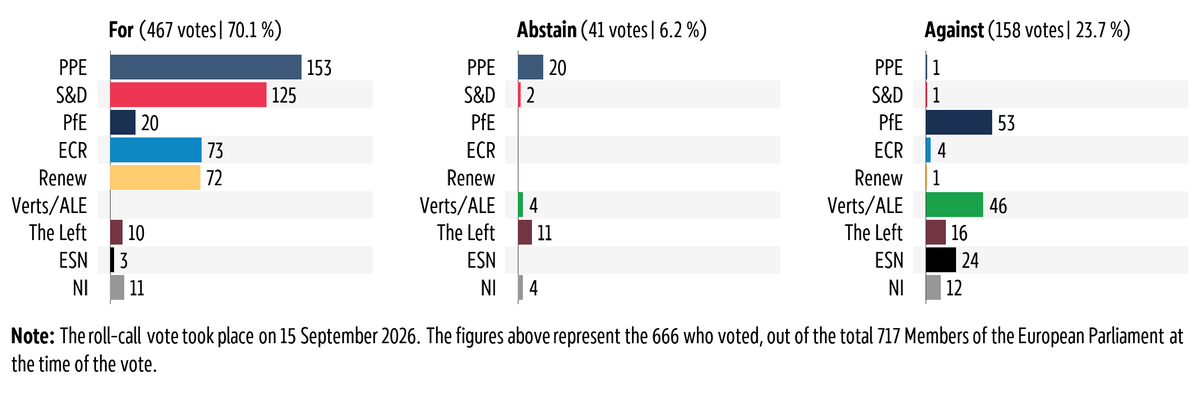
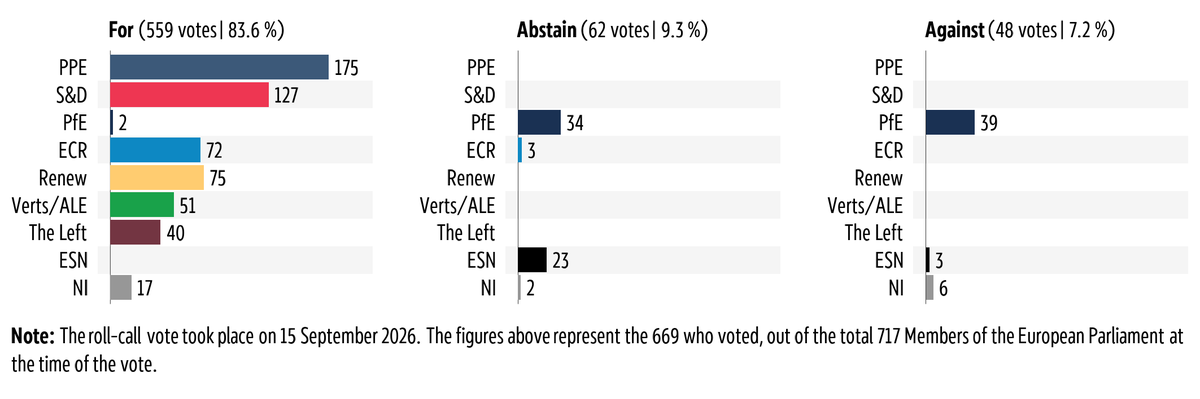
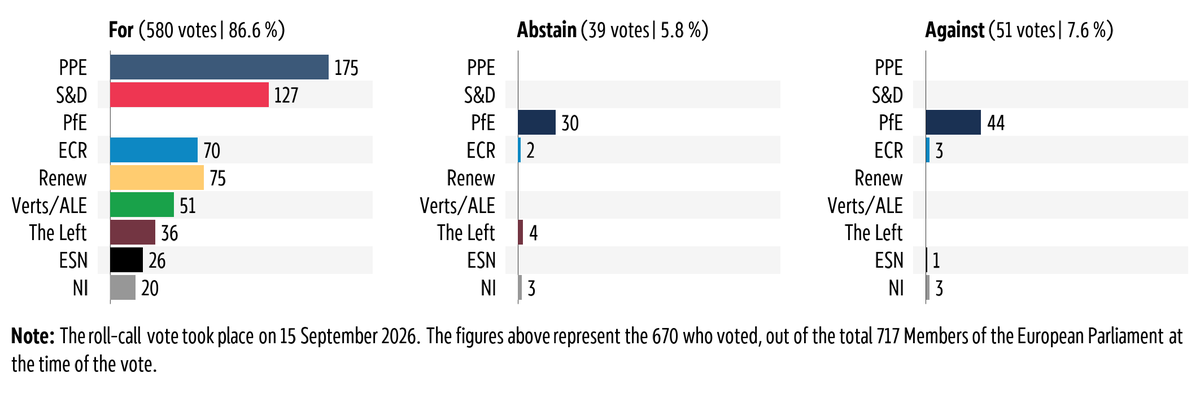
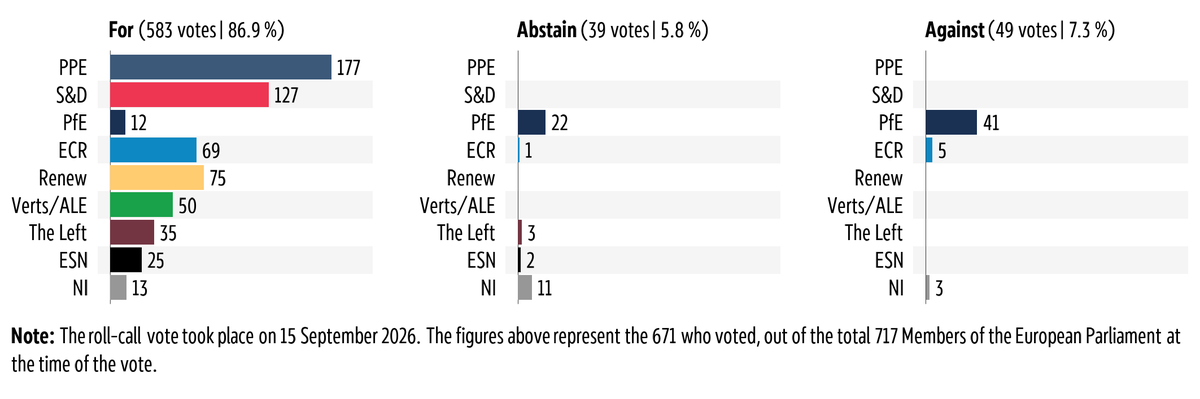
The graphics below show the voting by political group in the final roll-call votes for the files decided under the ordinary legislative procedure or consent procedures during this plenary session.
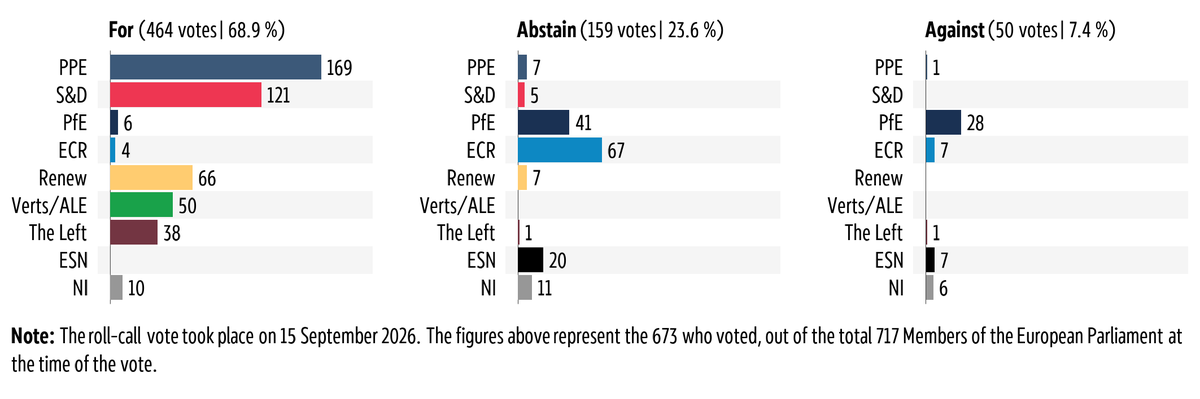
Data source: EP Open Data Portal
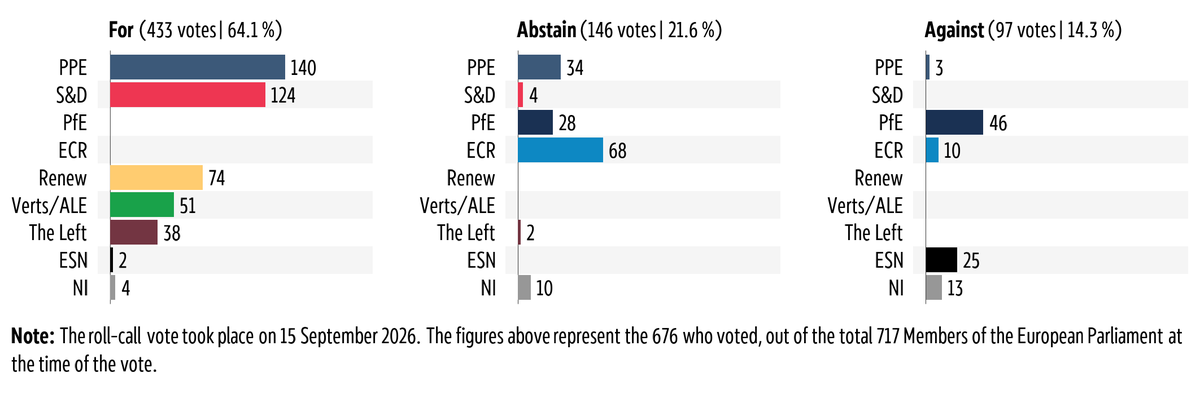
Data source: EP Open Data Portal
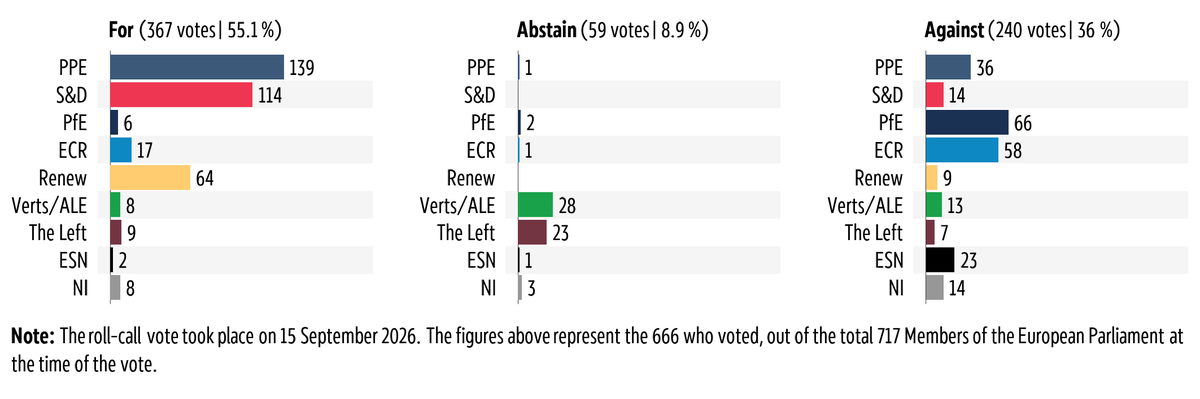
Data source: EP Open Data Portal
Data source: EP Open Data Portal
Data source: EP Open Data Portal
Data source: EP Open Data Portal
Data source: EP Open Data Portal
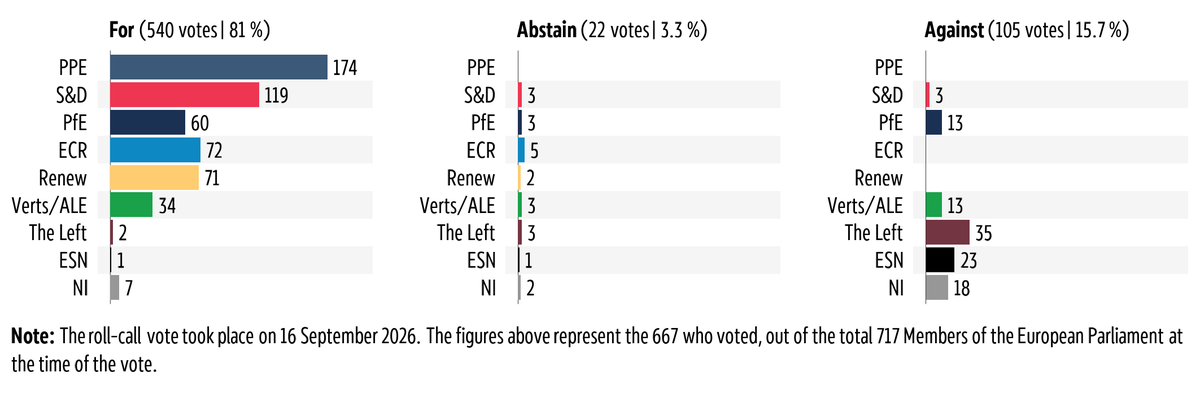
Data source: EP Open Data Portal
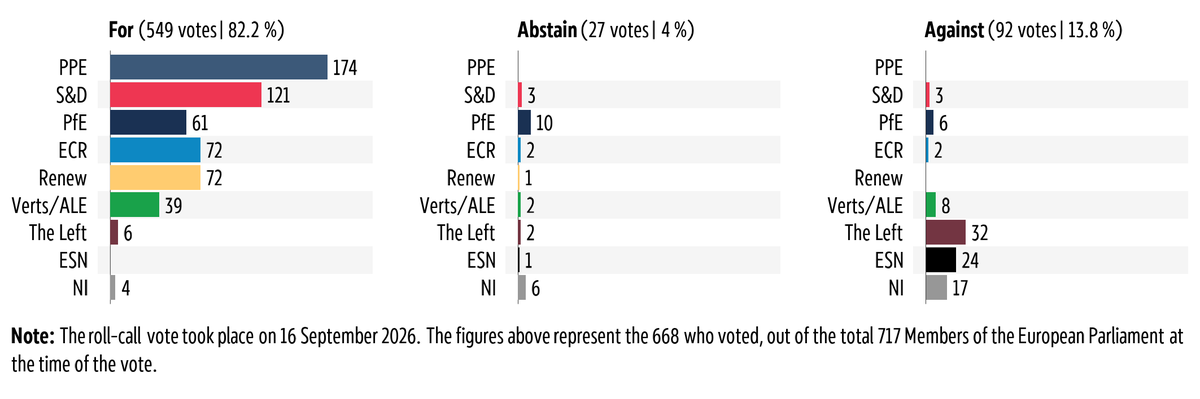
Data source: EP Open Data Portal
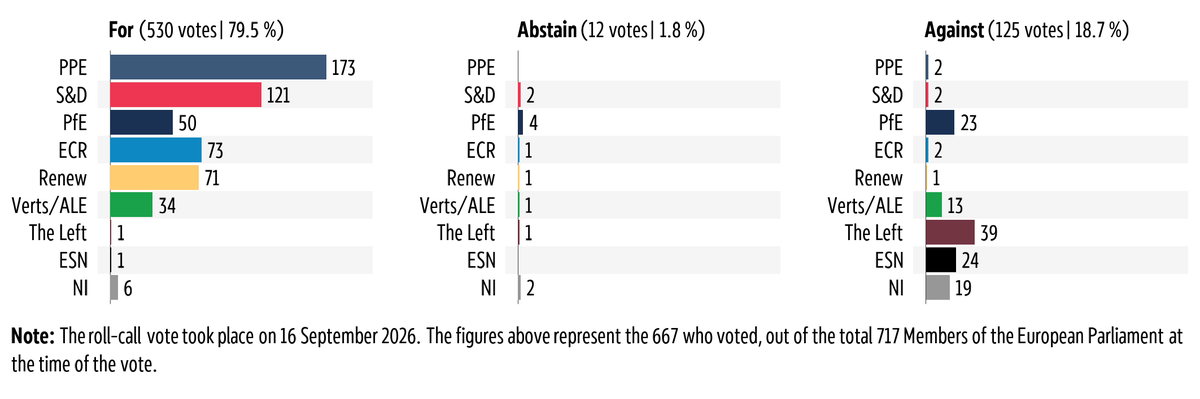
Data source: EP Open Data Portal
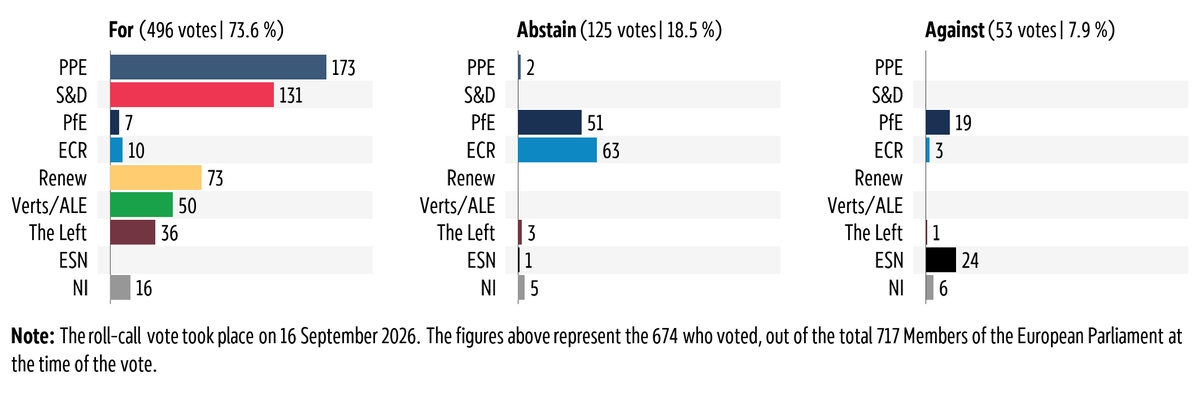
Data source: EP Open Data Portal
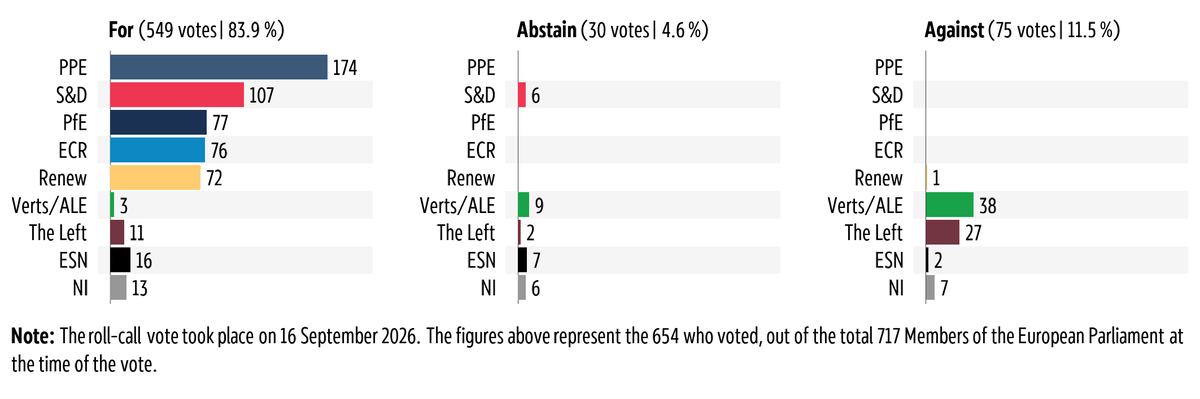
Data source: EP Open Data Portal
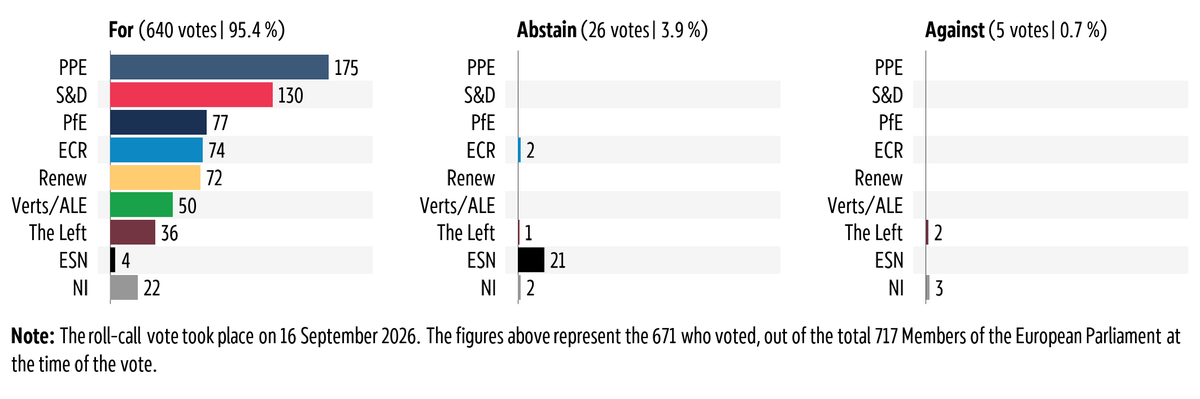
Data source: EP Open Data Portal
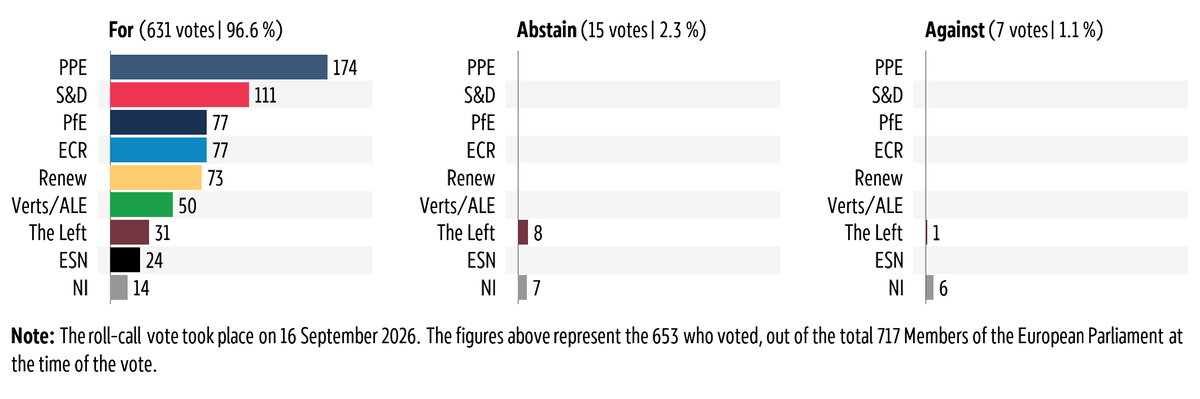
Data source: EP Open Data Portal
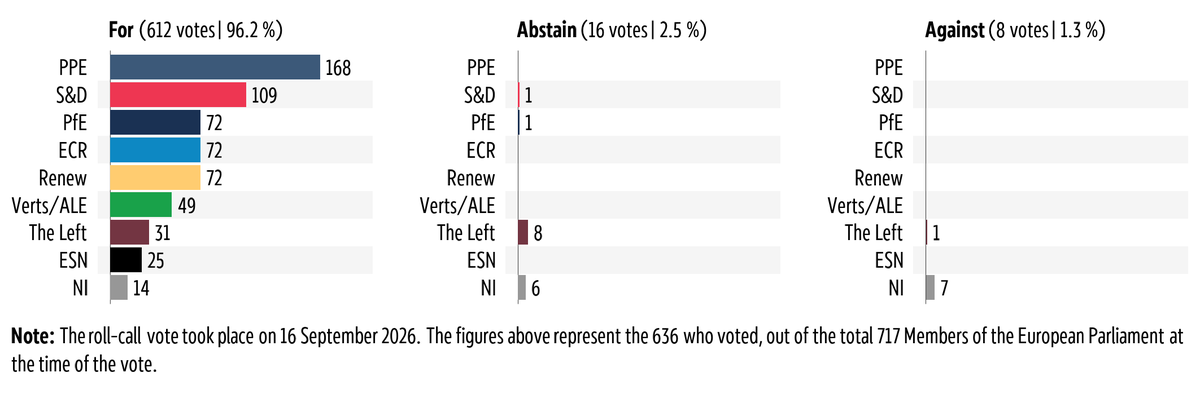
Data source: EP Open Data Portal
Statement on the use of AI
Any AI-generated content in this text has been reviewed by the author(s).
Disclaimer
This document is prepared for, and addressed to, the Members and staff of the European Parliament as background material to assist them in their parliamentary work. The content of the document is the sole responsibility of its author(s) and any opinions expressed herein should not be taken to represent an official position of the Parliament.
Copyright
© European Union.
The reuse of this document is authorised under a Creative Commons Attribution 4.0 International (CC-BY 4.0) licence.

https://creativecommons.org/licenses/by/4.0/deed.en
To use or reproduce elements that are not owned by the European Union, permission may need to be sought directly from the respective rightsholders.