
Article page checkbox is not checked in page info.
Status of Taiwan (ROC) in an era of growing tension
Status of Taiwan (ROC) in an era of growing tension
Ulrich Jochheim, Members' Research Service
Summary
The issue of Taiwan (Republic of China, ROC) and of its future has been a major bone of contention between the United States and the People's Republic of China, at least since the US Congress passed the 'Taiwan Relations Act' in 1979. This issue has, however, gained considerably in attention in Europe, particularly since the start of the illegal Russian war of aggression against Ukraine.
According to the Chinese readout published after the summit between Chinese leader Xi Jinping and US President Donald Trump in mid-May 2026 in Beijing, once the press had left the meeting room, President Xi had insisted that 'the Taiwan issue is the most critical issue in China-U.S. relations'. Following the summit, President Trump stated that the US does not support the independence of Taiwan, but refused to comment on the envisaged US arms sales to Taiwan.
While there are no official diplomatic relations between the European Union and Taiwan (ROC), both sides cooperate not only on commercial issues, but also on disinformation and cyber-resilience. The EU also categorically opposes the use of force in the Taiwan Strait.
Political system
Taiwan (officially the Republic of China, ROC) is a mountainous island with a population of 23 million people that is located off the coast of south-east China, between the Philippines and Japan. With a total area of around 35 834 km², Taiwan is only slightly larger than Belgium. Four colonial powers invaded and ruled the island for a total of four centuries: the Dutch and Spanish (1624-1668), the Chinese Qing Dynasty (1683-1895), the Japanese (1895-1945), and finally the Republic of China (1945-1987).
From 1945 to 1949, China was (again) in a civil war for control between the Nationalists (Kuomintang, KMT) and the Communists under Mao Zedong. Chiang Kai-Shek, leader of the KMT, moved the Republic of China to Taiwan in 1949 after the KMT's retreat from the mainland to the island. Chiang Ching-Kuo (Chiang Kai-Shek's son) governed Taiwan following his father's death in 1975 and lifted martial law in July 1987. Chiang Ching-Kuo passed away in January 1988 and the decision by the KMT and the army to make Lee Teng-hui (of Taiwanese origin, but a member of the KMT) his successor marked a decisive step in Taiwan's democratic transition.
Since then, Taiwan's political system has been dominated by the KMT and the Democratic Progressive Party (DPP) founded in 1986. The first direct presidential elections were held on 23 March 1996 and confirmed President Lee Teng‑hui in office. In 2000, the candidate of the DPP, Chen Shui-bian, was elected President (and was re-elected in the 2004 election). From 2008 to 2016, Ma Ying-jeou from the KMT was Taiwan's leader. Ever since, Taiwan has been led by a President from the DPP, currently Lai Ching-te (since 2024). In the parliamentary elections to the Legislative Yuan in 2024, the KMT won 52 seats, the DPP 51 seats and the smaller Taiwan People's Party 8 seats – marking the first time since the introduction of free elections that neither of the two big parties gained an absolute majority.
The outbreak of the Korean War on 25 June 1950 transformed relations between the US, Taiwan (ROC) and China (PRC). Prior to the conflict, the US had adopted a non-interventionist approach towards the Chinese Civil War. In response to the North Korean invasion of South Korea, President Harry S. Truman ordered the US Seventh Fleet into the Taiwan Strait on 27 June 1950. This aimed to prevent the conflict from expanding and a potential invasion of Taiwan by the PRC. This military move placed Taiwan under US protection, thereby shifting the previous non-interventionist approach.
Taiwan's leader, President Lai Ching-te, declared on 13 March 2025 that China was a 'foreign hostile force' exploiting Taiwan's freedoms in order to 'divide, destroy, and subvert us from within'. Lai stated that an additional special budget would potentially be used to raise defence spending to more than 3 % of GDP. However, in May 2026, this budget was approved by the legislature in a significantly reduced version, intensifying concerns that this might provoke a weakening of the US commitment to Taiwan's security. These historical developments underline that Taiwan's current situation is not only related to China but is also linked to its broader international relations.
International status of Taiwan (ROC)
Since 1971, when the United Nations switched recognition to the People's Republic of China (PRC) with UN Resolution 2758, Taiwan (ROC) has been excluded from the UN system. Following this loss of UN membership, a wave of countries shifted recognition from Taipei to Beijing. Over the ensuing decades, China steadily whittled down Taiwan's remaining allies, using economic and political leverage to persuade countries to switch recognition. However, Taiwan still has unofficial offices around the world such as the 'Taipei Economic and Cultural Representative Office (TECRO)' in Washington and the 'Taipei Representative Office in the EU and Belgium' that represent the interests of Taiwan.
The EU Member States do not officially recognise Taiwan as a sovereign state. Only 12 independent countries around the world recognise the Taipei government, including the Holy See (Vatican). Nevertheless, the EU has an economic and trade office in Taiwan, and 16 EU Member States have representative offices in Taipei.
Since 2002, Taiwan has also been part of the World Trade Organisation under the name 'Separate Customs Territory of Taiwan, Penghu, Kinmen and Matsu (Chinese Taipei) and the WTO'. Among these international relationships, the United States stands out as the most significant security and political partner of Taiwan.
Taiwan (ROC)–US relations
In January 1950, the Truman administration decided not to intervene militarily in Taiwan or support the KMT government there, prioritising other regions over Taiwan for strategic interests and defence. However, this stance shifted rapidly after the outbreak of the Korean War. Following the war, the US began providing military and economic support to Taiwan to prevent it from falling to the PRC. US economic aid helped stabilise Taiwan's post-war economy and contributed significantly to its future economic growth, while military aid built the foundation for Taiwan's defence infrastructure.
In 1971, Henry Kissinger, the US National Security Advisor at the time, started to engage in secret missions with the People's Republic of China, bypassing diplomatic channels. This engagement with the PRC culminated in President Nixon's visit to Beijing in February 1972. This marked an important moment in international relations and reshaped US– China relations, symbolising the end of 25 years of isolation between the US and the PRC. In 1979, the United States recognised the (Communist) PRC regime as the government of China. This recognition led to the US severing formal diplomatic ties with Taiwan.
After US President Carter recognised the PRC and severed official ties with Taiwan, Congress responded by passing the Taiwan Relations Act (TRA). The TRA established US support for Taiwan's self-defence and gave Congress a formal role in approving arms sales and assessing threats to Taiwan's security. Congress has, ever since, consistently framed its Taiwan policy around democracy, human rights, and shared values. In 2025, the Senate passed the Porcupine Act, aimed at expediting arms transfers and enhancing Taiwan's access to asymmetric defence systems. Following that, Congress enacted the Taiwan Assurance Implementation Act, obliging regular reviews of guidance governing relations with Taiwan and reaffirming US security commitments. Furthermore, in April 2026, a bipartisan group of US senators indicated that pending weapons sales, such as counter-drone assets, battle command systems, and medium-range munitions, were likely to be approved in the coming weeks, confirming US commitments to Taiwan's defence once again. However, following the summit between Chinese leader Xi Jinping and US President Donald Trump in Beijing in mid-May 2026, it is far from obvious whether President Trump will approve those weapons sales.
As competition between the US and China slowly grew over recent decades, rivalries reached an intensive moment with then US Congress Speaker Nancy Pelosi's visit to Taiwan in 2022. Pelosi's visit symbolised US commitment and reassurance to Taiwan and prompted the PRC government in Beijing to conduct large-scale military exercises and apply economic sanctions to Taiwan. This situation marked a serious deterioration in US–China relations.
Taiwan (ROC)–China (PRC) relations
Taiwan (ROC) was highly irritated by the US recognition of Beijing. After 1979, China abandoned its hard-line stance of 'liberating Taiwan' by force and began promoting peaceful unification, offering Taiwan a high degree of autonomy under a 'One Country, Two Systems' model, though this gained little traction in Taiwan. Taiwan therefore focused on improving the economic and social life of its citizens, for example by instituting new reforms and encouraging civil society and democratic development. Moreover, there was a dismantling of the institutional bodies inherited from the mainland (like the National Assembly elected in the whole of China in 1947) to reflect the realities on the island. This caused an evolution of Taiwan's politics and an acceleration of changes within the island.
Taiwan underwent large-scale democratic reforms after 1987, leading to the first direct presidential election in 1996. This reinforced Taiwan's political identity and made reunification under PRC terms increasingly unpopular. Taiwan's democratic push, and especially President Lee Teng-hui's visit to the US in 1995, angered Beijing and sparked the Taiwan Strait Crisis, during which China conducted missile tests near Taiwan. The US reacted by sending two aircraft carrier groups to the region, the largest US naval deployment in Asia since the Vietnam War.
Despite political tensions, Taiwan's economic assimilation with China deepened in the 2000s. By the early 2000s, over 40 % of Taiwan's exports went to China or Hong Kong, and thousands of Taiwanese businesses were operating on the mainland. Agreements like the Economic Cooperation Framework Agreement (ECFA), signed in 2010, formalised trade ties and normalised investment channels. While economic links have grown, people in Taiwan increasingly identify as Taiwanese rather than Chinese, making political unification even less likely.
The year 2049 is believed to be a critical date, as this will mark the People's Republic of China's centennial anniversary. For the 'Chinese Dream', which sees China's international status restored, Xi Jinping emphasised that reunification with Taiwan is essential. Whether this reunification is achieved through peaceful or aggressive means is still up for debate, and so is the exact time frame for the Chinese administration.
On 1 April 2025, China's armed forces launched large-scale military exercises. Taiwan retaliated by deporting several social media personalities that they saw as being a 'growing threat from within' to the Chinese mainland. Subsequently, on 29 December 2025, China launched the 'Justice Mission 2025' exercise, structured as a comprehensive encirclement of Taiwan. The drills underscored a continued emphasis on rehearsing scenarios aimed at strangling Taiwan through blockade. As of April 2026, China has also signalled a forthcoming far-sea training of Fujian , China's third aircraft carrier which is expected to achieve full combat capability in 2026. In response, Taiwan's Defence Minister Wellington Koo stated that anti-blockade drills, including blockade and isolation scenarios, are already incorporated into existing military planning and exercises.
On 10 April 2026, President Xi Jinping and KMT Chair Cheng Li-wun held their first high-level meeting in over a decade. Both sides expressed a desire for cross-strait peace and signalled a symbolic restoration of communication channels. This may be interpreted as China's 'dual-track' strategy, combining military pressure with political engagement with the KMT to influence public opinion in Taiwan.
EU–Taiwan (ROC) relations
The EU's official policy on Taiwan is directed by its One China policy. This means that the EU (and its Member States) recognise the government in Beijing (People's Republic of China) as the sole legitimate government of China. At the same time, the EU maintains that Taiwan's future should be decided by peaceful means and the democratic choices of its people, consistent with Europe's commitment to a rules-based international order.
In November 2024, Taiwan's leader Lai Ching-te called for an economic partnership agreement with the EU, emphasising that such an agreement would bolster cooperation in semiconductors and contribute to building secure supply chains for global democracies.
In the eyes of the European Union, Taiwan is a thriving democracy, a like-minded partner, an open and dynamic economy, an attractive destination for investment and an unbeatable producer of cutting-edge technology that keeps the modern world running. The EU's One China policy also leaves room for practical engagement with Taiwan. The European External Action Service (EEAS) emphasises that Taiwan is a 'reliable and valued like-minded partner' in Asia, sharing the EU's values of democracy, human rights and rule of law.
The European Parliament's first mission to Taipei was conducted in November 2021 by a delegation from the Special Committee on Foreign Interference and Disinformation (INGE). The delegation met with President Tsai Ing-wen to discuss innovative strategies against cyber-resilience and disinformation, emphasising Taiwan's role as a front-line partner in defending democracy.
The EU is Taiwan's fourth largest trading partner after the PRC, the US and Japan.The EU is also Taiwan's largest foreign investor. Since 1988, the European Chamber of Commerce Taipei has represented the interests of EU business in Taiwan, with 30 established sector committees to date. Taiwan was the EU's 13th biggest trading partner in 2025 and its total goods trade with the EU-27 reached €76.2 billion. EU exports to Taiwan and EU imports from Taiwan amounted to €30.9 billion and €45.3 billion respectively.
The EU's largest export categories to Taiwan are semiconductor machinery (21 % of total goods exports in 2023), passenger cars (12 %), integrated circuits (10 %), and pharmaceuticals (6 %). EU imports from Taiwan are dominated by information and communication technology products. The largest categories are integrated circuits (microchips, etc.), which accounted for 23 % of EU goods imports from Taiwan in 2023, computers and their parts (accounting for 21 %), and phones (7 %).
For the EU, reducing vulnerability in the domain of very advanced ITC products has become a top priority. In early 2022, the European Commission launched the European Chips Act, a comprehensive strategy to boost Europe's domestic semiconductor capacity and ensure supply chain security. The EU's goal is to roughly double its share of global chip production to 20 % by 2030, up from around 9-10 % today. On 3 June 2026, the Commission proposed a Chips Act 2.0 seeking to stimulate demand for EU-made chips in order to reduce dependencies, while strengthening cooperation with international partners, like Taiwan, through strategic partnerships on semiconductors.
Semiconductors
Taiwan's 'Silicon Shield' is a term that describes the semiconductor chip-making capacity that protects the island. The semiconductor supply chain that Taiwan has is a key aspect of the competition between the US and China. Japan is involved in the design phase and provides equipment and materials for front-end semiconductor manufacturing.
A trilateral MOU was signed between Arizona (US), Kaohsiung City (Taiwan), and Kumamoto Prefecture (Japan) on 12 March 2026. The agreement aims to strengthen collaboration across semiconductor ecosystems, including manufacturing, workforce development, and supply chain resilience. It reflects broader efforts to reduce dependence on China and geopolitical risks. China is the world's largest chip market but it is mainly involved in back-end semiconductor manufacturing (and has a close relationship with South Korea in front-end manufacturing). China, Japan and South Korea each play significant roles in the semiconductor value chain and hold substantial shares in the global market. In 2022, South Korea held a 19 % global market share, Japan had 9 %, and China accounted for 7 %.
Taiwan occupies a dominant position in global semiconductor manufacturing, producing an estimated 60 % of the world's semiconductors (including 90 % of the most sophisticated ones). Taiwan Semiconductor Manufacturing Company (TSMC) is the world's largest contract chipmaker ('foundry'), manufacturing chips for countless consumer electronics, automotive, and industrial applications on behalf of clients worldwide. The cutting-edge microprocessors that enable smartphones, high-performance computing, artificial intelligence, and advanced military systems are overwhelmingly fabricated in Taiwan. Until recently, TSMC was the only company capable of volume-producing the most advanced 5-nanometer (nm) and 3-nanometer chips and, as of late 2025, TSMC has commenced mass production of its 2-nanometer chips as well. This concentration brings efficiency and expertise, but also creates a single point of failure risk for the global economy. As one report noted, if disruption (for instance, war or a blockade) were to cut off Taiwan's chip exports, it 'could cripple the global technology and artificial intelligence sectors'.
Especially in the field of artificial intelligence, Taiwan has emerged as a dominant player in global exports. Taiwan's total exports reached US$641 billion in 2025, representing a 35 % year-on-year increase. A large share of this growth was driven by three categories: data processing machines, integrated circuits and related parts. Taiwanese companies are now estimated to produce 90 % of the world's AI servers, reflecting the rising global demand for AI servers produced in Taiwan. However, this also highlights the substantial risks associated with heavy global dependence on Taiwan's semiconductor sector, including AI.
The COVID-19 pandemic exposed how dependent Europe is on Asian (especially Taiwanese) chip suppliers for everything from cars to medical devices. In strategic terms, semiconductors are now as critical to economies as oil or steel; Taiwan's silicon output is therefore a strategic asset.
Mitigating this vulnerability through production inside the EU could be a cornerstone of the EU's strategy to enhance supply chain resilience. In October 2021, Taiwan's Minister of Economic Affairs led a delegation to Brussels for the first EU–Taiwan high-level dialogue on supply chain cooperation, with a focus on semiconductors. TSMC agreed to invest in its first-ever European fab (production facility for semiconductors). In August 2024, the company announced a €10 billion joint venture to build European Semiconductor Manufacturing Co. (ESMC), a semiconductor plant in Dresden, Germany, dedicated mainly to producing chips for automotive and industrial uses. It will be TSMC's first plant in Europe, and will be owned by TSMC, with European firms Bosch, Infineon, and NXP involved. TSMC has already relocated dozens of Taiwanese and their families to Dresden, and approximately 2 000 employees and their families are expected to settle there for at least three years. To accommodate this influx, the city is expanding housing and transport infrastructure, increasing capacity in international schools, and establishing administrative support systems. ESMC will be the largest semiconductor investment in Dresden's history and is expected to create more than 5 000 jobs in the city. The EU approved a €5 billion State aid package – the largest subsidy so far under the Chips Act framework – to support this project. This has created a new milestone in EU–Taiwan (ROC) tech cooperation.
Taiwan's priority is to maintain its technological edge, so understandably it guards its most advanced know-how. For example, TSMC has been cautious about deploying its latest nodes outside of Taiwan – its overseas factories (in the US, with planned factories in Japan and Germany) have so far been planned primarily for slightly older technology. While Taiwanese facilities have started volume production of 2nm technology, overseas fabs are generally assigned previous nodes. The US fab is expected to begin 3nm mass production as early as the second half of 2027. Similarly, in Kumamoto, Japan, TSMC plans to manufacture 3nm chips at its second plant, marking a major upgrade to its initial plan of producing 6nm to 12nm chips. Conversely, the ESMC facility in Germany will focus on 12nm to 28nm technology. This confirms that, while the technological gap is narrowing in the US and Japan, the European partnership is currently centred on mature nodes essential for the automotive and industrial sectors.
Strategic developments
Russia's invasion of Ukraine in February 2022 has increased attention towards Taiwan and its future. Partly because of this, Taiwan's unofficial relations with eastern European and Baltic states have deepened.
Joint military exercises between the US military, the Japanese Self Defence Forces and the Australian Defence Force named 'Keen Edge' were held in February 2024. This simulated a Taiwan invasion scenario by Chinese forces. The exercise included land, air, sea, space and cyber operations. This exercise reinforced existing commitments of the participating nations and their militaries to combined retaliation in the region.
Taiwan's 'Porcupine Strategy', which entails warding off attackers, has been promoted by analysts. This strategy prioritises the deployment of large numbers of small, cheap, agile weapons rather than expensive conventional hardware. By leveraging Taiwan's rugged geography and sea-crossing difficulties, effective short-range anti-air and anti-ship defences could buy critical time for allied intervention or increase the risk that an invasion attempt would fail. The prospect of failure and the costs of long-term conflict could deter China from initiating an invasion that could drag on with negative consequences.
The island is also a core element in the 'First Island Chain', and Taiwan's fall would greatly alter the strategic balance in the western Pacific. The United States and Japan, as allies, play essential roles in fortifying these island chains under their security doctrines. A secondary defensive perimeter – the 'Second Island Chain' - further out in the western Pacific (around 1 500-2 000 km from China) includes key US territories like Guam and US-allied jurisdictions. It provides bases for US power projection and a fall-back line if the first chain is breached.
To back up its defence in view of rising US demands, Taiwan's government proposed a massive US$40 billion special defence budget in 2025. This plan, which runs until 2033, focuses heavily on asymmetric tools rather than traditional hardware. Key purchases include HIMARS long-range rocket system, ALTIUS drones, and the 'Taiwan Dome', a new AI-powered missile defence system. However, these military plans were stuck for a long time in Taiwan's complicated domestic politics. Since the 2024 elections, the government has been split: the Democratic Progressive Party holds the presidency, but the opposition (KMT and Taiwan People's Party) controls the legislature. This has led to a political deadlock, with the opposition resisting for a very long time the government's proposed US$40 billion package and ultimately approving a reduced version of US$25 billion in May 2026. The opposition argued that the original proposal risked excessive spending and heightened cross-strait tensions, while emphasising the need for a more stable relationship with China.
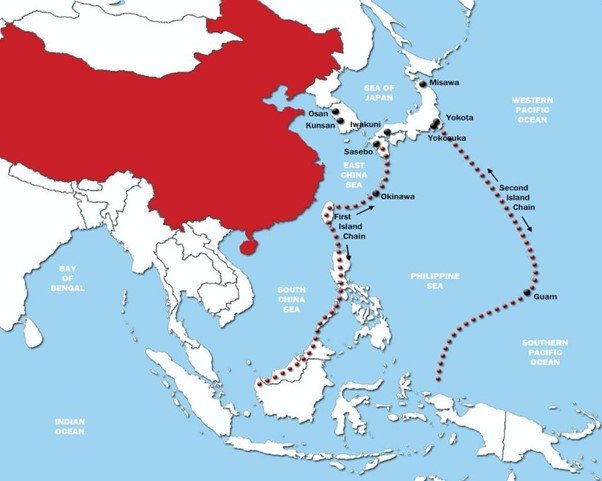
Source: Odrobiński-Stąporek, J., Outline of geopolitical situation in the South China Sea, 2017.
Classification
Policy areas: Foreign Affairs
Regions: Asia and Pacific
Committees: Foreign Affairs (AFET)
Statement on the use of AI
Any AI-generated content in this text has been reviewed by the author.
Disclaimer
This document is prepared for, and addressed to, the Members and staff of the European Parliament as background material to assist them in their parliamentary work. The content of the document is the sole responsibility of its author(s) and any opinions expressed herein should not be taken to represent an official position of the Parliament.
Copyright
© European Union.
The reuse of this document is authorised under a Creative Commons Attribution 4.0 International (CC-BY 4.0) licence.

https://creativecommons.org/licenses/by/4.0/deed.en
To use or reproduce elements that are not owned by the European Union, permission may need to be sought directly from the respective rightsholders.