
Article page checkbox is not checked in page info.
Revision of EU energy product legislation – Implementation takeaways
Revision of EU energy product legislation – Implementation takeaways
Hubert Dalli and Alexandre Lotito, Ex-Post Evaluation Unit
Key findings
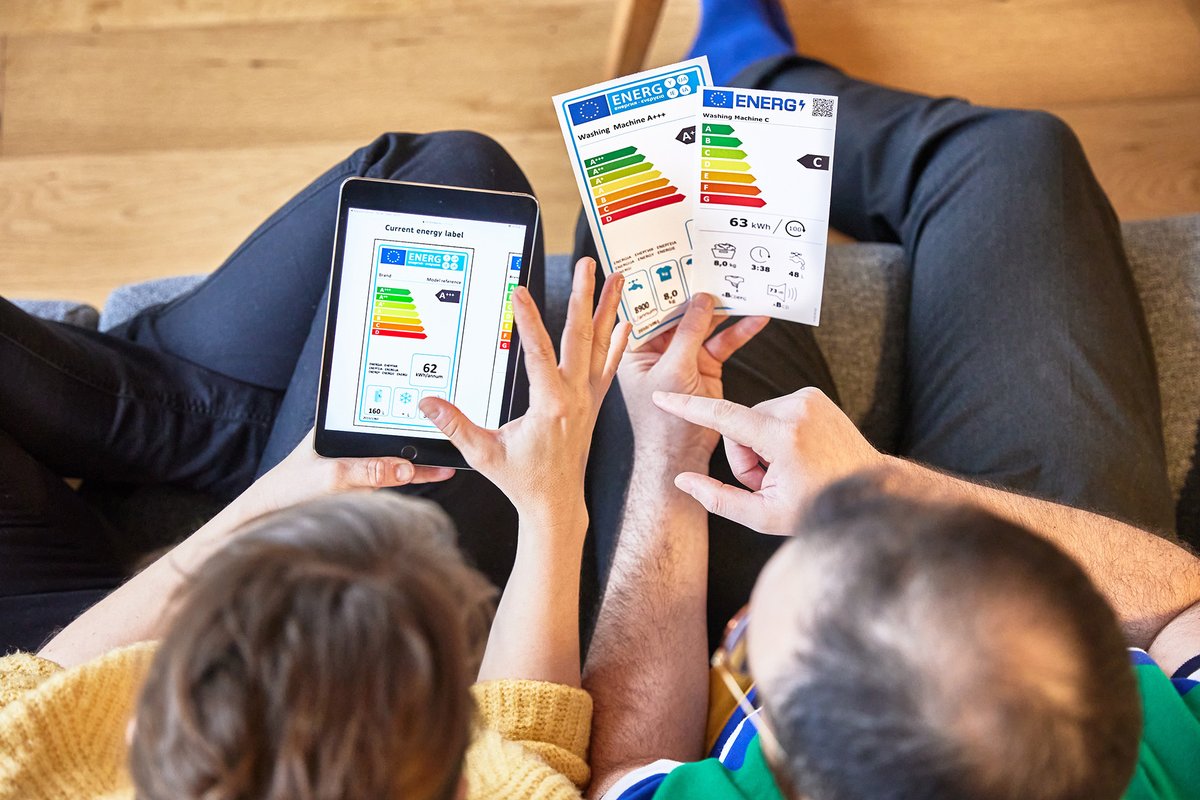
This briefing examines the implementation of the EU Energy Labelling Framework and the related Tyre Labelling Regulation in the context of the wider simplification agenda of the Commission for 2026 and the omnibus on energy-product legislation expected on 24 June 2026. Energy labelling remains an important instrument for enabling consumers to compare products, supporting energy savings, and encouraging innovation in more efficient products. Available evidence suggests that EU action has contributed effectively to the objectives of the policy. However, implementation has been weakened by delays in updating product-specific rules and labels, persistent non-compliance by manufacturers and retailers, and uneven enforcement, particularly in online sales and for products imported from third countries.
Key issues include reducing unnecessary administrative burden while preserving consumer trust in labels; improving the usability and interoperability of the energy-product database; clarifying responsibilities across the supply chain, including for retailers, online marketplaces, importers and installers; and ensuring that label rescaling is timely, predictable and understandable for consumers. Stakeholder views point to a need for simplification that improves compliance and usability without weakening the visibility, comparability and enforceability of energy information at the point of purchase.
Purpose statement
This briefing is one in a series of implementation appraisals produced by the European Parliamentary Research Service (EPRS) on the operation of existing EU legislation in practice. Each briefing focuses on a specific EU law that is announced to be amended or reviewed in the European Commission's annual work programme. Implementation appraisals aim at providing a succinct overview of publicly available material on the implementation, application and effectiveness to date of that specific EU law, drawing on input from EU institutions and bodies, as well as external organisations.
Background and existing EU policy framework
The first measure at EU level addressing the issue of providing information on energy use to consumers was adopted in 1976. Council recommendation of 4 May 1976 on the rational use of energy for electrical household appliances aimed to provide buyers with comprehensible and standardised information on the power consumption of electrical household appliances 'with a view to encouraging them to buy those which use energy most economically'. This was followed in 1979 with the first framework energy labelling directive and the first EU-designed label.1 However, the 1979 energy labelling scheme was not mandatory and allowed Member States to choose whether to require manufacturers, importers and dealers to attach energy labels to certain household appliances. In 1990, the EU adopted a new framework Energy Labelling Directive, making it mandatory for Member States to adopt energy labelling provisions for the household appliances listed therein.2
The EU energy labelling framework continued to evolve and is currently regulated by the 2017 Energy Labelling Framework Regulation,3 as amended by the 2020 Tyre Labelling Regulation.4
The Energy Labelling Framework Regulation sets rules for the labelling of energy-related products placed on the market or put into service. It requires suppliers to ensure the provision of standard product information regarding energy efficiency and the consumption of energy and other resources during use, and of supplementary information. The aim is to enable customers to choose more efficient products in order to reduce their energy consumption. In accordance with the regulation, the European Commission developed the European Product Registry for Energy Labelling (the EPREL database), in which suppliers are obliged to register product models and make technical documentation available. The EPREL database consists of both public and compliance parts. The public part contains the information relevant for consumers and dealers, and access is facilitated by QR codes affixed to products. The other part of the database contains product compliance information available to authorities for verifying product compliance with energy labelling rules.
The Tyre Labelling Regulation establishes a framework for the provision of harmonised information on tyre parameters through labelling, to allow end-users to make an informed choice when purchasing tyres. The aim is to increase safety and health protection and enhance the economic and environmental efficiency of road transport by promoting fuel‐efficient, long‐lasting and safe tyres with low noise levels.
The Energy Labelling Framework Regulation and the Tyre Labelling Regulation are complementary to EU legislation on ecodesign, in particular the Ecodesign for Sustainable Products Regulation (ESPR), which gradually replaces earlier ecodesign legislation. Together these legal acts create a legislative ecosystem designed to have a synergic 'push and pull' effect. The Commission explains that 'while ecodesign "pushes out" of the EU/EEA market the worst performing products, the Label grades the products allowed to be placed on the market in order to "pull" consumer purchase choice towards the most efficient ones'.5 These legal acts are supplemented by a number of delegated acts establishing energy labelling and ecodesign requirements for specific product groups.
The Letta report on the future of the single market highlighted the importance of energy labels, not only in helping consumers to cut their energy bills and reduce their carbon footprint, but also to enable suppliers to get a better return on investment for more advanced products.6 While also acknowledging the importance of energy labelling, the Draghi report on EU competitiveness notes EU energy labelling legislation suffers from insufficient market surveillance and poor enforcement. It identifies the limited resources of national market surveillance authorities and the lack of effective coordination between them as the main cause for this.7
In February 2025, the Commission's affordable energy action plan outlined eight actions to help European citizens and businesses lower their energy costs in the interest of competitiveness, affordability, security and sustainability. Action 4 contemplates an update of the rules on energy labelling and ecodesign for products, among other measures, to help deliver energy savings. In April 2025, the first ESPR and energy labelling working plan for 2025-2030 was adopted, prioritising products for the first five years of implementation. It specified that 16 energy-related products.8 It also highlighted conditions for successful implementation with a focus on effective market surveillance. The Commission plan announced its intention to work with national authorities to strengthen enforcement, in particular in a context of online sales. The work plan was accompanied by an implementation report on the Ecodesign and Energy Labelling Working Plan 2022-2024.
European Commission reports, studies and consultations in preparation of the revision
Call for evidence
Among the simplification initiatives listed in its 2026 work programme, the Commission contemplates an omnibus package to simplify energy product legislation.9 A call for evidence for an impact assessment, published by the Commission on 12 February 2026, clarifies that this omnibus package will cover the Energy Labelling Framework Regulation and the Tyre Labelling Regulation. It states the initiative will aim to improve compliance and reduce administrative burden stemming from the two legal acts, while maintaining the high consumer trust and the usefulness of labels to inform purchase decisions about energy use and other features.
The call for evidence focuses on several areas for simplification, including on ways of delivering (printed) labels and product information sheets to retailers, as well as delivering and changing the display of labels during the transition from existing to rescaled labels. It also aims at identifying potential measures to increase the usefulness of the EPREL database. It focuses on identifying measures to improve market surveillance and compliance with labels. To this end, it builds on the results of an implementation dialogue, a 'reality check' and two implementation reports and an impact assessment (see section below).
The feedback period for the call for evidence ran from 12 February to 12 March 2026, and input was received from 58 respondents. Most of the responses (40) came from businesses or business associations; others came from public authorities (5), EU citizens (5), consumer organisations (3), non-governmental organisations (NGOs, 2), academic or research institutions (1), and others (2).
Implementation report and evaluation
Article 19 of the Energy Labelling Framework Regulation stipulates that the Commission shall assess its implementation and submit a report to the European Parliament and the Council by 2 August 2025. The report should have assessed how effectively the regulation 'allowed customers to choose more efficient products, taking into account its impacts on business, energy consumption, greenhouse gas emissions, market surveillance activities, and the cost to establish and maintain the database'. To date, the results of the implementation report have not been made available.
Similarly, Article 15 of the Tyre Labelling Regulation also provides for evaluation and reporting of its implementation, to be completed by 1 June 2025. Although the Commission initiated the process for an evaluation of the regulation by contracting for the provision of a study to assist it in the preparation of a report assessing the regulation's implementation, this evaluation report was not submitted as required by the regulation and the support study has not been published.
The staff working document on the implementation of the ecodesign and energy labelling working plan 2022-2024 published in April 2025 mentioned the implementation reports on the two pieces of legislation were still 'work in progress'.
Implementation dialogue and reality check
On 14 October 2025, Commissioner for Energy and Housing, Dan Jørgensen, held an implementation dialogue on energy efficient product legislation, with 23 organisations representing manufacturers, retailers, installers, consumers, online platforms, NGOs and market surveillance experts.
The summary report of the implementation dialogue highlights the strong consensus among stakeholders on the merit of the ecodesign and labelling policies for consumers, competitiveness and innovation. It also highlights the importance to maintain 'the collaborative and transparent preparation process for product-specific measures'. It notes however, that delays and lengthy revisions might hinder the effectiveness of the framework. Stakeholders see the EPREL database as a beneficial and practical tool, although some aspects of visibility and user-friendliness could be improved. The dialogue also specifically emphasised the importance of market surveillance and compliance, especially in the context of rising online shopping and direct import from outside the EU. It urges for 'more resources, efforts and EU coordination in this area'.
The implementation dialogue was followed on 8 December 2025 with a 'reality check', which aimed at gathering insights regarding the practical implementation of the EU framework rules on energy and tyre labelling. The workshop was structured around two sessions:a first session focusing on improving compliance with labels, clarify modalities to display labels and improve some market surveillance activities. The second session focused on possible simplification ideas.
European Parliament position and oversight activities
Parliamentary resolutions
Under the 9th legislative term, Parliament's January 2020 resolution on the European Green Deal highlighted the importance of measures empowering and informing consumers with 'transparent, comparable and harmonised product information', which includes product labelling informed by consumer research and strong data, 'to help them make healthier and more sustainable choices'. In February 2021, Parliament's resolution on the new circular economy action plan recalled that together both the Ecodesign Directive and the Energy Labelling Directive provided 'nearly half of the energy savings target set by the EU for 2020', urging the Commission to finalise existing eco-design work on a broad range of products.
Under the 10th term, in February 2026, the Committee on the Internal Market and Consumer Protection (IMCO) adopted a report on the proposed Omnibus IV amending certain regulations as regards digitalisation and common specifications. The report emphasises accessibility, ensuring that 'consumers, including elderly persons, persons with disabilities or those with limited digital literacy' are able to access and understand information.
Selection of parliamentary questions
Several parliamentary questions from the current 10th legislature focused on design choices in product-specific energy labelling rules, such as common energy-smart features or refrigeration cabinets. In its reply the Commission highlighted it was considering adding details on energy-smart features on revised labels for space and water heaters, including in the EPREL database.
For tyre labelling, questions point to the technical maturity of testing methods, where legislators consider adding new indicators to labels. The Commission responded it would prioritise tested methodologies until the equivalence of new testing methods can be demonstrated based on robust results. Market surveillance and online-sales enforcement is also a point raised by Members. In its reply, the Commission pointed to coordinated joint enforcement actions targeting multiple range of products across sectors, available both online and in 'brick-and-mortar' shops.
Views of the European Council and the Council
On March 2025, the European Council adopted its conclusions on competitiveness and welcomed the Omnibus simplification agenda. It called to reduce administrative, regulatory and reporting burdens while maintaining a high degree of predictability, policy goals, high standards and the integrity of the single market. Moreover, it welcomed the Commission's action plan for affordable energy presented in February 2025, including structural and short term measures, which encompasses updating rules on energy labelling.
The 2015 Council's position on the Energy Labelling Framework Regulation, reaffirmed the role of energy labelling in achieving EU's goal on energy efficiency. On the tyre labelling regulation, Council position included improved labelling to provide consumer with clearer and more visible information to choose safer, quieter and more fuel-efficient tyres.
Infringement procedures and Court of Justice of the European Union judgments
Infringement procedures
The European Commission has launched two active infringement procedures against Portugal (INFR(2025)2073) and Romania (INFR(2025)2074, for failing to comply with market surveillance obligations under Regulation (EU)2019/2020 with respect to ecodesign and energy labelling of products. The formal notice indicates that Member States are responsible for checking products satisfy 'the minimum energy use requirements and have a correct energy label providing consumers with the information they need for purchase decisions'. The Commission motivates the procedures against the two Member States for not complying with their obligations to ensure effective market surveillance as defined in the Market Surveillance Regulation (Regulation (EU)2019/1020).
Judgments of the Court of Justice of the European Union
In Verband Wirtschaft (Case C-761/22), the European Court of Justice was requested to give a preliminary ruling regarding the interpretation of point (a) of the first paragraph of Article 6 of the Energy Labelling Framework Regulation. The Court's interpretative ruling, in October 2023, held that visual advertisements or technical promotional materials are required to show, not only the energy efficiency class of the product, but also the relevant range of classes. The Court continued that this also applies to products that are regulated by delegated acts adopted before the 2017 Energy Labelling Framework Regulation, which introduced that requirement.
Further to this ruling, a July 2024 Commission notice sought to clarify how suppliers and retailers of energy-labelled products should show energy labels in their visual advertising. The Commission considers that the Court ruling established a principle that is applicable to all products covered by delegated acts under the pre-2017 energy-labelling framework.
Another, ongoing, case before the European Court of Justice (Case C-120/25), concerns the definition of 'dealer' in the Energy Labelling Framework Regulation.
European Court of Auditors views
In its special report 01/2020, the European Court of Auditors (ECA) assessed the effectiveness of the EU's actions on ecodesign and energy labelling contributing to achieving its energy efficiency and environmental objectives.10 It concluded that 'EU actions contributed effectively to reaching the objectives of the ecodesign and energy labelling policy, but that effectiveness was reduced by significant delays in the regulatory process and non-compliance by manufacturers and retailers'. In regard to energy labels, it found they 'no longer always help consumers to differentiate between products', and recommended that the Commission assess market data more regularly to ensure that labels that are no longer relevant are swiftly updated.
The Court found the processes for establishing or reviewing specific rules are lengthy and there were avoidable delays. While the court recognises the technical complexity associated with specific product groups, it also highlights that labels may no longer reflect technological progress by the time they apply. Moreover, adoption of measures in large packages of products can delay product-specific rules. The ECA recommended adopting implementing measures when they are ready, rather than waiting for a whole package.
The Court also identified persistent non-compliance by manufacturers and retailers. The ECA's evidence shows that online sales channels present specific compliance risks. In the EU-funded project findings cited by the ECA, 57 % of products sold online were not labelled properly – or at all. In a context where purchasing increasingly takes place online, this suggests that's the function of the framework to provide consumer information might be weakened.
Views of EU advisory bodies and agencies
On the energy-labelling framework, the European Economic and Social Committee (EESC) 2016 opinion was broadly supportive of the reform. It endorsed the return to the A‑G scale, supported the idea of a product database to strengthen market surveillance, backed mandatory inclusion of energy information in advertising, and called for clearer labels that consumers can understand more easily. At the same time, it asked for a more prudent use of delegated acts, a longer switch-over period during rescaling, stronger action on counterfeit labels, and a real strategy for online marketplaces, which it saw as a weak spot for enforcement. On the tyre labelling revision, the EESC's 2018 opinion, published in 2019, welcomed better information for consumers on fuel efficiency, safety, and noise; and supported bringing tyres into the EPREL database under the energy labelling regulation. However, it warned against adding mileage and abrasion prematurely because test methods were not yet sufficiently robust.
On a related piece of legislation, the EESC published an opinion on the ESPR in 2022, welcoming the harmonised legal approach, the wider product scope and the new information tools such as the digital product passport. However, it highlighted the need for faster and more ambitious implementation, cutting unnecessary red tape, advocated further stakeholder involvement and better resourcing of market-surveillance authorities. In September 2025, the EESC published an opinion on the Omnibus IV, where it welcomed the Commission's efforts to reduce administrative burden while maintaining standards. It expressed clear reservations about digitalisation, noting this could exclude older people, people with low digital literacy or those with poor digital access.
Expert and stakeholder views
To identify the main arguments in the debate, this section covers input from companies, civil society organisations, business associations and public authorities on the Commission's call for evidence on simplification of energy-efficient products legislation. It is not an exhaustive account of all the different views.
Delivery of printed labels and product information sheets to retailers: Consumer and environmental organisations emphasise that simplification of label delivery should not reduce the visibility of information to consumers. ECOS (Environmental Coalition on Standards) supports maintaining 'upfront and visible sustainability information on or next to the labelled products' and warns against moving towards purely digital models. BEUC, the European Consumer Organisation, takes a similar position, arguing physical labels remain central to the functioning of the energy product labelling framework, as they provide immediate and comparable information at the point of sale. Public authorities such as the Sustainable Energy Authority of Ireland similarly stress the physical label supports both consumer information and enforceability, although they acknowledge that considerations may be given to practical delivery arrangements in specific sales contexts. They note that digital displays at the point of sale could be allowed where retailers already use such systems, provided they complement, rather than weaken, label visibility.
The allocation of responsibilities for providing printed labels should remain on the side of manufacturers and suppliers according to business associations, consumer and environmental organisations. Eurocommerce and Independent Retail Europe argue that manufacturers should remain responsible for providing compliant labels and product information, as retailers do not control the underlying product data. In this regard, BEUC also argues that shifting responsibility to retailers would pose potential challenges 'on market surveillance to assess responsibilities of different actors'. EuroCommerce also supports flexibility, such as labels printed on packaging where appropriate, a position also shared by ECOS.
Transition to rescaled labels: Transition from existing to rescaled11 labels represents an important challenge, according to stakeholders. On the one hand faster rescaling is needed to ensure clarity and the effectiveness of the framework in delivering energy efficiency gains and cost savings for consumers. On the other hand, predictable transition arrangements are needed that do not impose disproportionate operational burden on market actors.
ECOS and BEUC consider that remaining product groups should move away from old label scales faster, particularly where the coexistence of old and new labels risks confusing consumers or weakening trust in the framework. It notes that there are now 'a significant amount of products on the market still using the old scaling system (domestic ovens, kitchen extractor hoods, domestic air conditioners, residential ventilation, domestic tumble driers, and professional refrigerated cabinets, space and water heaters, local space heaters)'. EuroCommerce and other industry associations advocate predictability and sufficient transition periods. The sector encountered no major issues during the relabelling process. Moreover, the sector would benefit from being allowed 'to sell through periods for existing stocks, particularly for high-volume products'.The Sustainable Energy Authority of Ireland suggests that transitional labels, provided by the supplier, showing both the old and new scales for a limited period could support consumer understanding while making the transition more manageable.
EPREL registration, usefulness and usability: Stakeholders largely view EPREL as a useful and important tool for making product information more transparent and accessible to consumers, support market surveillance and enforce compliance. They also identify several simplification needs and quality of life features. ECOS notes that EPREL is currently the only tool available to the European Commission and Member States where they can 'track products sold in Europe and have relatively easy access to mandatory technical documentation relating to these products'. A majority of stakeholders advocate some sort of interoperability with the ESPR. Expanding EPREL's scope would allow to avoid double registering by manufacturers that have already entered documentation for their products in EPREL. Reducing duplication is an important aspect for industry stakeholders, who also advocate for several quality of life improvements, especially on data access. For instance, retailers call for reliable manufacturer-provided data, application programming interface (API) and non-API access, and bulk download options.
In parallel, consumer organisations and public authorities also note that EPREL has outgrown its role as a background database, and should be d eveloped as a stand-alone, consumer-facing website, making the public part of the database more user-friendly and attractive (e.g. reliable product comparison, less technical language, simpler navigation).
Increasing compliance with labels, particularly for tyres, heating and cooling appliances, and online: Stakeholders identify compliance as a major weakness of the current framework, and a majority highlight the challenge is enforcement of existing rules, rather than further simplification. ECOS stress that improved compliance should come primarily from better coordination and funding of market surveillance authorities. Tyres Europe points to persistent non-compliance, particularly on online sales channels and imports from third countries, and calls for clearer responsibilities for importers and online marketplaces, stronger customs cooperation and better-resourced authorities. In this regard, EuroCommerce calls for market surveillance methods adapted to online sales while Retail Europe supports stronger checks on manufacturers and importers.
For heating and cooling appliances, the main challenge is that the sales process often differs from standard retail purchases. Consumers may not see the product before purchase, and installers frequently play a central role in advising them. Public authorities therefore highlight the need to clarify how label information should be provided when the product is not physically displayed. EHI argues that heating appliance labels should be provided electronically so installers can present and explain them when the purchase decision is discussed, rather than after installation. EPEE makes a similar argument for heat pumps and air-conditioning systems, particularly where the final installed system is composed of different units and the printed label included in the box may not correspond to the actual configuration. EHPA supports digital labels and product information sheets as an alternative to printed versions, with paper copies available on request.
Obligations of intermediary actors, including installers:Stakeholders call for clearer responsibilities across the supply chain. ECOS, BEUC and public authorities emphasise that clarification should improve compliance and consumer information. Retail organisations argue that responsibility for generating accurate labels and product information should remain with manufacturers and suppliers, while retailers should be responsible for displaying the information provided to them.
Installers are particularly relevant for heating and cooling appliances. EHI and EPEE present installers as key information intermediaries because they often influence the consumer's purchase decision. Their role should therefore be clarified around the presentation or transmission of label information at the relevant moment in the sales process. However, installers should not be made responsible for the technical accuracy of manufacturer-generated product data unless they place products on the market under their own responsibility. For tyres, a similar issue arises for distributors and sales desks where the product is not visible: obligations should make clear how label information must be provided and how compliance can be verified.
Tyre label rescaling and display online, in advertisements, vehicle offers and technical documentation: Tyres Europe argues that rescaling would create relabelling costs, stock management challenges and IT updates, while also raising technical issues linked to measurement uncertainty. It considers enforcement of the current framework should take priority over rescaling. In this regard, it notes that current display obligations are 'unevenly implemented, particularly in online marketplaces' and that simplification should aim 'to clarify responsibilities across the supply chain and ensure consistent digital display requirements'.
Regarding technical documentation,Sustainable Energy Authority of Ireland adds suppliers who have 'duly registered their products in EPREL should not be required to provide additional or duplicate documentation', but notes a 'clearer and more harmonised definition of the required documentation' is required.
Endnotes
Classification
Policy areas: Evaluation of Law and Policy in Practice | Energy
Committees: Industry, Research and Energy (ITRE)
Disclaimer
This document is prepared for, and addressed to, the Members and staff of the European Parliament as background material to assist them in their parliamentary work. The content of the document is the sole responsibility of its author(s) and any opinions expressed herein should not be taken to represent an official position of the Parliament.
Copyright
© European Union.
The reuse of this document is authorised under a Creative Commons Attribution 4.0 International (CC-BY 4.0) licence.

https://creativecommons.org/licenses/by/4.0/deed.en
To use or reproduce elements that are not owned by the European Union, permission may need to be sought directly from the respective rightsholders.