
Article page checkbox is not checked in page info.
Towards a comprehensive and beneficial approach to military mobility
Towards a comprehensive and beneficial approach to military mobility
Marco Centrone and Jérôme Saulnier with Maxim Baumgaertel, European Added Value Unit

Summary
Military mobility, defined as the capacity of armed forces to swiftly move troops and equipment across the European Union (EU), is a crucial but long-overlooked aspect of European defence. After decades of underinvestment and unresolved obstacles, there is a need to intensify coordinated and integrated efforts at EU, North Atlantic Treaty Organization (NATO) and Member State level to increase resources and address physical, legislative, and regulatory barriers that continue to cause delays and disruptions for military forces. Failure to act would leave armed forces unprepared in the face of threats, and undermine the security of citizens. Ultimately, this could jeopardise the EU's ability to demonstrate credible deterrence and achieve defence readiness. Upcoming initiatives at EU level represent an opportunity to finally adopt a comprehensive approach to military mobility. Clear added value could be provided by not only increasing targeted investment in dual-use infrastructure and reducing regulatory burdens, but also addressing issues in related security and defence domains that clearly impact military mobility decisions, including investment in cybersecurity, logistics hubs, stockpiling and transport innovation to enhance the security and resilience of military networks. For current ambitious defence initiatives, allocating sufficient budgetary resources is essential. This briefing looks within and beyond the current framework and explores the potential impact of additional investment of between €75 billion and €100 billion until 2035 to improve the current state of infrastructure. Our analysis finds that the added value associated with a larger amount of funds invested collectively leads to benefits which are almost three times higher (€21 billion additional GDP per year in 2035) than when Member States invest separately and in an uncoordinated way.
Introduction
Despite various commitments, pledges and action plans, military mobility in Europe is still limited by financial, physical, legislative, and national regulatory barriers. Years of chronic under-investment and unnecessary red tape over recent decades have put the EU in a situation where it needs to intensify efforts immediately to address multiple gaps and shortfalls in different defence domains, including military mobility.
In response to the evolving security environment, the European Union is ramping up defence readiness to be able to respond effectively to different types of crises. To achieve readiness, a key enabling factor is the ability for armed forces to swiftly move troops, equipment and assets, identified as one of the priority areas to strengthen Europe's security and defence.
Ambitious projects and declarations now require sufficient budgetary resources. For the first time, under the 2021-2027 multiannual financial framework (MFF), the EU has allocated €1.7 billion for military mobility under a dedicated envelope in the Connecting Europe Facility (CEF). The European Commission has proposed to expand the CEF in the MFF proposal for 2028-2034, with €51.5 billion earmarked for transport, doubling the current allocation. This package includes €17.6 billion for military mobility.
Military mobility and logistics: Essential enablers for better deployment
Military mobility refers to the capacity to move military personnel and equipment swiftly across territories, within and beyond the EU, including at short notice and on a large scale. It can be considered part of military logistics, which can also encompass the production, supply and protection of key military components. This aligns with NATO's definition, which considers logistics to be a set of core functions that includes supply, movement, maintenance and services.
In June 2025, NATO Allies, of which 23 are also EU Member States, made a commitment to invest 5 % of their gross domestic product (GDP) annually in defence, with at least 3.5 % on 'core defence' requirements as well as up to 1.5 % on 'defence – and security-related' spending by 2035. The latter category includes investment in the protection of infrastructure and cyber-resilience, which could be considered essential elements for any extended plan on mobility and logistics. The 2025 investment commitment built on an earlier pledge to 'move towards' 2 % of national GDP annually dedicated to defence spending.
However, the increase in spending at national level is only part of the equation when it comes to achieving EU defence readiness. In fact, while the increase in spending in recent years has been called for and welcomed by the European Parliament, it is generally agreed that increased national defence expenditure does not automatically translate into defence strength and effective deterrence if lack of coordination, red tape or infrastructure bottlenecks hinder armed forces' ability to act and participate in live, multinational, large-scale operations and exercises.
Further action is urgently needed to remove military mobility obstacles. Parliament has already highlighted the need to substantially enhance and invest in military mobility, prioritising investments and removing bottlenecks and missing links. The Commission has announced the presentation, by the end of 2025, of a military mobility package, consisting of a joint communication, a regulation and amendments to EU laws.
Infrastructure weaknesses, complex and lengthy bureaucratic procedures, cyber threats, capability gaps and supply chain bottlenecks are among the factors that hamper the effective deployment and supply of troops and military equipment.
Such a combination of barriers and obstacles across different domains generates delays and disruptions for military forces. These challenges are compounded in a larger picture where EU Member States currently struggle in terms of personnel and critical resources.
Mobility – For what troops? With what materials?
While the EU is increasing its efforts to facilitate movement of military personnel and equipment, European armed forces remain under strength. In most European countries, the total number of soldiers is half what it was in the 1990s, with several European armies currently unable to recruit and retain sufficient personnel due to a range of factors, including demographic challenges.
In terms of materiel, critical raw materials are essential ingredients of any plan on military mobility and logistics, as they contribute to creating components, spare parts, ammunition, radar systems, computer chips, and other vital supplies. There is increased concern among EU institutions, Member States in NATO and citizens regarding the increased raw material dependency on third countries and the disruptive effects of this dependency on military logistics and supply chains.
The nature of military mobility is rooted in a complex framework that involves multiple actors beyond EU institutions, such as Member States, NATO, and the private sector.
-
Some Member States have already teamed up at regional and multilateral level to facilitate cross-border movement of troops by establishing transport corridors, such as those set up by the Netherlands, Germany, and Poland in January 2024 and by Greece, Bulgaria, and Romania in July 2024. If extended at EU level, such initiatives could help significantly to reduce red tape and establish 'best practice' in developing joint projects.
-
While NATO deals with collective defence, identifies capability targets and already relies on existing defence planning processes and logistics frameworks, the EU has coordination and budgetary tools at its disposal to continue pooling investment, removing legal barriers, and developing dual-use transport infrastructure, while also tackling other issues that have a clear impact on military mobility decisions, such as cyber resilience, stockpiling and innovation.
-
Coordination with the private sector at EU level is also crucial. The private sector is actively involved in the production of critical capabilities and in developing infrastructure, which is often owned by commercial companies and provides essential facilities and services for military movements.
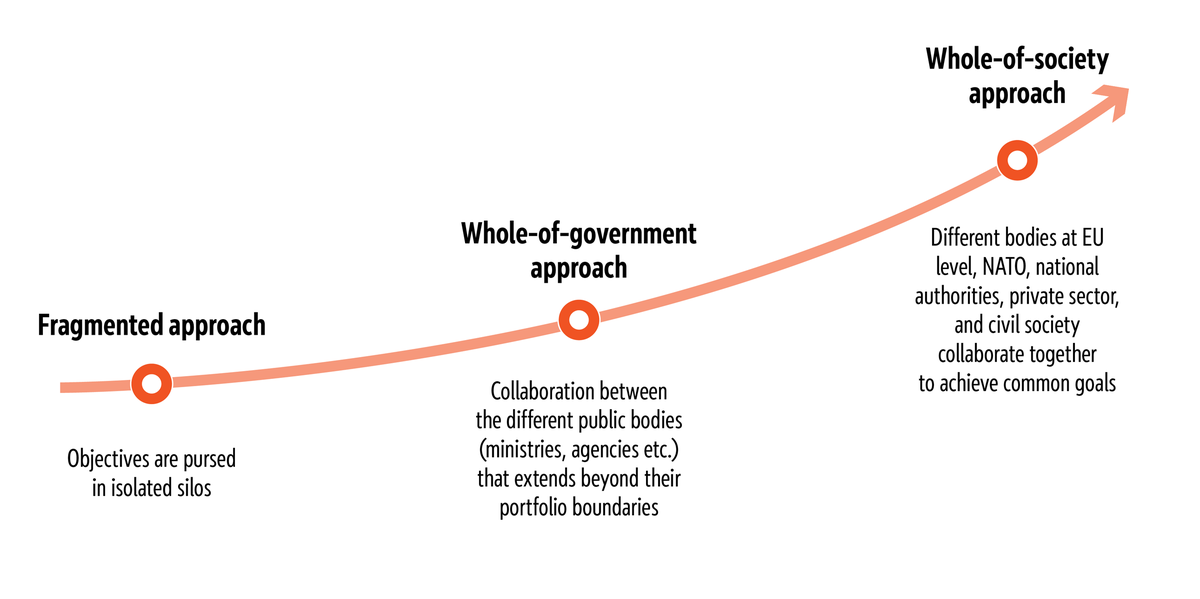
Consequently, enhanced cooperation and coordination between different actors is essential. Effective logistics and military mobility ultimately require thinking about these efforts in a whole-of-society framework, ensuring smooth collaboration between public institutions and private entities.
Investing in military mobility: Dual use for a dual dividend
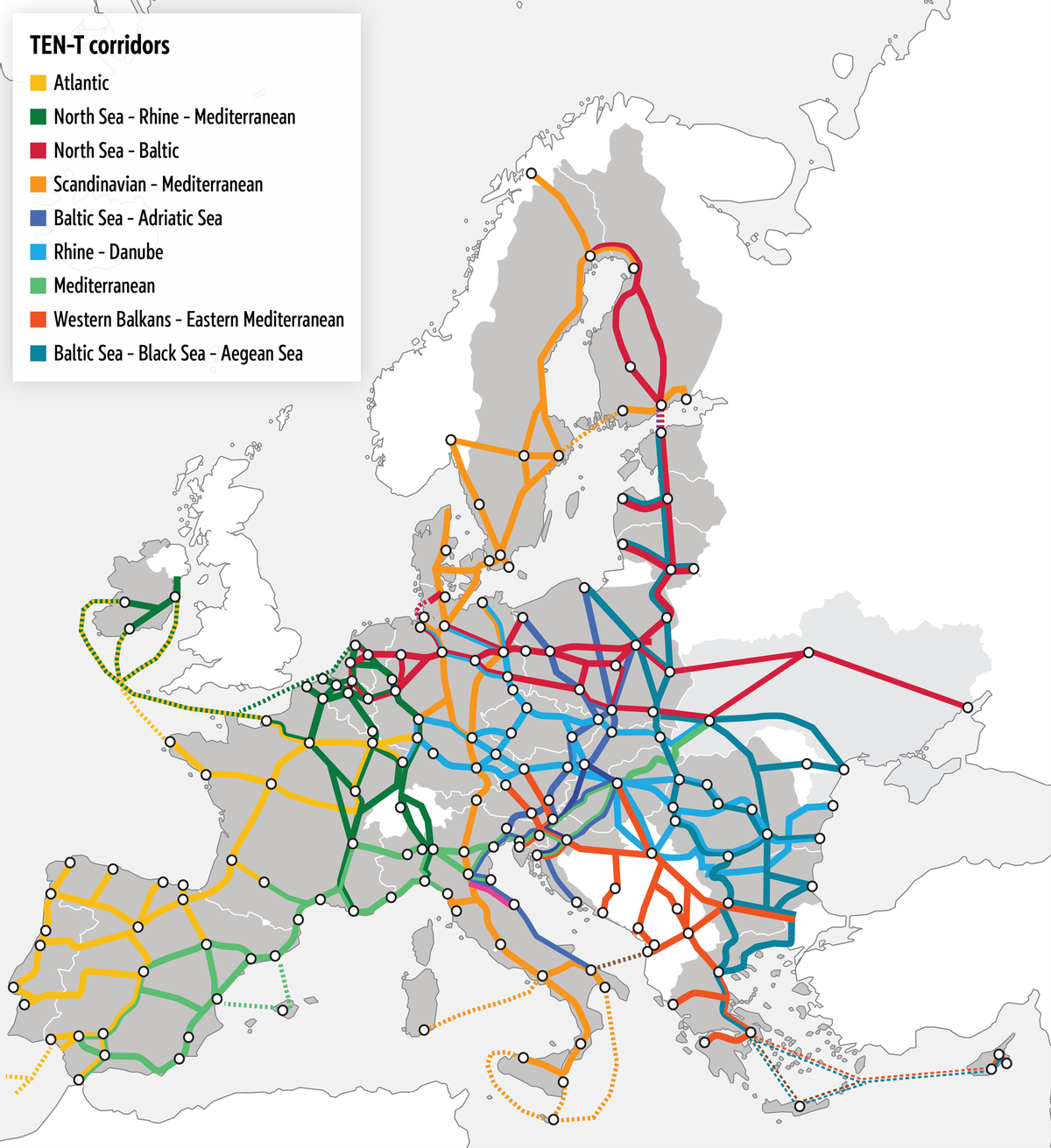
Military mobility is an area where public investment and coordinated efforts benefit both the civilian and the military sector, given the dual-use nature of transport assets. To move swiftly across the continent, armed forces rely on the infrastructure of the trans-European transport network (TEN‑T), the EU-wide network of railways, inland waterways, short sea shipping routes and roads, currently organised around nine transport corridors (see Figure 1).
As indicated by the European Court of Auditors (ECA) in a 2025 special report, there is a 94 % overlap between the EU military mobility network and the TEN-T network. Therefore, infrastructure improvements on the TEN-T network would also benefit military mobility, creating significant returns and positive impacts. At the same time, funding of military mobility would necessarily also benefit civilian use.
Source: European Commission, 2024. Graphic by: Samy Chahri, EPRS.
State of play and recent developments
Despite the concept of military mobility starting to be addressed in different EU communications and strategic documents after Russia's invasion of Ukraine in 2014, concrete plans were slow to be realised. As highlighted by one expert, the momentum did not materialise for a long time 'beyond increased awareness, growing exchanges, and very slow progress on the commitments undertaken at the EU level'.
To provide a comprehensive framework for military mobility, the European Commission and the High Representative of the Union for Foreign Affairs and Security Policy/Vice-President of the Commission (HR/VP) published two action plans on military mobility in 2018 and 2022. The 2018 action plan focused on identifying military requirements and supporting EU Member States in aligning regulations and customs formalities and facilitating cross-border movement. While the action plan did not have any impact on the EU budget, it paved the way to the Commission's proposal for the 2021-2027 MFF. In 2022, the Commission and the HR/VP jointly published the 'Action Plan on Military Mobility 2.0', covering the period 2022-2026. This time, the plan was broader in scope and called for the establishment of an interconnected network through multi-modal transport corridors and sustainable logistical centres, the strengthening of strategic capabilities, including in the cyber domain, and increased coherence between NATO and EU standards.
While results have been achieved in single areas, this plan again 'lacked sufficiently solid foundations, and progress towards its objectives has been variable', as indicated by the ECA in its 2025 assessment report. Both plans were followed by a set of commitments and military pledges in 2018 and in 2024, all recognising the urgency to achieve concrete results. The 2024 pledge focused inter alia on dual-use transport infrastructure investments and multi-modal networks along corridors, and recognised the need to prioritise measures to ensure cross-border movement permissions are granted within three working days.
The simplification of cross-border military transport procedures and the establishment of logistics hubs have become the main objectives of two intergovernmental permanent structured cooperation (PESCO) projects, launched in 2018 – 'Military mobility' (in which the United States, Canada and Norway also participated) and 'Network of logistics hubs in Europe and support to operations'. The European Defence Agency (EDA) also contributes to ongoing efforts to simplify and standardise procedures across Europe, through initiatives such as 'Optimising cross-border movement permission procedures in Europe' and 'Harmonising military requirements related to customs'.
Military mobility is a flagship area of EU-NATO collaboration, and it is part of a structured dialogue that has been in place since 2018. Consultations and exchanges of views allow different actors to discuss shared priorities, increase information sharing, and ensure that the EU's progress is consistent with NATO's requirements.
Transport corridors and cooperation with Ukraine and Moldova
The EU, Ukraine and Moldova launched the EU-Ukraine Solidarity Lanes in May 2022 to keep transport network and supply chains operational between the EU and Ukraine, including for military and humanitarian assistance.
The CEF played a key role in funding critical border needs and taking initial steps towards integrating Ukraine's and Moldova's transport systems into the EU's TEN-T network.
On the transport side, a revised TEN-T Regulation was adopted in 2024. This revision anchors within EU law the notion of a military mobility transport network, obliging Member States' projects to consider military mobility needs and extending the European transport corridors to Ukraine and Moldova. Four priority multimodal corridors (rail, road, sea and air) have been identified for urgent investment, with 500 'hot spot' projects already recognised for upgrades (e.g. tunnel widening, bridge reinforcement and port expansion).
While important steps have been taken in the EU, with multiple initiatives across different bodies, progress on the ground has continued to be slow, and implementation lacks both strong budgetary support and political decisions.
Problems analysis
There are currently different challenges that prevent troops and equipment from swiftly moving within the EU and beyond.
Transport infrastructure and capability gaps: Years of underinvestment have exacerbated vulnerabilities in the infrastructure network. As recently underlined by Commissioner for Transport Apostolos Tzitzikostas, 'if NATO's tanks were called to respond to an invasion by Moscow's forces across the EU's eastern border, they would get stuck in tunnels, cause bridges to collapse and get snarled up in border protocols'. In fact, as also outlined in the Niinistö report, EU roads, railways, ports, bridges and airports are often not suited to supporting the weight of large, heavy military vehicles. For example, the railway network played an important role during the first weeks of Russia's invasion of Ukraine and it serves as the backbone of Russian and Ukrainian military logistics. According to experts, rail transport could be faster and more economical than road deployments when it comes to large-scale movements of different assets, despite remaining particularly vulnerable to targeted attacks. However, according to analysts, the European network is much less adapted than Russia's to military use and also suffers from 'civilian domain' issues such as weaknesses in the control systems at borders, electrification and average speed of rail lines.
Given the overlap between the EU military mobility network and the TEN-T network, this creates additional obstacles to military movements. Rail standards are a clear example of how operational differences in infrastructure create further challenges in terms of connectivity and interoperability that require ad hoc solutions. While studies on extending the standard track gauge commonly used in Europe are under way, a vital project such as Rail Baltica, which aims to integrate the Baltic States into the European rail network, is progressing slowly and will not be completed before the end of 2030, because of technical and financial challenges.
Major highways on the road networks have often successfully demonstrated compliance with dual-use standards. However, secondary and tertiary roads, especially on NATO's eastern flank, reveal considerable vulnerabilities, such as ageing infrastructure, low load-bearing capacity or resistance to adverse weather conditions, that force military convoys to reconfigure their routes. For instance, while a Leopard 2 Main Battle Tank can weigh up to 70 tonnes, most European roads can handle a maximum weight of 40 tonnes. In this area, challenges remain especially in terms of interoperability between civilian and military systems, data sharing and lack of specialised transport capacities.
Maritime infrastructure often suffers from the same structural problems and many EU terminals are not designed for handling military cargo. European ports therefore need to prepare by planning space for ships carrying military supplies and deciding where to divert cargo if needed. The ownership and control of some critical maritime infrastructure might also need to be given more attention, as noted in the White Paper for European Defence – Readiness 2030.
Furthermore, effective and rapid deployment is hindered by capability gaps in air domain enablers, such as intelligence, reconnaissance and surveillance (ISR) platforms, air-to-air refuelling (AAR), and large air transport capacity, which have been shown to be crucial in recent confrontations and operations, such as the 2021 evacuation from Afghanistan. For instance, Member States combined have only four signals intelligence (SIGINT) aircraft in service and a few others on order, while the US has 17 such aircraft.
AAR is another key enabler to sustain missions and operations. Altogether, data from 2023 shows that European NATO allies had around 156 aerial refuelling aircraft, compared to 447 for the US. Analysts have claimed that, while AAR might be 'less important in the European theatre in terms of long-range transit, it does provide the capacity for tactical combat aircraft to stay on station longer and to extend their mission radius'.
Most projects in these areas have a scale, cost and complexity that go beyond Member States' individual capacities; making progress towards closing gaps in these areas will prove to be a difficult challenge without coordinated action and major common investment. The Multinational Multi Role Tanker Transport Fleet, which was developed with support from the EDA, is a clear example of effective cooperation between NATO and the EU in delivering critical capabilities.
Finally, with Russia currently able to deploy over 700 drones overnight in Ukraine, these tools, combined with long-range precision strike missiles, offer new vectors of 'physical' attack to critical nodes and infrastructure. At the same time, emerging and disruptive technologies (EDTs), especially those related to robotics, could play a key role in monitoring critical infrastructure in extreme or inaccessible environments, as in the case of submarine cables or maritime infrastructure.
Bureaucratic and regulatory obstacles: As underlined by the Commission, 'the current regulatory environment of the Union, adopted in peacetime, is not fully adapted to the objective of developing the necessary capabilities and military readiness to credibly deter armed aggression'. This is becoming evident for issues related to mobility. Despite the ongoing efforts to reduce administrative burdens, there are still bureaucratic obstacles that hamper the ability of troops and equipment to move swiftly within the EU. A clear example is the need for diplomatic clearance for armed forces to cross Member States, which can take several days to obtain and slow down participation in live and joint exercises, both in times of peace and of crisis.
Specific limitations in customs procedures, including insufficient digitalisation, add to complexity and fall short on the idea of moving towards a 'military Schengen area'. When it comes to customs formalities, there are currently two versions of the form 302 used for cross-border movements of military assets, depending on the context in which military activities are undertaken. The first form has been developed by NATO and the second by the EU. While these forms enable uniform treatment for cross-border movements in the EU, there is a need to further reduce duplication of efforts, speed up digitalisation, and facilitate information exchange between military forces and customs authorities, in compliance with the Union Customs Code. This also applies to special permits required to move dangerous goods, which can take time too.
Cyber risks, resilience and security of supply: The increased use of sabotage and cyber techniques by state and non-state actors to disrupt core civilian and military infrastructure poses other serious risks in terms of resilience to such threats. The Directive on security of network and information systems (NIS Directive), which promoted the first unified legal framework to uphold cybersecurity across the EU, listed transport assets among the 11 sectors of high criticality for which Member States are required to guarantee cybersecurity. Transport networks and control systems, which were designed decades ago, are often not set up to be resilient to modern cyber-attacks. For instance, transport represented 21 % of all distributed denial-of-service (DDoS) attacks in the EU in 2024. To respond to the increased exposure to cyber threats, NIS has been repealed by Directive 2022/2555, also known as NIS2, which widened the scope and updated the list of critical sectors to include other areas that provide essential services to military mobility, such as space. However, the transposition and implementation process has been marked by a substantial divergence in adoption timelines and requirements among Member States.
Military mobility and logistics depend on secure data transmission and reliable connectivity. Command and control structures increasingly rely on real-time data provided by ISR platforms to enable fast and more informed decisions. At the same time, submarine cables play a vital role as they are responsible for carrying global internet traffic and have become a clear target for attacks. However, at the moment, there are difficulties in terms of capabilities to prevent disruption of traffic and to swiftly repair systems used in the network.
A crucial enabling factor of European defence is security of supply. Armed forces depend to a large extent on effective supply lines that rely on the infrastructure network to deliver equipment, fuel, medicines, food and other logistical support. In particular, increasing attention has been given in the EU to the role of fuel infrastructure that is strategic for military mobility. Challenges in military fuel supply include a strong dependency on crude oil imports from third countries, limited storage capacity, and unequally distributed and shrinking refining capacity among Member States, impacting the defence readiness of European forces.
How could the EU address the challenges?
A credible budget
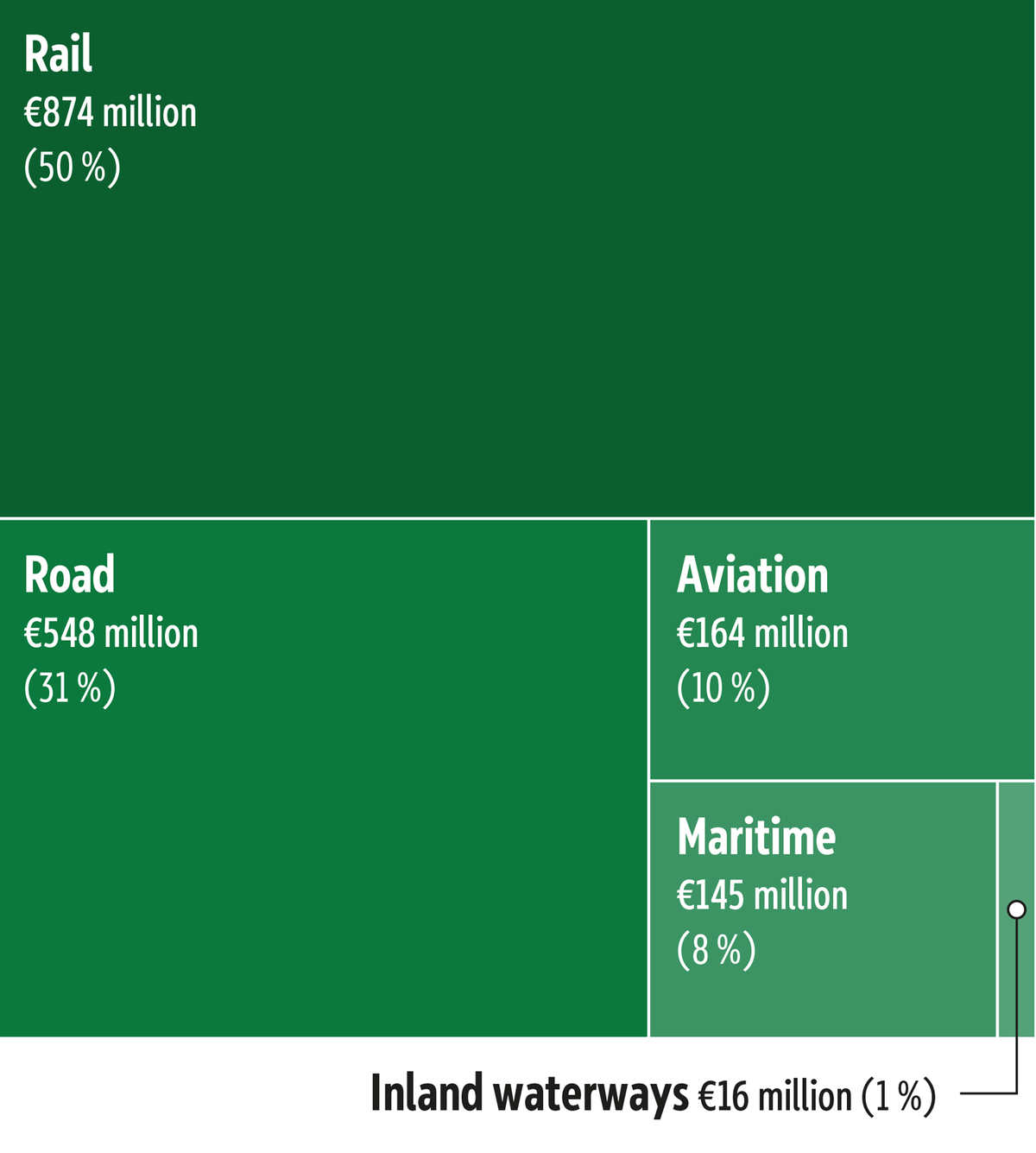
Under a dedicated envelope in the 2021-2027 CEF, the Union's programme supporting investment in transport infrastructure, the EU has co-funded 95 military mobility transport infrastructure projects across 21 Member States, allocating a total amount of €1.7 billion (from the Commission's initial proposed budget of €6.5 billion), along the different transport modes (see Figure 2). This funding, frontloaded in response to Russia's invasion of Ukraine and envisaged to last until 2027, has already been exhausted. Due to the limited budget available, many projects that passed the evaluation thresholds could not be selected during the three calls for proposals. This increased demand demonstrates how crucial it is to allocate a sufficient budget to pivotal projects.
Source: European Commission, 2024. Graphic by: Samy Chahri, EPRS.
Individual infrastructure projects alone often cost more than the budget available and require investment at EU and national level. For example, the estimated costs of changing the track gauge only in northern Finland are about €3.2 billion, while, according to recent estimates, Rail Baltica is expected to cost at least €15.3 billion. A 2024 study estimates that investment of €866 billion (in 2023 terms) is needed to complete the TEN-T's core and extended core networks. Of this, around €201 billion represents the total cost of key cross-border projects and their access routes, and around €39 billion is needed to ensure compliance with specific rail technical standards.
In addition to the dedicated military mobility section, the CEF also supports relevant projects that could satisfy dual-use requirements under its 'Transport' envelope. However, efforts to strengthen military mobility could extend beyond this facility. As part of its mid-term review for the 2021-2027 period, the Commission has proposed changes to the European Regional Development Fund and Cohesion Fund to use cohesion funds to improve military mobility and increase infrastructure resilience, particularly in the eastern border regions. Under the strategic European security initiative, the European Investment Bank has expanded its eligibilities for financing Europe's military mobility projects and dual-use infrastructure. This has included, among others, projects such as the capacity expansion of the Danish port of Esbjerg, to accommodate larger military vessels. The port is frequently used by NATO in shipments between the US and Europe and remains key to developing the TEN-T network. Additional support comes from the European Defence Fund, as demonstrated by the allocation of funds to projects such as the 'Secure Digital Military Mobility System' to facilitate information exchange during customs procedures and the 'Future Air System for European Tactical Transportation' for the development of capabilities.
There is an opportunity to enhance EU-level contributions to military mobility under the next MFF. The Commission has proposed to expand the CEF to support investments in military mobility, alongside civilian infrastructure, with nearly €17.6 billion, 10 times higher than the current MFF. However, there is a risk that the fund could be reduced during negotiations, as occurred under the current MFF with the Council's cut to military mobility funding from the position of Parliament and the Commission, a fact that has already been criticised by Parliament.
The European defence industry programme (EDIP) and the Security Action for Europe (SAFE) initiative could enhance genuine European cooperation and support joint acquisition of enabling capabilities for military mobility. This would be done in line with the nature of these initiatives and the critical priority areas identified in the White Paper, the capability development plan (CDP) and the coordinated annual review on defence (CARD), which include military mobility and protection of infrastructure. In the case of EDIP, the budget of €1.5 billion is insufficient for such an ambitious objective, as also clearly indicated by Parliament.
Addressing challenges in a whole-of-society approach
Military mobility involves a wide range of actors, including the EU institutions and their agencies/bodies, NATO, national authorities, the private sector, and civil society. Its success depends on the added value each entity brings, requiring cooperation across a 'whole-of-society' framework (see Figure 3). While cooperation with NATO on this subject has proven to deliver results (e.g. to address issues such as military requirements, dangerous goods and host nation support), more could be done to further strengthen communication between the EU and national, regional and local authorities, which often have more direct contact with civilian and private entities, such as railway companies and port authorities, or industry, which is key for the production and maintenance of products directly contributing to and improving military mobility in the Union. Equally, this requires continuing involving the 'end-users', particularly the chiefs of Member States' armed forces.
Source: EPRS. Graphic by: Samy Chahri, EPRS.
Moving from short-term communication towards a common EU strategic military mobility strategy
To increase defence readiness, the EU could move from short-term communications and declarations towards a common broader EU military mobility strategy, which could focus on the short, medium and long term. In close cooperation with NATO, a comprehensive EU approach to military mobility could include not only targeted investment in dual-use infrastructure and address regulatory burdens but also tackle issues across other defence domains that have a clear impact on military mobility decisions. As highlighted by various experts, the EU could go beyond the 'classic concept' of military mobility and further integrate and expand upon NATO's logistics framework to enhance its military mobility and logistics. To achieve this, it would be crucial to continue investing not only in modernising the infrastructure network, but further harmonising national logistics plans, expanding strategic stockpiling and logistics hubs, reducing dependencies in fuel supply chains and energy infrastructure, investing in transport innovation, closing capability gaps, and increasing resilience to cyber-attacks.
The development of space-based defence systems could mark a new age of space exploration. While the EU has already demonstrated the ability to develop programmes and initiatives such as the EU Governmental Satellite Communication (GOVSATCOM) and IRIS,² further investing in space assets and intelligence, surveillance and reconnaissance tools to detect military threats could make the difference not only in securing the movement of troops and equipment, but also in protecting critical nodes and infrastructure. Testing infrastructure 'on the ground' could also be part of the broader strategy, and both the EU and NATO have expertise in the field of multinational exercises and training. As large-scale exercises bring together joint military forces from different countries, they provide significant opportunities to 'stress test' infrastructure nodes and logistics hubs at all levels. While this was a goal of the Action Plan 2.0, results have been mixed and the ECA noted that there is a lack of evidence of a formalised analysis of lessons learned from military exercises.
To ensure a robust and responsive defence framework, it is, however, fundamental to address long-standing complex and divergent bureaucratic rules and administrative burdens which prevent armed forces from swiftly moving across the EU.
Potential impacts
Security, deterrence and strategic autonomy
Improving military mobility is a demanding and costly endeavour, but it is also essential. Failure to act comes at a price, primarily in terms of security of EU citizens. Insufficient and uncoordinated spending, coupled with unresolved regulatory and bureaucratic obstacles, puts the EU in a situation where armed forces would not be ready to be rapidly deployed and protect citizens in case of threats. Ultimately, this could jeopardise the EU's ability to demonstrate credible deterrence. Addressing barriers and closing gaps in military mobility is crucial for EU-NATO cooperation, as NATO Allies rely on the EU infrastructure to move their assets around the continent. It could also boost the response times of armed forces and increase the ability to meet NATO's operational-level planning timeline, which is currently set at 72 hours. At the same time, according to a survey, military mobility is considered an essential capability for achieving strategic autonomy.
Boosted innovation and EU participation in the ongoing tech race
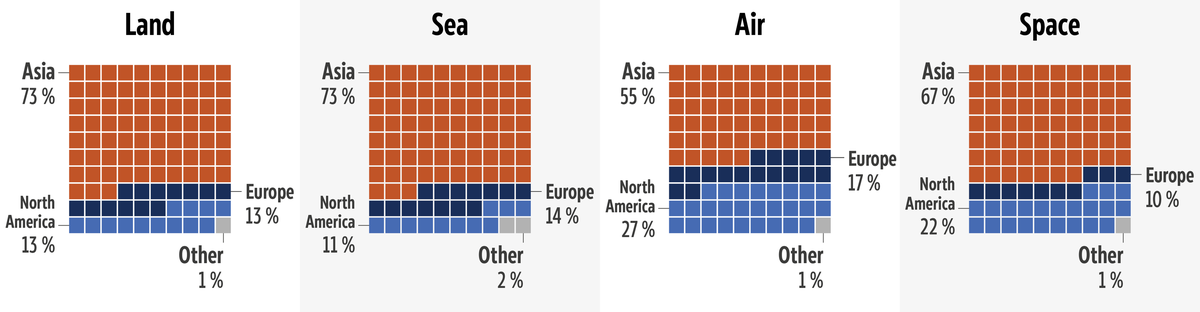
As explained, beyond direct investment in physical infrastructure, the EU will also need to coordinate spending more broadly on its digital infrastructure ensuring cybersecurity, logistics and innovation in transport, if it wants to improve the security and resilience of its dual-use networks. As highlighted in a recent study by the World Intellectual Property Organization (WIPO), Europe is increasingly falling behind when it comes to patenting related to transport-related technologies, particularly regarding digitalisation, space and cybersecurity. Asia dominates strongly across the board, while North America shows relative strengths in air and space transport (see Figure 4).
Source: WIPO, 2025. Graphic by: Samy Chahri, EPRS.
Since 2018, China has led global patent activity in future transport technologies, recording a 14.3 % growth rate. This could be an opportunity for more EU public and private support for creative entrepreneurs and researchers in these areas. As with military spending, years of underinvestment in innovation (the target of 3 % of GDP spending on R&D set in 2000 is still far from being achieved) have now put the EU at the dependency of external actors, not always like-minded, for the supply of key elements of what is needed for secure, effective and resilient transport infrastructure. Immediate action in this area would ensure that the EU can start to play a significant role in the ongoing new space race, in cybersecurity development and in improved contemporary air defence capacity and logistics. Failure to address these broader concerns will mean increasing vulnerabilities and less effective troop deployment, even if the dual-use physical infrastructure is updated.
Added value of common action
Looking at the impact on GDP of the announced investment in dual-use transport infrastructure, it is essential to distinguish what would constitute new investment from what would constitute a shifting from the transport budgetary line to the dual-use military budgetary line. Budgetary realignment is important for flagging priorities and directing investment towards certain goals, but it is unlikely to boost GDP in a significant way as the total amount invested is unchanged. On the contrary, as explained in the impact assessment on completing the TEN-T infrastructure, the effects of new additional and transnational investment would be substantial.
In this briefing, in line with recent investment needs envisaged by the Commission, we adopt an ambitious approach, with investment of between €75 billion and €100 billion until 2035 to improve the current state of infrastructure.1 This amount has been presented by Commissioner for Defence and Space Andrius Kubilius and Transport Commissioner Apostolos Tzitzikostas in various interviews and meetings that took place before the presentation of the 2028-2034 MFF proposal. For the purpose of analysing the GDP impact, we assumed this amount to be reached by national investment in infrastructure as well as funds coming from the CEF military mobility. For current defence expenditure on infrastructure, NATO estimates a total of around €12.9 billion in 2024 for the EU Member States that are part of NATO. Allies committed to invest up to 1.5 % of their GDP annually in 'defence-and security-related' categories. The declaration was vague on the details, and it is still unclear at the time of writing what qualifies under this additional 1.5 %. However, it is possible that a majority of this spending could be directed towards improving the current state of infrastructure.
In scenario 1, we focus on the potential economic impact of an almost 60 % increase in Member States' expenditure on infrastructure, from €12.9 billion per year at present according to NATO, to €20.3 billion per year, representing a total additional cumulated investment of around €75 billion (€7.5 billion per year for 10 years) for 2025-2035. In this scenario, limited coordination between Member States in spending these funds could lead to inefficiencies, low interoperability and excessive bureaucracy. In scenario 2, we envisage a slightly higher increase in Member States' expenditure on infrastructure of 65 %, assuming reinforced cooperation between Member States. This represents a total additional cumulated investment of around €83 billion (€8.3 billion per year for 10 years) for 2025-2035. We also envisage an increase in the CEF budget dedicated to military mobility at EU level from €1.7 billion to €17 billion in the 2028-2034 MFF, in line with the proposal from the Commission. In total in this scenario, we therefore have an additional cumulated investment of €100 billion for the period; coordination is expected to be strongly reinforced, including through NATO, with joint investment leading to reduced inefficiencies and higher interoperability.

Source: EPRS. Graphic by: Samy Chahri, EPRS.
The results confirm the largely beneficial impact of coordinated EU action when it comes to investment in this area (see Figure 5). The larger amount of funds invested collectively, and the efficiency gains associated with sharing best practice and further harmonisation, leads to benefits which are almost three times higher (€21 billion additional GDP per year in 2035) than when Member States invest on their own (around €7 billion additional GDP per year in 2035). These results are nothing new and are largely consistent with estimates in studies on the impacts of investing in transport infrastructure.
Other aspects of the dual dividend for civilians
A comprehensive approach to military mobility would necessarily also benefit civilian mobility. Given the dual-use aspect of investing in such projects, targeted investment in infrastructure networks and transport assets, including in cybersecurity, have the potential to facilitate movement of people, goods and services, and to boost the single market area. Citizens and businesses could rely on a more secure and efficient infrastructure network, and investment in the TEN-T network could have a positive impact in other domains such as trade, employment, and the green transformation.
Main references
- Chihaia, M., Advancing military mobility in Europe: An uphill battle, European Policy Centre, April 2023.
- Chihaia, M., EU Defence Series: Military Mobility A Critical Enabler, International Centre for Defence and Security (ICDS), 2025.
- Clapp, S., Kiss, M. and Gullentops, M., Military Mobility, EPRS, European Parliament, July 2025.
- De Jong, J., et al., The effect of public investment in Europe: a model-based assessment, ECB working paper No 2021, European Central Bank, February 2017.
- Fiott, D., Keep it Moving: From Mobility to Logistics in European Defence, Centre for Security, Diplomacy and Strategy, September 2024.
- Fiott, D., Towards Military Mobility?, European Institute for Security Studies, 2017.
- Herciu, A. and Manolache, C., Understanding the crucial role of deployment and military mobility within the European Union and the North Atlantic Treaty Organization, Sci. J. Mil. Univ. Land Forces, 2025.
- Kiss, M., Revision of the trans-European transport network guidelines, EPRS, European Parliament, July 2024.
- Kremidas-Courtney, C., How to Spend It: European defence for the age of mass precision, European Policy Centre, March 2025.
- Zaborowski, M. and Pavov, P., Roads to Readiness: Military Mobility Infrastructure on NATO's Eastern Flank, GLOBSEC, June 2025.
Endnotes
Classification
Policy areas: Transport | Security and Defence | European Added Value
Regions: European Union
Committees: Security and Defence (SEDE), Transport and Tourism (TRAN)
Disclaimer
This document is prepared for, and addressed to, the Members and staff of the European Parliament as background material to assist them in their parliamentary work. The content of the document is the sole responsibility of its author(s) and any opinions expressed herein should not be taken to represent an official position of the Parliament.
Copyright
© European Union.
The reuse of this document is authorised under a Creative Commons Attribution 4.0 International (CC-BY 4.0) licence.

https://creativecommons.org/licenses/by/4.0/deed.en
To use or reproduce elements that are not owned by the European Union, permission may need to be sought directly from the respective rightsholders.