
Article page checkbox is not checked in page info.
Plenary round-up – October II 2026
Plenary round‑up – October II 2026
Clare Ferguson, Katarzyna Sochacka and Marco Scipioni, EPRS
Summary
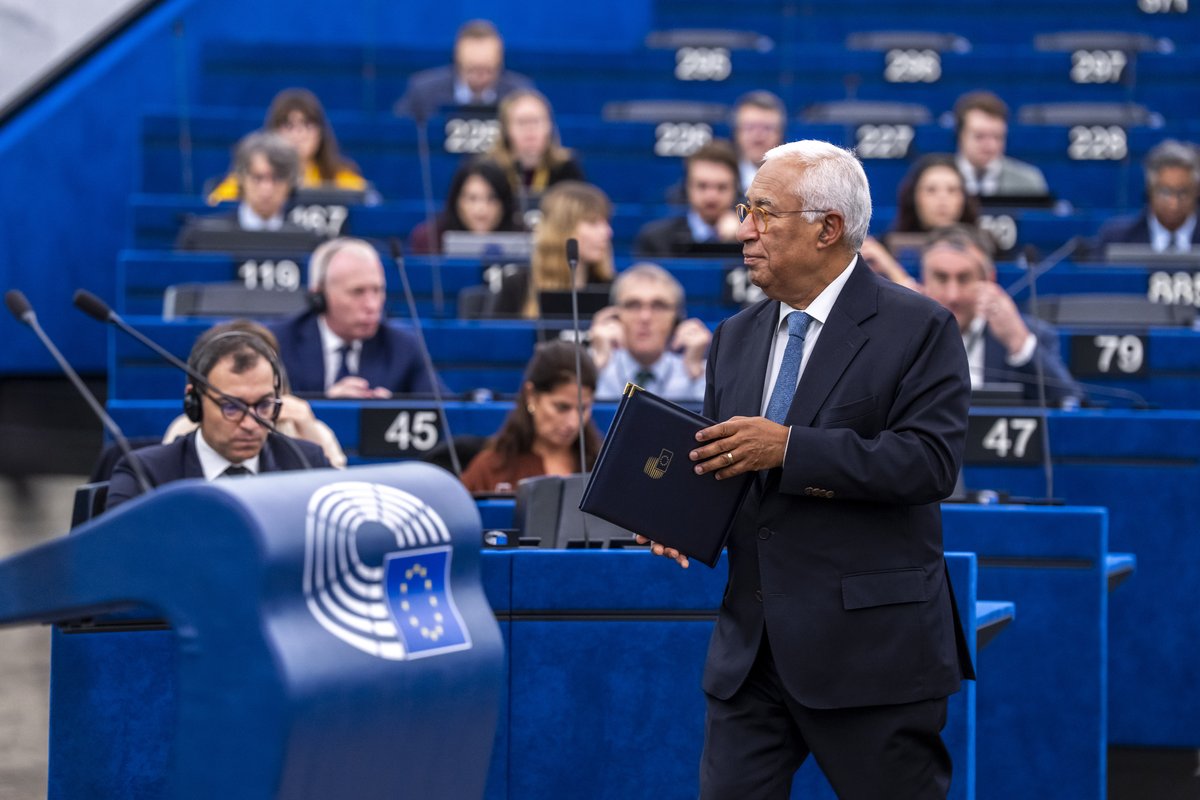
The highlight of the October II 2026 plenary session was the debate on the conclusions of the European Council meeting held on 15‑16 October, focusing on the European Union's strategic priorities, including competitiveness, European security and defence, support for Ukraine, migration and enlargement. The question time debate with the Commission focused on the economic debate, discussing the future of EU competition policy and the upcoming revision of the Merger Guidelines, as well as the proposed circular economy act aimed at strengthening Europe's strategic autonomy, boosting competitiveness and making life more affordable.
Other debates on security and foreign policy addressed the escalation of Russian strikes affecting Black Sea shipping, human life and food security; as well as Houthi attacks and their implications for regional stability. Members also discussed the Trump administration's waiving of sanctions and tariffs on Russia. On international relations, Parliament addressed the prospects for a closer EU‑United Kingdom partnership, preparations for the EU‑Canada summit, European support for the International Criminal Court and the need to strengthen global governance of artificial intelligence.
Democracy and fundamental rights featured prominently, with Parliament marking the International Day for the Eradication of Poverty and discussing anti‑democratic violence by radical far‑left groups in France, Italy and Belgium. Members also examined the rule of law in Malta, nine years after the assassination of Daphne Caruana Galizia. Finally, Parliament debated the lifting of EU sanctions on imports of Russian sable fur.
Statement of purpose
This 'at a glance' note is intended to review some of the highlights of the plenary part‑session, and notably to follow up on key dossiers identified by EPRS. The annex shows the breakdown by political group in the final roll‑call votes on the files decided by ordinary legislative procedure and consent procedures during the session. For more detailed information on specific files, please see other EPRS products and the plenary minutes.
Question time with the Commission on the future of EU competition policy
Question time with the Commission focused on new Merger Guidelines, expected to be published later this year to reflect recent trends, such as digitalisation, globalisation and decarbonisation, notably by making it easier for companies to scale up and to foster innovation. The guidelines will mark another step in the recent evolution of competition policy to make it more compatible with EU goals on competitiveness, climate change, innovation and strategic autonomy.
Multiannual financial framework (MFF)
As the deadline for decisions on the EU's next long‑term budget (MFF) for 2028‑2034 draws closer, Parliament is aiming for greater involvement in shaping the allocation of funding.
Erasmus+
Parliament adopted a report from its Committee on Culture and Education (CULT) on the Erasmus+ programme for 2028‑2034, to set its position for interinstitutional negotiations. The Commission proposes a 49 % increase in funding (to €40.8 billion) in comparison to 2021‑2027. The CULT committee proposes to increase this amount further, to €47.38 billion. It stresses that the visibility of the European Solidarity Corps should be maintained, despite its planned integration into the fund.
Euro counterfeiting
The EU has a budget for training and studies to help combat counterfeiting of the euro through the Pericles programme. The next edition of the scheme, Pericles V, will come under the 2028‑2034 MFF. A report from Parliament's Committee on Civil Liberties, Justice and Home Affairs (LIBE) proposes a higher budget than the European Commission's proposal, at €7.8 million. It calls to avoid overlaps between Pericles V and other programmes, and asks the Commission to report on its status annually. The vote on the file sets Parliament's position for negotiations with the Council.
European Union annual budget for 2027
Parliament voted to set its position ahead of a conciliation committee meeting with the Council on amendments to the proposed 2027 EU budget. While the Council's mandate plans a cut of €1 billion in commitments and €0.5 billion in payments, in comparison to the Commission's draft budget, Parliament adopted a Committee on Budgets (BUDG) report that seeks to reverse these cuts and reinforce the Commission's proposal by €1.17 billion. The BUDG committee recommends that these additional funds go towards Parliament's priorities, such as €260.5 million for the Connecting Europe Facility.
Members also voted on a report regarding the discharge procedure, under which Parliament scrutinises how the EU's budget has been spent – it can either approve, postpone, or refuse discharge for each EU institution. Parliament's Committee on Budgetary Control (CONT) publishes a report on each EU body. Once again Members followed the CONT committee advice to refuse discharge to the Council and the European Council for 2024. The CONT report underlines that the Council did not participate in a budget hearing organised for the institutions, nor did its Secretariat answer Parliament's questionnaire.
UN Climate Change Conference 2026 in Antalya
The 31st Conference of the Parties (COP31) to the UN Framework Convention on Climate Change will be held in Antalya, Türkiye, from 9 to 20 November 2026. The conference will launch the second global stocktake (GST) of climate action under the Paris Agreement, while seeking to advance implementation of targets and tools agreed at previous COPs. The European Parliament adopted its resolution on COP31, tabled by its Committee on the Environment, Climate and Food Safety (ENVI) expressing concern about the insufficient progress towards tripling renewable energy capacity and doubling energy efficiency by 2030, and in the transition away from fossil fuels, as agreed in the first global stocktake outcome.
Environment – Omnibus VIII
Extended producer responsibility is the principle that producers are responsible for a product for its whole life cycle, including when it becomes waste. An authorised representative (AR) is appointed to fulfil these producer obligations. The Commission put forward two proposals suspending the obligation of EU‑based, cross‑border producers to appoint ARs. One of the proposals covers products such as batteries and packaging; the other relates to single‑use plastics, textiles and e‑waste. Members debated and adopted two corresponding reports from Parliament's Committee on the Environment, Climate and Food Safety (ENVI). The vote on these files sets Parliament's position for interinstitutional negotiations.
Chemicals – Omnibus VI
Members held a debate and adopted a text agreed between Parliament and the Council on simplifying certain chemical procedures and requirements – ensuring that human health is safeguarded, notwithstanding a reduction in compliance costs. This includes that labels on products must be clearly visible. On fertilisers, the final text retains provisions the Commission proposal sought to replace. It also includes stricter provisions on the transition periods for taking newly banned carcinogenic, mutagenic and reprotoxic substances (CMR) off the market. The interinstitutional negotiations halved the time that these chemicals are allowed to be placed on the market and in circulation (after they have been outlawed).
Critical Raw Materials Act
Members debated and adopted a Committee on Industry, Research and Energy (ITRE) report on amending the Critical Raw Materials (CRM) Act, which favours the Commission's plan to establish a European CRM Centre as an EU body. This centre would be responsible for tasks such as joint purchasing, European contingency stocks, identifying supply chain vulnerabilities, and risk analysis. The vote on the report sets Parliament's mandate for interinsitutional negotiations.
Passenger rights
Members adopted the provisional agreement reached between Parliament and the Council on more harmonised, efficient and clearer rules for passenger rights. During interinstitutional negotiations, Parliament's Committee on Transport and Tourism (TRAN) called for clearer rules on travel tickets bought via intermediaries (i.e. tickets not purchased directly from the travel company itself) and supported the establishment of a common European form for compensation. In the agreed text, air‑ticket intermediaries' obligations are clarified and a common EU form for air, sea, and bus (but not rail) is set out. Also in line with the Parliament's position, the agreement secures a stronger role for enforcement bodies.
Cross‑border protection of vulnerable adults
Members adopted an agreement reached in interinstitutional negotiations on the rights of adult citizens who have limited decision‑making capacity and have moved between Member States. The proposed regulation aims to clarify which Member States' jurisdiction applies in these specific cross-border cases. It would also allow certificates of support and representation to be recognised across Member States. In its report on the proposal, Parliament's Committee on Legal Affairs (JURI) underlined the importance of supported decision‑making. The agreed text therefore emphasises supported decision‑making – aiming to grant more autonomy to adults who need assistance.
Annex – Voting results for legislative files
The graphics below show the voting by political group in the final roll‑call votes for the files decided under the ordinary legislative procedure or consent procedures during this plenary session.
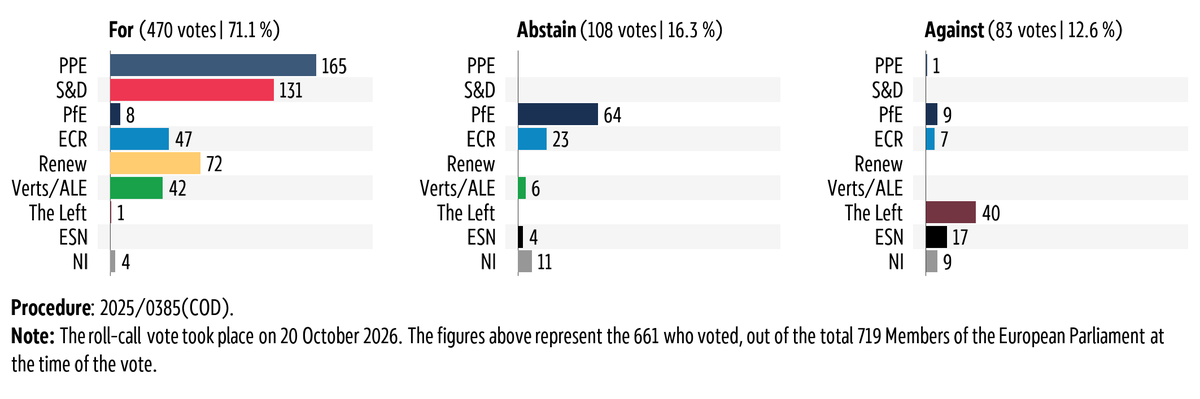
Data source: EP Open Data Portal
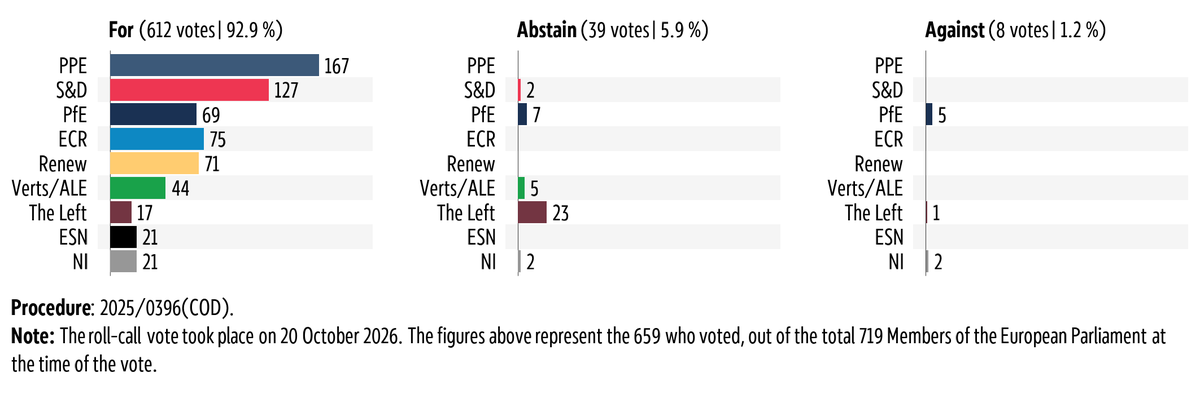
Data source: EP Open Data Portal
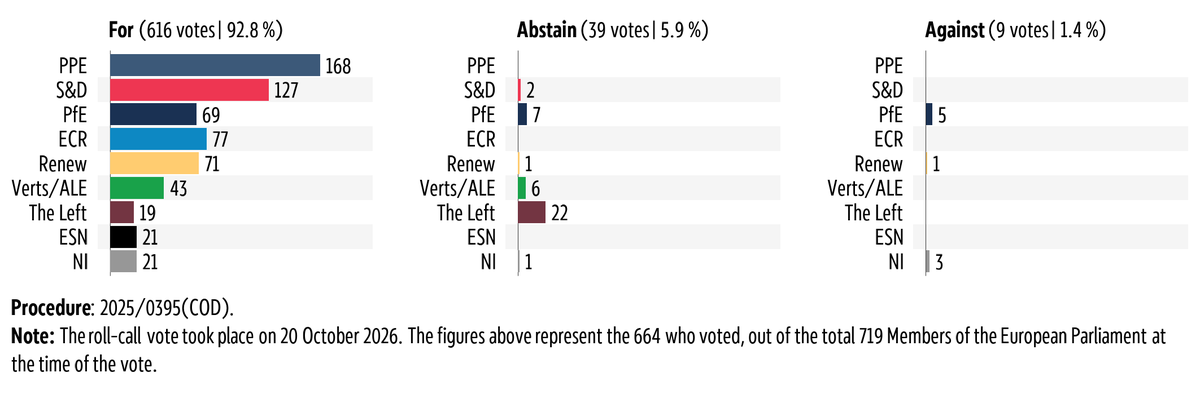
Data source: EP Open Data Portal
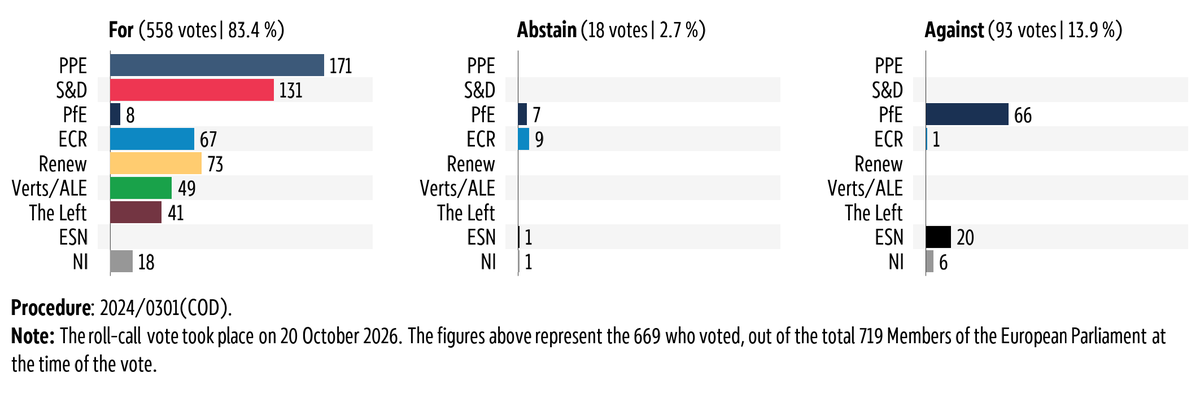
Data source: EP Open Data Portal
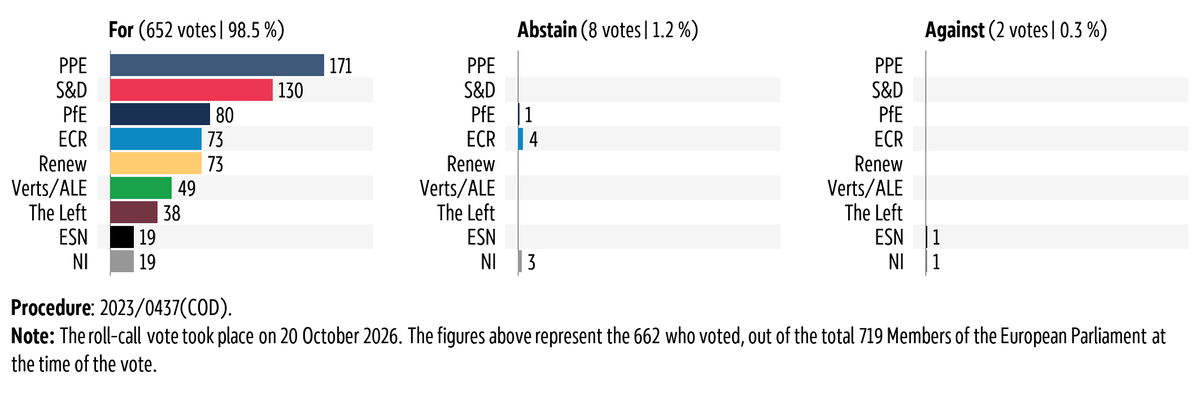
Data source: EP Open Data Portal
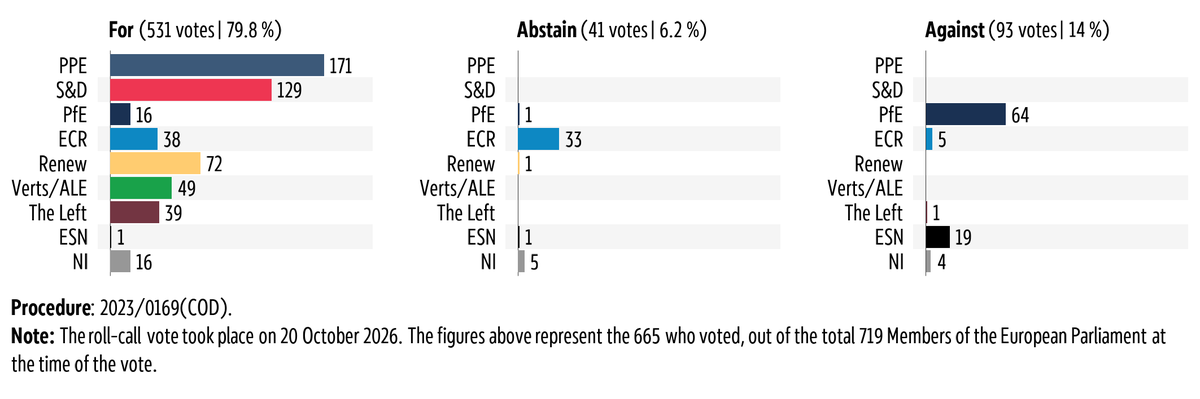
Data source: EP Open Data Portal
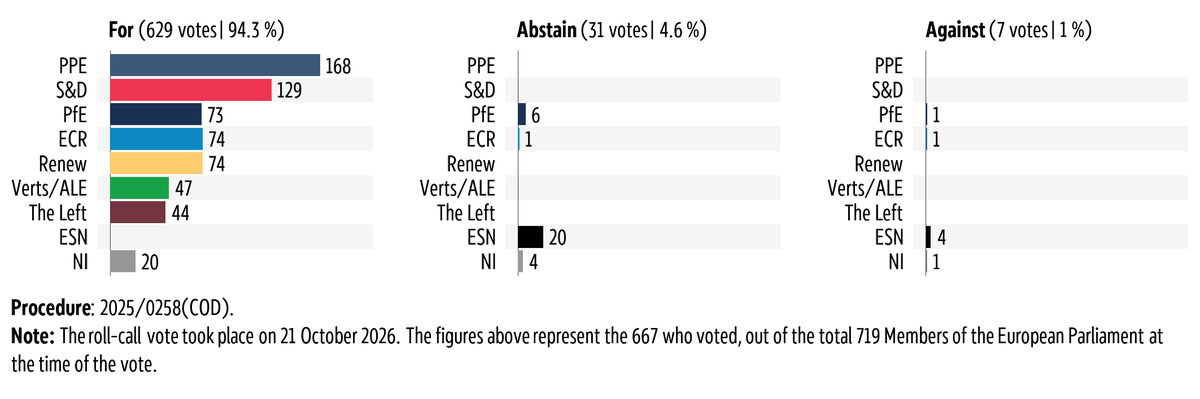
Data source: EP Open Data Portal
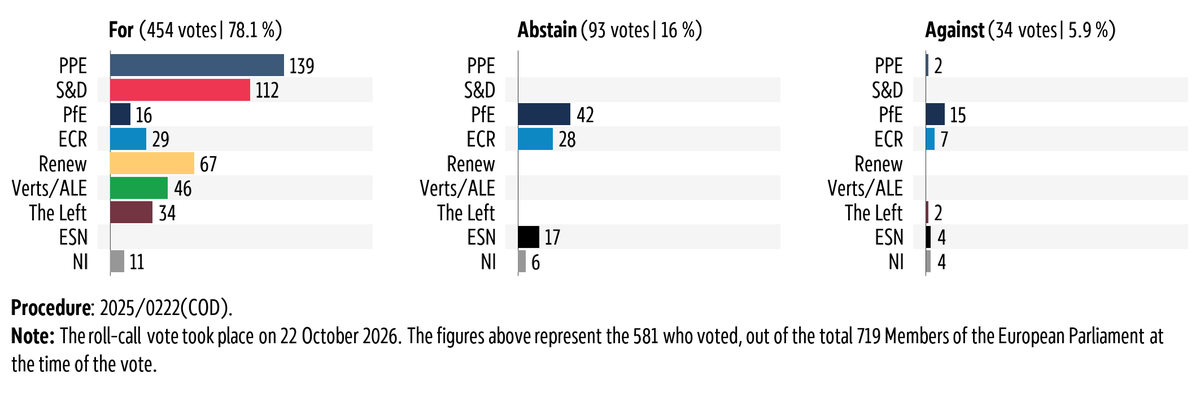
Data source: EP Open Data Portal
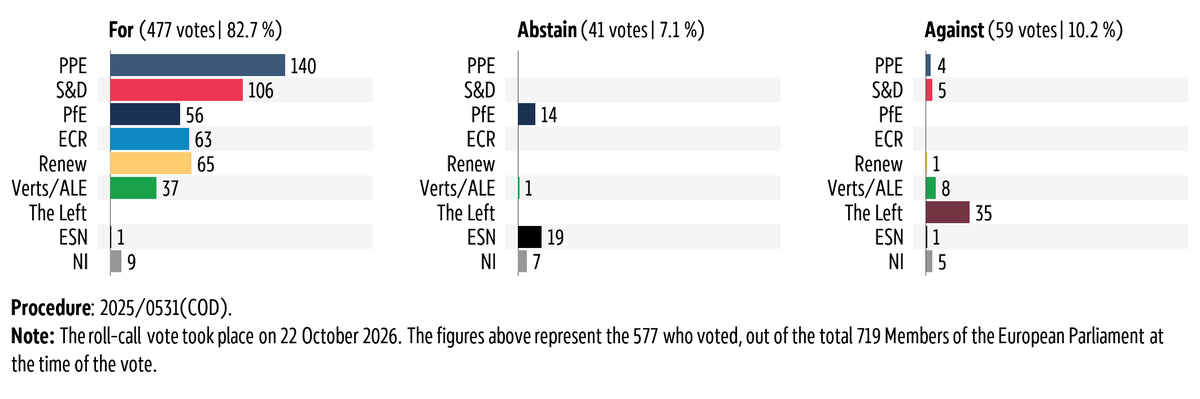
Data source: EP Open Data Portal
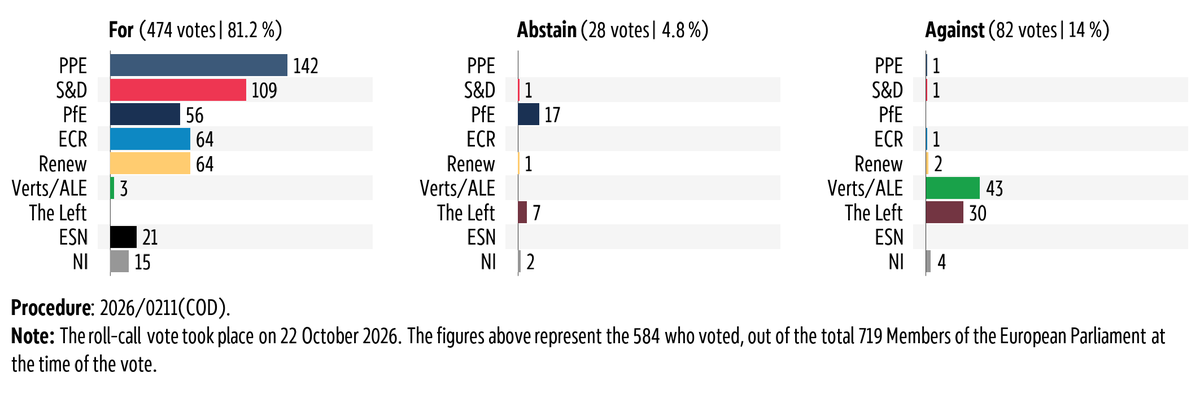
Data source: EP Open Data Portal
Statement on the use of AI
Any AI‑generated content in this text has been reviewed by the authors.
Disclaimer
This document is prepared for, and addressed to, the Members and staff of the European Parliament as background material to assist them in their parliamentary work. The content of the document is the sole responsibility of its author(s) and any opinions expressed herein should not be taken to represent an official position of the Parliament.
Copyright
© European Union.
The reuse of this document is authorised under a Creative Commons Attribution 4.0 International (CC-BY 4.0) licence.

To use or reproduce elements that are not owned by the European Union, permission may need to be sought directly from the respective rightsholders.