
Article page checkbox is not checked in page info.
Understanding alternative maritime fuels
Understanding alternative maritime fuels
Linda Kohl, Members' Research Service
Summary
This briefing outlines alternative maritime fuels and their relevance for the non-expert reader. Maritime transport is an important sector for the EU, but one that comes with significant greenhouse gas emissions, in particular due to onboard fuel use. Consequently, alternative fuels in the maritime sector and their potential for emission reduction can contribute to the success of relevant EU policies, notably the FuelEU Maritime Regulation, which promotes the use of renewable, low-carbon fuels. They may also bolster the EU emissions trading system, which limits the EU's overall emissions by defining a limited number of tradable emission allowances per year. Although alternative maritime fuels have the potential to offer a better environmental performance than conventional fuels, the extent of this varies. 'Well-to-wake' emissions paint the most complete picture of a fuel's overall greenhouse gas intensity: they consist of well-to-tank emissions (from the extraction, production and delivery of the fuel) and tank-to-wake emissions (from the use of the fuel onboard the vessel). While liquified natural gas (LNG) is considered a transitional alternative to conventional fuels, choosing biofuels, hydrogen, methanol and ammonia creates potential for carbon neutrality and for renewable production. However, there are substantial technical and financial barriers to their uptake. They require precautions for safe handling and, in most cases, retrofitting to enable their use. Moreover, their total emissions and their price depend on how they are generated. Alternative fuels are currently more expensive than conventional fuels, and it is difficult to project price development, as well as infrastructure and fuel availability. That is why there are risks associated with investing in the adoption of these alternative fuels.
Maritime transport and its impacts
Maritime transport is of great trade-related and socio-economic importance, but also comes with negative environmental impacts, including greenhouse gas (GHG) emissions from shipping and ports. According to the European Maritime Safety Agency (EMSA), maritime transport enables 77 % of the EU's external trade and 35 % of its internal trade. At the same time, roll-on, roll-off1 cargo, passenger and cruise ships represent a significant share of port calls in the EU.
In 2025, the emissions from the maritime sector accounted for 14.2 % of the EU's CO2 emissions from transport and had been increasing for more than a decade, except in the year 2020. Maritime transport also contributes substantially to methane emissions from transport (26 % in 2022), and nitrogen oxides (NOx) emissions from the maritime sector rose by an average of 10 % across the EU between 2015 and 2023.2 The maritime sector therefore has a role to play in the efforts to reach the EU's decarbonisation targets, which prescribes substantial importance to the fuels used in maritime transport.
Maritime fuels and the EU's decarbonisation efforts
The EU has taken action to decarbonise maritime transport. Regulation (EU) 2023/1805 (the FuelEU Maritime Regulation), which is part of the European Commission's fit for 55 legislative package, promotes the use of renewable, low-carbon fuels. It sets maximum limits for the yearly average GHG intensity of the energy used by ships above 5 000 gross tonnage calling at European ports, aiming for a gradual decrease, reaching an 80 % reduction by 2050.
Since 2024, emissions from maritime transport have been included in the EU emissions trading system (EU ETS). The EU ETS is a scheme aiming to reduce overall EU emissions and to finance the green transition. It sets a limit on the total GHG that can be emitted in the EU, reducing that limit annually in line with the EU's climate target. The system is based on allowances, each giving the right to emit one tonne of CO2 equivalent. Allowances are sold in auctions and can be traded, with the allowances issued (and therefore maximum total emissions) decreasing every year. Emission monitoring and reporting is required under the system. However, fuels with a certain level of GHG savings compared to conventional fossil fuels do not need to be covered by EU ETS allowances (zero-rating fuels). Consequently, the use of those fuels does not require surrendering increasingly scarce allowances, which could incentivise the uptake of less GHG‑intense fuels.
On 17 July 2026, the European Commission proposed a review of the ETS, with a feedback period concerning the proposal open from 20 August to 20 October 2026. Maritime fuels will continue to be subject to the system and the proposal includes extending the ETS's scope to additional categories of vessels.So, the GHG intensity of fuels used in the maritime sector will be highly relevant in the implementation of these decarbonisation efforts.
Alternative fuels in maritime transport
Alternative fuels are defined – in Article 2 of Regulation (EU) 2023/1804 on the deployment of alternative fuels infrastructure (AFIR) – as fuels or power sources which serve, at least partly, as a substitute for fossil oil sources in the energy used for transport, and which have the potential to contribute to decarbonisation and enhance the environmental performance of the transport sector. Different fuels fall under this category, meaning that, as discussed below, not all alternative fuels offer the same GHG‑saving potential. They further differ in terms of technical, storage and safety requirements. Additionally, a fuel's production pathway greatly impacts its overall GHG intensity. That is why one and the same alternative fuel can have very different lifecycle emissions, depending on how it is generated.
Calculation matters
As explained in the report on calculation methodologies under the FuelEU Maritime Regulation, the GHG intensity of a fuel, on a well-to-wake (WtW) basis, is made up of two parts: the well-to-tank (WtT) emissions, which are a result of the fuel's extraction, production and delivery, and the tank-to-wake (TtW) emissions from the use of the fuel onboard the vessel.
One of the categories concerning the WtT emissions for alternative fuels is e-fuels (referred to as renewable fuels of non-biological origin (RFNBO) in the FuelEU Maritime Regulation). They are generated using renewable energy sources rather than fossil fuels, lowering their WtT emissions. Moreover, the WtT emissions caused by alternative fuels generated based on fossil fuels can vary, depending on whether or not carbon capture and storage (CCS) is used. The International Renewable Energy Agency's (IRENA's) 2021 graphic comparison of methanol production methods and their impact on carbon intensity is an example illustrating how one and the same end product, in this case methanol, can vary greatly in terms of sustainability, depending on whether production is based on either fossil fuels or renewable energy. Fuels are sometimes assigned colours based on this specific difference in sustainability: While 'green' describes renewables-based production, 'blue' and 'grey' pertain to fossil-based production with and without CCS, respectively. Below is a basic presentation of the main alternative maritime fuels.
LNG
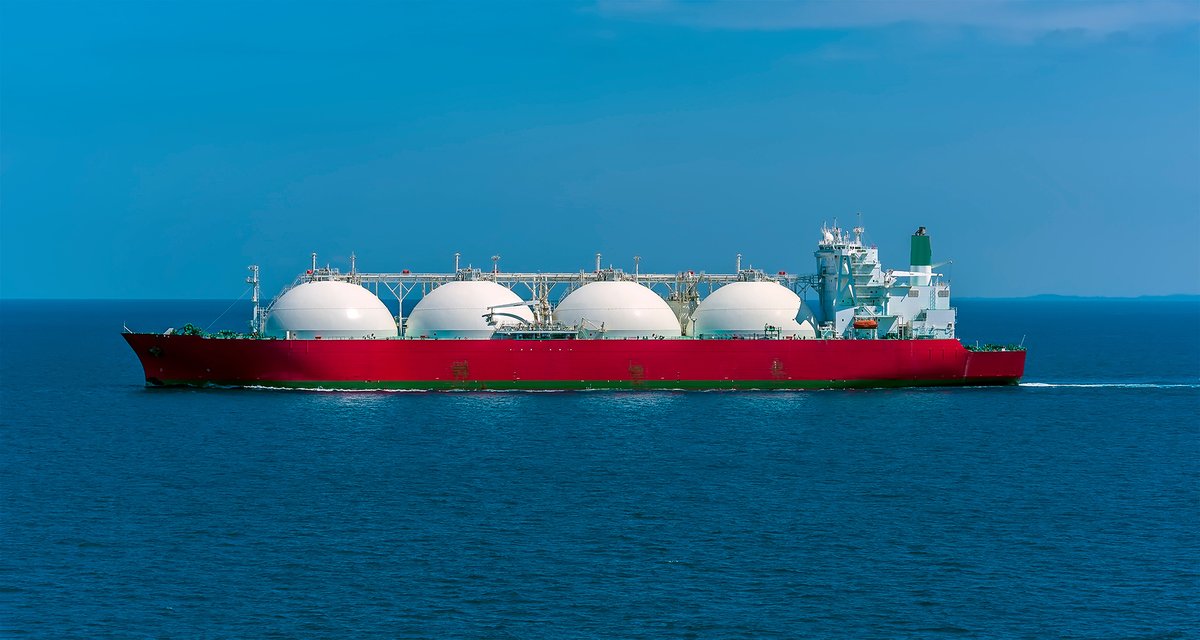
Liquified natural gas (LNG) is natural gas after the conversion to its liquid form, increasing its volumetric energy density and making it easier to transport and store. Natural gas is cooled to -162°C for liquefaction, which is an energy-intensive process. LNG is regarded as a transitional alternative fuel in maritime transport. While CO2 emissions from LNG are lower compared to conventional heavy fuel oil, it remains CO2-intense and does not constitute a renewable alternative. The strong points of LNG include very low emissions of sulphur oxide, enabling compliance with International Maritime Organization (IMO) rules, and a well‑established global infrastructure for its use. The unintended release of methane, a potent GHG, during production, transport, and engine operation (methane slip) remains a challenge. Emissions can be reduced by using CCS during production.
Biofuels
Biofuels are derived from renewable biological sources like plants, organic waste or algae. Due to concerns about competition for crops and land use ('food vs. fuel'), there has been an effort to shift towards the uptake of advanced biofuels, where production is based on sustainable feedstock like agricultural and forest residues or algae. Biofuels can be used in blended forms and are compatible with existing engines and infrastructures. Unblended biodiesel (B100) offers potential for carbon neutrality, but its scalability is limited due to feedstock availability. Engine modifications are generally required if a maximum blend of 20 % is exceeded. Liquified biomethane (LBM), also referred to as bio-LNG or liquified biogas (LBG), constitutes a renewable alternative to LNG and is a chemically comparable product which can be carbon neutral. Its origin is, however, entirely different from conventional LNG. It is sourced from biomethane, a gas generated from anaerobic digestion. The organic matter used for this decomposition process can consist of waste and residues, further improving the product's carbon footprint.
Hydrogen
Hydrogen is a naturally occurring element that is usually bound to other atoms, for example in water. Hydrogen can be produced (i.e. split from other atoms) through a process called electrolysis. If that process is powered by renewable energy, the product is green hydrogen, producing significantly less WtT emissions compared to fossil-based hydrogen.3 Additionally, TtW emissions of hydrogen are zero when used in fuel cells, so it has potential as a zero-emission maritime fuel. However, hydrogen requires retrofitting for use, as well as high pressure or ultra-low temperatures for storage. Its high flammability represents a safety risk. The insufficient development of bunkering and distribution infrastructure constitutes another barrier to the use of hydrogen.
Methanol
Methanol is an alcohol with potential for carbon-neutrality when its production basis is biomass or green hydrogen. It can be used both as a standalone fuel and blended in adapted engines.It emits relatively low levels of air pollutants at combustion. Methanol can be stored in its liquid state at an ambient temperature and pressure, simplifying onboard handling. Distribution infrastructures are also available. In terms of challenges, methanol has a low energy density. It is also toxic and flammable and therefore needs to be handled under strict exposure and fire hazard protocols to manage safety risks.
Ammonia
Ammonia consists of nitrogen and hydrogen. Emissions at production4 (counting towards WtT emissions) greatly depend on the way these two elements are produced. Renewable production of ammonia is possible if the nitrogen and hydrogen are generated using renewable energy for the necessary processes. Logistical infrastructure is available, as ammonia is commonly used in fertiliser production. Ammonia is carbon-free at combustion (meaning it has very low TtW emissions), making it a promising alternative. Safety measures are required for its handling due to high toxicity and corrosiveness. Moreover, engine retrofitting is necessary for the use of ammonia.
Cost
The costs associated with alternative fuels represent a challenge for their uptake. Price projections are difficult, partly due to the high volatility of fossil fuel prices and the current low availability of alternative fuels. In terms of price development, very different scenarios, depending on a number of factors, are possible. The price of a fuel also varies based on how it is generated. For example, the price for fossil-based hydrogen can differ from the price for renewable hydrogen, making it all the more difficult to predict or define a fuel price. Moreover, price development is not only impacted by technology and feedstock availability, but also by regulation and geopolitical factors.
While prices for renewable fuels are expected to become more competitive over the next decades, they are currently significantly higher than conventional fuel prices. However, renewable fuels could help to balance the high volatility to which the fossil fuels market is subject.
Economic barriers to the uptake of alternative maritime fuels are not limited to the price of fuel itself. Costs also arise from the construction and retrofitting of vessels to enable the use of those fuels, as well as their safe handling. This high upfront investment, inevitable for the adoption of alternative fuels, can be a deterrent and a risk, especially against the backdrop of uncertainty regarding future infrastructure and fuel availability.
Outlook
As the EU ETS is being reviewed, the proposed changes include a slower annual decline of allowances. While the pace would be reduced, the overall availability of allowances would still continue to decrease. That makes fuels allowing for zero-rating of CO2 emissions under the EU ETS – for the purposes of which emissions are calculated on a TtW basis – all the more relevant. This includes biofuels and e-fuels complying with certain criteria. The availability and accessibility of these fuels is therefore essential to support EU ETS compliance and contribute to emission reduction targets. While the availability of e-fuels for the maritime sector is increasing, the majority of related projects have not yet reached a final investment decision. In terms of costs, the use of EU ETS revenues could help bridge the price gap between conventional and alternative fuels.5 While important steps towards the uptake of alternative fuels in the maritime sector have been taken, the remaining challenges mentioned above need to be further addressed.
Main references
- European Sustainable Shipping Forum, Report on calculation methodologies under Regulation (EU) 2023/1805 (FuelEU), 2025.
- International Renewable Energy Agency (IRENA), A pathway to decarbonise the shipping sector by 2050, International Renewable Energy Agency, 2021.
Further reading
- Gullentops, M. and Kohl, L., EU Ports Strategy and EU Industrial Maritime Strategy, EPRS, European Parliament, June 2026.
- López Hernández, J.F. , Update of the EU emissions trading system for stationary installations, aviation, and maritime transport, EPRS, European Parliament, April 2026.
- López Hernández, J.F., Revision of the EU emissions trading system, EPRS, European Parliament, January 2026.
Endnotes
Statement on the use of AI
Any AI-generated content in this text has been reviewed by the author. AI was used to broaden the range of sources available to the author.
Disclaimer
This document is prepared for, and addressed to, the Members and staff of the European Parliament as background material to assist them in their parliamentary work. The content of the document is the sole responsibility of its author(s) and any opinions expressed herein should not be taken to represent an official position of the Parliament.
Copyright
© European Union.
The reuse of this document is authorised under a Creative Commons Attribution 4.0 International (CC-BY 4.0) licence.

https://creativecommons.org/licenses/by/4.0/deed.en
To use or reproduce elements that are not owned by the European Union, permission may need to be sought directly from the respective rightsholders.