
Article page checkbox is not checked in page info.
EU mussel production
EU mussel production
Anne Altmayer, Members' Research Service
Summary
With more than one third of production volume, mussel farming is the European Union's (EU) largest aquaculture sector. However, in recent years, productivity has decreased across all EU mussel-farming countries, further weakening the relatively small EU aquaculture sector. During the same period, EU imports of mussels from third countries have increased. Considering the sector's diversity in terms of production methods and regional characteristics, a number of causes of the decline have been identified, many of them related to changes in the natural environment.
Overview in figures
Mussel production represents the biggest share of EU aquaculture production, accounting for one third of the total volume of farmed aquatic species. In 2023,1 EU production of farmed mussels amounted to 357 938 tonnes, accounting for 96 % of mussels produced, while only 4 % was derived from catches.
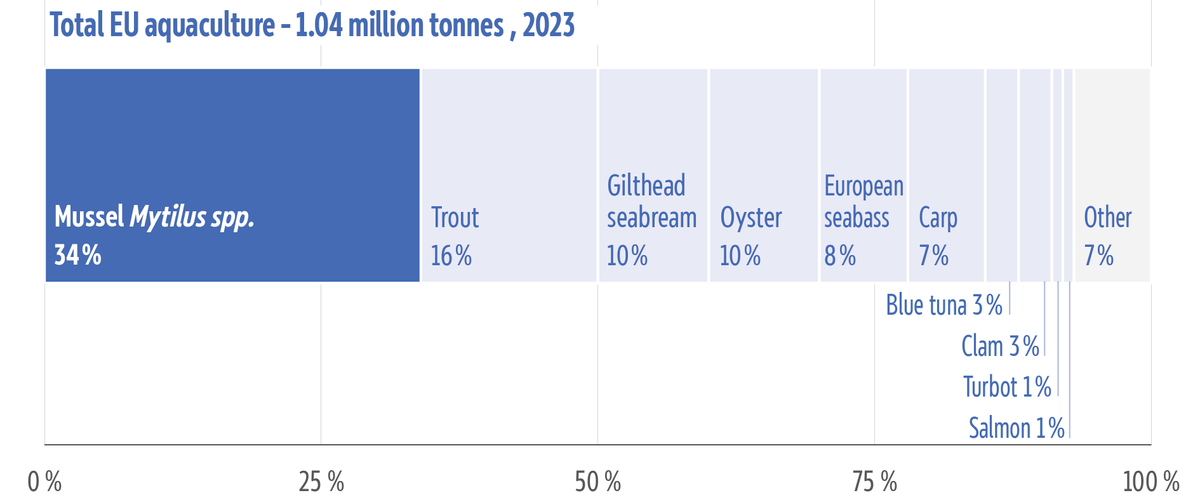
Data source: European Commission, European Market Observatory, The EU Fish Market 2025.; Graphic by Nadejda Kresnichka-Nikolchova, EPRS.
In contrast to other seafood products, for which the EU relies heavily on imports (the EU's seafood-self-sufficiency rate reached 37.5 % in 2022), mussels are still predominantly supplied by EU production. However, the self-sufficiency rate for mussels declined from 81 % in 2018 to 74 % in 2023. Spain, Italy, France and the Netherlands are the main suppliers, accounting for nearly 90 % of EU mussel production. Worldwide, the EU ranks third (18 % of global aquaculture mussel production) after China (44 %) and Chile (20 %).
Mussels are also the main species produced in organic aquaculture, accounting for about half of the total organic aquaculture production. Organic mussel production accounts for 10 % of overall EU mussel production and increased by more than 100 % between 2015 and 2020.
Overall, EU mussel production decreased by 20 % between 2014 and 2023, following declines in all major producing Member States: 29 % in Spain, 10 % in Italy, 5 % in France, and 40 % in the Netherlands. During the same period, average prices and value increased.
Due to the decreasing production, the share of mussel production in total aquaculture fell from 41 % in 2014 to 34 % in 2023. That said, mussels continue to dominate the EU aquaculture sector.
The decrease in production has exacerbated the stagnation of the already very small EU aquaculture sector, which accounts for about 1 % of global aquaculture production.
Between 2020 and 2024, EU imports of mussels from third countries increased by 38 % in volume. The vast majority of mussel imports into the EU consisted of preserved mussels from Chile (86 % in 2024), while 8 % of EU imports consisted of fresh mussels imported from the United Kingdom.
Main species produced and characteristics
The commonly used term 'mussel' refers to species across several families of bivalve molluscs. Mussels have two-part shells, made of calcium carbonate and connected by a hinge in the back. Unlike their relatives, clams and oysters,2 mussels have dark, blue or black shells that are slightly triangular with a rounder edge.
Mussels are filter feeders, i.e. they feed on phytoplankton and organic matter by constantly filtering seawater. In their earliest life stage, mussel larvae float around with water currents for a number of weeks before finding a suitable support to which they attach themselves using a filament known as the byssus or the byssal thread. Mussels can live in a wide variety of habitats and tolerate a broad range of temperatures and levels of salinity.
While there are many species of mussels, only two are commercially farmed in the EU: the Mediterranean mussel (Mytilus galloprovincialis) and the blue mussel (Mytilus edulis), accounting for 69 % and 31 % respectively of the volume produced in 2023.
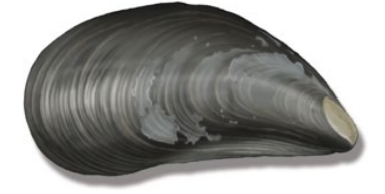
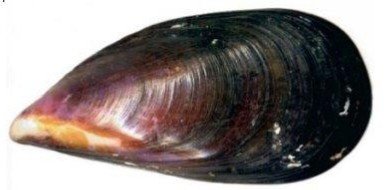
Source: Handbook of fish species exploited in the EU, Directorate-General for Internal Policies, European Parliament, 2024.
The blue mussel can live in many different habitats, including both marine and brackish waters. The species is well acclimated within temperatures between 5°C and 23°C, and does not tolerate higher water temperatures for a longer period. M. edulis typically dwells in intertidal habitats.
The Mediterranean mussel equally tolerates a broad range of environmental conditions throughout its wide distribution range. The species maintains normal physiological functioning at temperatures ranging from 10°C to 30°C. Just as with its more northern counterpart, it prefers rocky intertidal coastlines but tends to grow larger (up to 15 cm).
The main EU producers of blue mussels are France and the Netherlands. The Mediterranean mussel is mainly produced in Spain and Italy.
Mussel production methods
Mussel larvae at an early stage of life (called 'spat' or mussel seed – see box below) are the basis of mussel farming. These 'baby mussels' are collected from the wild either by active harvesting from naturally occurring accumulations of mussel seed, which are subsequently transferred to a plot on a farm, or by passive settlement on purpose-made spat collectors (e.g. nets or ropes). The seed collection method varies depending on the cultivation method. Active collection from the wild is regulated and restricted due to nature protection requirements.3 The method using seed mussel collectors (SMCs) is considered more sustainable but also more costly. Hatchery techniques that would enable a reliable supply of mussel seeds and introduce opportunities for selective breeding are being explored. However, their implementation is likely to further increase operational costs for mussel farmers.
Four main mussel culture techniques are used in the EU; two are suspended and two are associated with the seabed:
-
Raft culture: Mussels are attached to ropes that are vertically suspended in the water from a fixed or floating structure. They are harvested at regular intervals to maintain continuous production throughout the year; the main harvest is from October to March. Raft culture is the dominant technique used in Galicia for Mytilus galloprovincialis and is also used in the French Mediterranean.
-
Longline culture: This method involves floats connected by horizontal lines that support many vertical ropes where mussels are grown. It is used as an alternative to raft culture in more exposed areas subject to stronger wave action. Longlines require larger areas than raft culture and are typically used in Denmark, France, Greece, Ireland and Italy.
-
Bottom culture: For bottom cultivation, mussel seed is placed on underwater culture plots. The mussels grow under natural conditions until they reach consumption size and are then harvested using special trawl nets. While this farming method requires minimal investment, it is strongly exposed to predation. Bottom culture is mostly used in the Netherlands, Germany and Ireland.
-
Bouchot culture: This technique uses poles ('bouchots' in French), planted close to the shore, into the intertidal seabed, thus making use of the swaying of the tides. Mussels grow on ropes that are tied in a spiral around the poles. The bouchot technique can combine spat collection with growing, and is commonly used along the French Atlantic coast and the English Channel.
Figure 4 – Production cycle of the blue mussel 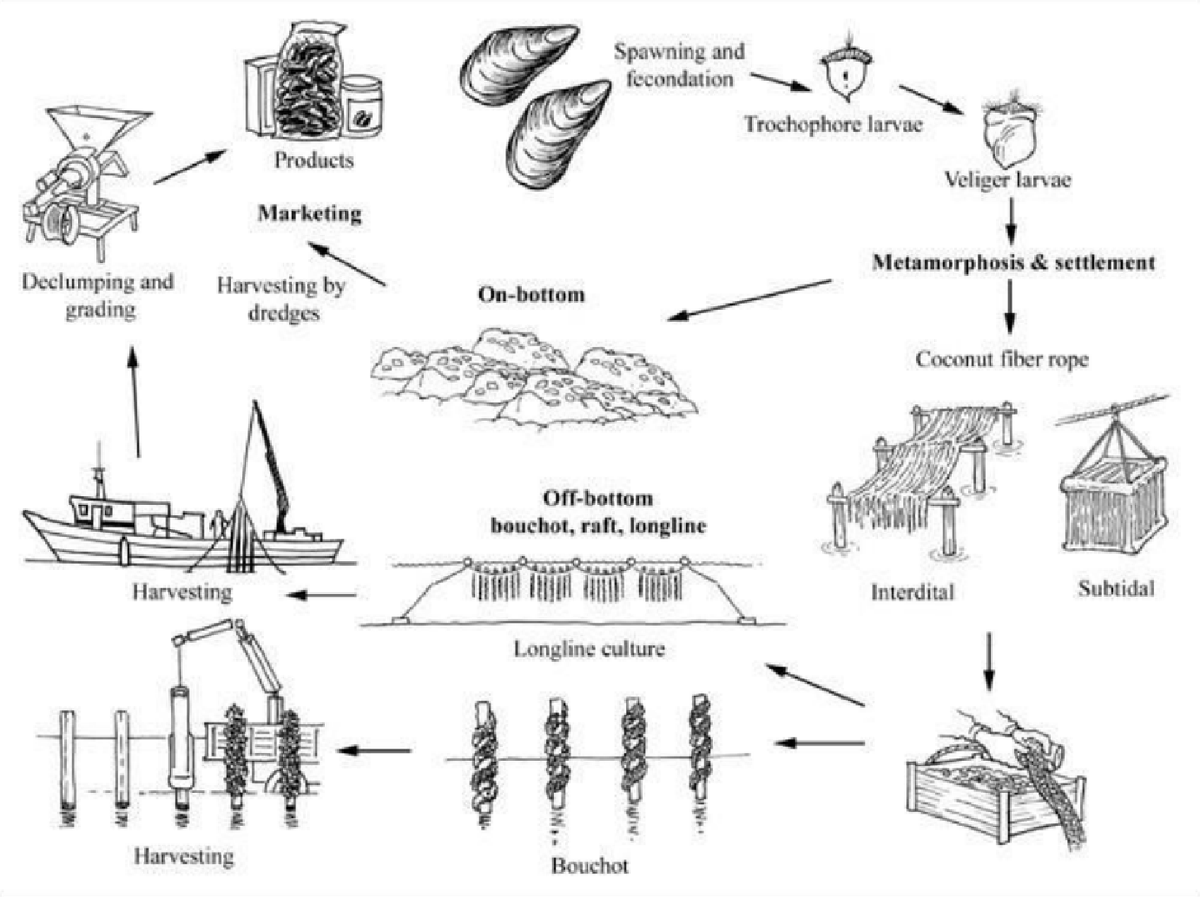
Figure 5 – Production cycle of the Mediterranean mussel 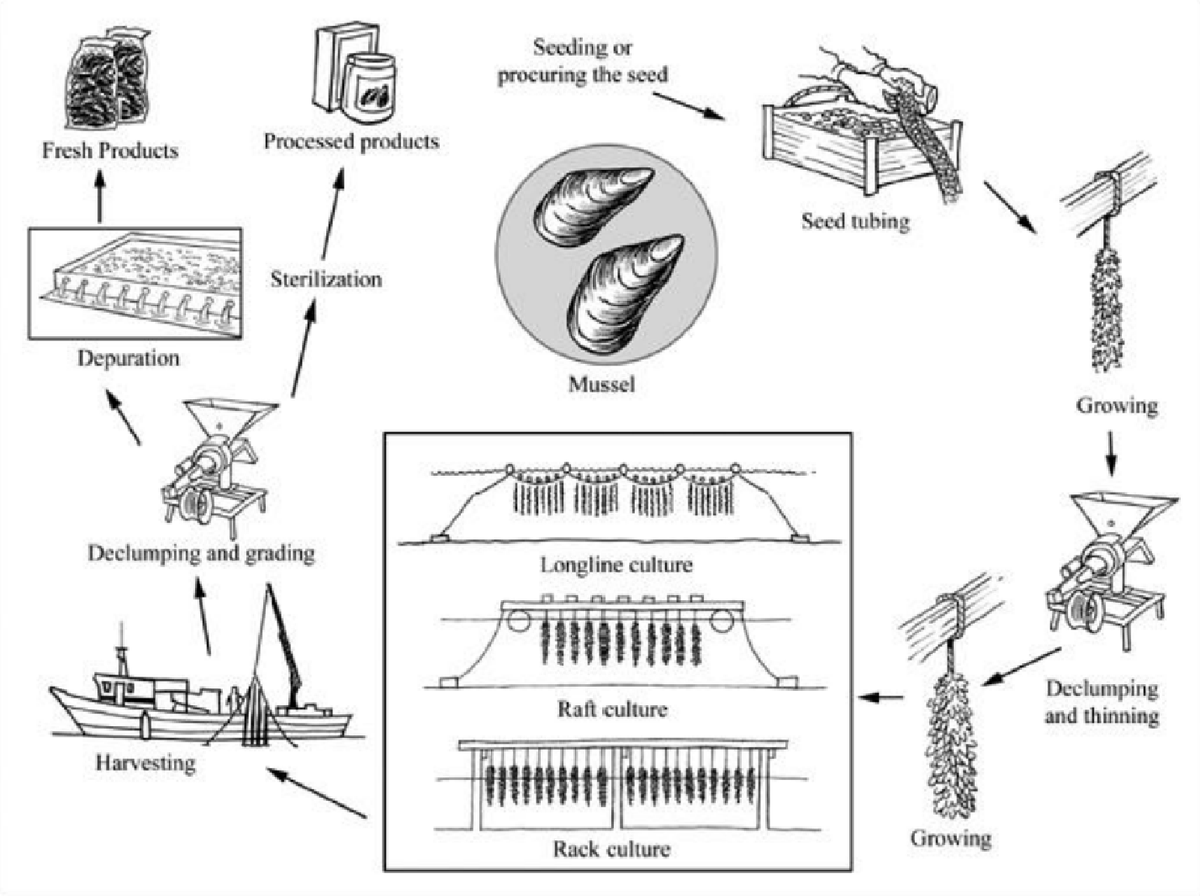
Mussel production can be considered an environmentally friendly business, as it requires no feeding. Instead, the mussels take nutrients from the water, and no antibiotics are used. In particular, offshore longline mussel farms can even contribute to increasing biodiversity by introducing structures that serve as colonisation sites for organisms, as studies show. Moreover, shellfish aquaculture does not release pollutants but can potentially improve water quality and provide other ecosystem services such as carbon sequestration, removal of excess nitrogen and water clarification through filter feeding. However, mussels' passive filter-feeding behaviour makes their farming highly dependent on a safe environment. Maintaining good-quality water is therefore highly important in mussel farming.
Main mussel-producing countries in the EU
Spain is by far the EU's largest mussel-producing country. In 2023, the country's mussel-farming sector produced 155 741 tonnes of mussels, representing more than 40 % of EU production. With about 10 % of global production, Spain is the third-largest producer of mussels in the world, after China and Chile. Within the EU, the country is followed by Italy (57 279 tonnes), France (54 531 tonnes) and the Netherlands (32 501 tonnes).
Spain produces exclusively the Mediterranean mussel, with the majority of production (97 % in 2020) concentrated on the Galician coast, where mussel farming is both a cultural and an economic cornerstone. Galician mussels benefit from a Protected Designation of Origin (PDO) label. However, the Spanish mussel-farming sector has experienced a sharp decrease in production: within two years, the sector has lost 25 % of its production, falling from 203 000 tonnes in 2021 to 155 741 tonnes in 2023, marking the lowest production level in 10 years. With only a slight recovery in 2024,4 a general upward trend is not apparent.
Like Spain, mussel production in Italy is mainly based on the Mediterranean mussel. Italian production is distributed across many different areas, with a high concentration on the Adriatic coast. In Italy, the Scardovari mussel has, for instance, been granted the Protected Designation of Origin (PDO) label. The dominant production system in Italy is suspended long-lines. As in other mussel-producing countries, the Italian sector has experienced a production decrease in recent years, with volumes falling by almost 10 % between 2021 (62 000 tonnes) and 2023 (57 000 tonnes). Exceptionally high mussel mortality rates were reported in 2024, with further dramatic losses expected, particularly for farms along the southern Adriatic.
France produces both blue and Mediterranean mussels,6 with a clear focus on the blue mussel (90 % of national production). North Brittany is the main producing area, accounting for 45 % of national production in 2020. In France, a variety of production methods are used, the bouchot technique predominating in the production of blue mussels. Bouchot mussels are recognised as a Traditional Speciality Guaranteed, while those produced in the Bay of Mont-Saint-Michel have also been granted the Protected Designation of Origin label. Mussel production in France decreased by 18 % from over 66 000 tonnes in 2021 to 54 000 tonnes in 2023.
In the Netherlands, mussel farming mainly focuses on the blue mussel, which is cultivated in the Oosterschelde estuary in the province of Zeeland and in the Wadden Sea on the northern coast. The vast majority of Dutch mussels are grown using traditional bottom culture, but offshore longline culture is gaining ground. An expansion into the North Sea, particularly within wind farms, is currently being tested through a pilot project. The Dutch mussel-farming sector, which accounts for the highest share of organic mussel production in the EU, is losing ground just as those in other Member States are: in 2024, the sector recorded an almost 30 % decrease in production compared with 2023, resulting in the smallest harvest in 30 years.
Challenges
Aquaculture production of mussels in the EU peaked in the late 1990s at more than 600 000 tonnes per year and has shown a decreasing trend since then. The sharp fall in production in recent years affects all major EU producers, with the main producing country, Spain, hit particularly hard. This trend is in contrast to global aquaculture production of mussels, which remained stable between 2014 and 2023, with Chilean production markedly on the rise.
Across the EU, the mussel-farming sector is facing a range of challenges affecting productivity. Several studies identify a combination of economic, social and environmental issues, but conclude that environmental factors are the main drivers of the decline in EU mussel production.
Climate change effects
Human-made climate change due to increased emissions of carbon dioxide (CO2) is known to induce a wide range of changes in the aquatic environment, triggering chain reactions with the potential to disrupt ecological balance. Its main effects include a measurable increase of water temperatures, altered rainfall, air movement and water circulation patterns as well as ocean acidification. Taken together, these phenomena can degrade the environmental conditions on which mussels depend to thrive. The European continent is warming faster than any other part of the world, with a particularly pronounced rise in temperatures around the Mediterranean Sea.
Seawater temperatures above 20°C for M. edulis (blue mussel) and 24°C for M. galloprovincialis (Mediterranean mussel) increase mortality risk in mussel farming, as shown by scientific studies. Temperatures above the seasonal average in both summer and winter have been observed in all mussel-producing countries. For instance, the exceptionally high mussel mortality rates recorded at the end of the summer in Italy in 2024, leading to a loss of 75-100 % of farmed mussels, resulted from a combination of winter temperatures 2-4°C above average and an exceptionally hot, windless summer that pushed water temperatures above the tolerance thresholds of 30-31°C. While increased temperatures are not necessarily lethal, they can stress farmed mussel species, resulting in reduced growth rates and greater susceptibility to diseases.
Moreover, higher water temperatures give rise to a number of other negative effects, such as lower levels of oxygen, which deteriorate the living conditions for many aquatic organisms. In addition, non-native warm-water-affinity species can spread more easily and displace indigenous species, with changes in ecosystems and disruptions of marine food webs as possible consequences.
Furthermore, considerable amounts of CO2 released into the atmosphere are absorbed by the oceans. The gas dissolves in the seawater, where carbonic acid is formed. A more acidic water environment reduces the availability of calcium carbonate, thus making it more difficult for mussels to produce and maintain their calcareous body parts.
Nutrient availability
Mussels feed on phytoplankton, also known as microalgae, which in turn require nutrients, such as phosphorus and nitrogen, for growth. Nutrients can enter the sea via rivers or be released during microbial recycling processes, for example, from the sediment layer on the seabed. Reduced rainfall during the summer months, as has been observed in recent years, for instance in France and Italy, has decreased the inflow of nutrient-containing freshwater and thus the availability of phytoplankton on which mussels feed.7 Scientists also attribute weakened byssal threads to the lack of nutrients: mussels that lose their ability to attach to the substrate and instead float around in the water can be considered lost for producers.
Changing patterns in coastal upwelling have been identified as a further cause of nutrient deficiency.8 Coastal upwelling, a process that typically occurs in coastal regions, brings cold, nutrient-rich deep water to the surface. The high productivity of mussel farming along the Galician coast is particularly strongly associated with this phenomenon. A marked reduction in coastal upwelling was observed in 2023 and 2024 in the Spanish mussel-farming region of Galicia, and can, together with exceptionally high water temperatures, be linked to poor growth, low meat content and detachment from farming structures, leading to historically low production levels during these years.
However, nutrient levels must be kept in balance. Excessive nutrient inputs into aquatic environments can lead to the opposite effect, giving rise to a rapid and massive growth of algae.
Harmful algal blooms (HABs)
Certain types of microalgae produce and release toxins that can be harmful to the organisms living in the same aquatic environment. The rapid and excessive growth of algae causing HABs has become a major environmental problem worldwide over the past two decades and is likely to increase in geographical extent and frequency. Once released into the water, these toxins are taken up by the marine organisms and can accumulate in their flesh, particularly in filter feeders such as mussels. Thus, when harmful algal blooms occur and potentially threaten human health, local authorities often close shellfish harvesting areas as a measure to prevent further damage, resulting in significant economic losses for the farming business.
Furthermore, the decay of large quantities of algae requires oxygen, which is taken from the surrounding water, thereby decreasing the oxygen available for living organisms, and in extreme cases leading to 'dead zones', with little or no oxygen.
There is still some uncertainty as to the causes of algal blooms. While the link with over-availability of nutrients seems to be confirmed, there is no conclusive evidence of the connection with increased water temperatures. Other possible explanations include overfishing and its disruptive effect on the food chain: declines in larger predatory fish are followed by significant increases in their prey, namely smaller fish, and, in turn, by decreases in algae-consuming herbivorous grazers, which are prey for the smaller fish.
Predation
Natural predation by fish, seabirds and other species can lead to substantial losses for farmers. In particular, suspended culture seems to attract various predator species.
In the French regions of Normandy and Brittany, a significant abundance of spider crabs has caused considerable damage to bouchot farms since 2016.9 Although this phenomenon is not directly linked to climate change, it is assumed that certain environmental changes favourable to this species have contributed to its proliferation.10
Another major concern for mussel farmers are gilthead seabream and black seabream, which can cause severe losses, as experienced by some farms on the French Mediterranean coast.11 The seabream also preys on baby mussels and is considered a major cause of the scarcity of spat in commercial mussel farms in recent years. Further predators feeding on mussels include the common starfish, which can consume large quantities of young mussels in particular. The impact of starfish may increase as average winter temperatures rise due to climate change.12
Spat scarcity
Mussel farmers rely for their business on tiny mussel larvae at the earliest stage of their life cycle, which they usually collect from the wild. However, for more than a decade, the mussel-farming sector worldwide has experienced a lower and unpredictable availability of this most important 'raw material'. While the reasons for the scarcity of spat are not yet fully identified, scientists tend to attribute it to a combination of several adverse circumstances including the effects of climate change, increased predation and pollution. The shortening of mussel cultivation time from 18 months to 12 months, due to consumer preference for smaller mussels, combined with reduced spawning opportunities, is another possible explanation. Critical shortages of mussel seed have been reported by the sector all over Europe.
Pollution
Pollutants can have considerable impacts on marine ecosystems, affecting the natural environment of marine coastal areas in particular. Pollution source include both land and sea-based activities ranging from waste disposal, agricultural run-off, industrial activities, inadequately treated wastewater, intense maritime traffic, oil and gas extraction, to abandoned fishing gear. Pollutants comprise physical matter (in particular, plastic litter, including microplastic particles); chemical substances (e.g. heavy metals, pesticides, per- and polyfluoroalkyl substances (PFAS)) and biological substances (e.g. excessive amounts of nutrients such as phosphorus and nitrogen), as well as emerging pollutants such as nanoparticles and pharmaceuticals.
Given that mussels feed by filtering, they are particularly exposed to the substances present in the water they live in. For instance, they can accumulate heavy metals in their soft tissue and finally transfer it through the food chain to other species, including humans as the final consumer.13 The ingestion of microplastics by mussels and their transfer to other organisms along the food chain have been reported; however, the health implications for marine organisms and human consumers have not yet been fully determined.
Diseases and parasites
By filtering water from their environment, mussels easily take up and accumulate bacteria or viruses that possibly affect their own growth and life span as well as consumers' health. Pathogens are often derived from land-based activities and result, for instance, from insufficient wastewater treatment or diffuse agricultural run-off.
The mass mortality events that have affected mussel farms on the French Atlantic coast since 2014 are probably related to the presence of pathogenic bacteria and parasites, including novel ones. The presence of the norovirus has also repeatedly been reported. Mussels' immune response, which allows them to cope with pathogenic microorganisms, relies exclusively on innate immunity. Unlike vertebrates, mussels cannot develop acquired immunity. Consequently, vaccination is not possible, nor can disinfection treatments be applied in open-water environments.
The depuration technique, which allows mussels to purge contaminants, is not effective against viral contamination.14
Operational issues
Seafood farming involves compliance with a large body of legislation, ranging from rules on the use of space and water, animal health, food safety and environmental protection, to rules on organic production and marketing. Alongside the comprehensive legal framework at EU level, a large part of the rules for the aquaculture sector is established at the national, regional and local levels. Moreover, legislation is not always consistent across Member States or even among authorities within the same Member State. The high administrative burden for aquaculture businesses – including, for instance, the procedures for obtaining or extending licences – has repeatedly been highlighted as costly and burdensome.
Moreover, in a context of continued coastal development and the rise of the blue economy, aquaculture faces strong competition for space with other users. Mussel production in particular can be more space-demanding than other aquaculture activities and often loses out to other sectors of the blue economy that benefit from a higher priority at the national level (such as coastal tourism) or enjoy greater social acceptance.
While the different production types vary with regard to their cost structures, labour and energy are the main cost components for most mussel-farming businesses. As in fisheries, personal and family-owned businesses rely to a large extent on unpaid work done by family members. In raft culture, the imputed value of unpaid labour is 43 %, while in the large and professionalised companies informal labour is rare. Energy costs equally vary depending on the production technique and are highest for longline production. Moreover, a sudden rise in energy prices, caused by geopolitical crises, can increase financial burdens for businesses.
On the other hand, none of the mussel-farming techniques involve any feed costs. However, the relatively simple production technology gives producers limited control over the production process, making them dependent on good environmental conditions. The traditional production system offers limited opportunities for economically viable innovation and productivity growth.
Market-related changes
In addition to the inherent challenges, the EU mussel sector is facing pressure from international market dynamics. Over the past two decades, Chile has emerged as a strong competitor on the world market, having seen an 18-fold increase in its mussel production (Mytilus chilensis) between 2000 and 2022 (from 24 000 tonnes to more than 428 000 tonnes). This country, which is the world's second-largest mussel producer, exports more than 90 % of its production and is displacing, in particular, the Galician mussel from the EU market for frozen and processed mussels.
Between 2020 and 2024, EU mussel imports increased by 39 % in volume and by 45 % in value, mostly due to the increase in imports of prepared/preserved mussels. EU imports from third countries came almost exclusively from Chile, accounting for 86 % of import volume in 2024. Over the same period, EU export of mussels decreased by 23 % in volume, while slightly increasing in value (6 %).
Moreover, following the United Kingdom's (UK) withdrawal from the EU, exports of live mussels from EU producers to the UK declined sharply due to stricter sanitary and classification rules. By 2024, UK-bound trade had recovered only partially, with exporters seeking to avoid new sanitary and customs rules by shifting trade towards EU markets.
Outlook
Technological innovation, climate change adaptation, shifting market trends and a stronger awareness among decision-makers might give rise to a number of changes in the EU mussel-farming sector in the coming years.
Innovation
Current technological and research projects aim to make mussel farming more resilient to climate change and other challenges. For instance, the EU co-funded research project ShellFishBoost focuses on the development of advanced tools for genetic selection targeting key traits such as growth, and resistance to heatwaves, salinity stress and harmful algal toxins. Other projects aim to assess the availability of mussel seed, to improve natural recruitment or enhance mussels' immune mechanisms. Projects with a broader focus seek to find innovative solutions for climate change adaptation in the aquaculture sector.
Another option for innovation in the mussel sector could be moving to offshore sites. Areas further away from the coast can reduce the competition for space, provide cleaner water and enable operation on a larger scale. However, this option poses new risks such as harder offshore conditions or additional costs due to the long distance from the shore. The integration of aquaculture activities within an offshore wind park is another approach, which has already been tested in countries such as Belgium and the Netherlands.
Consumer demand
Following growing consumer demand for local and/or organic production, a shift towards even more sustainable production might set the tone for the future. This could, for instance, include an expansion of off-bottom culture systems or the deployment of Integrated Multi-Trophic Aquaculture (IMTA)-arrangements, whereby different species – for example, seaweed and mussels – are co-cultured for mutual benefit. This could go hand in hand with improved consumer information in the form of certification and labelling.
Political awareness
In a 2026 resolution, the European Parliament called on the European Commission to better integrate aquaculture into maritime spatial planning and to improve the sector's operational conditions. In a 2022 resolution, Parliament highlighted the role of aquaculture in the transition to a sustainable food system in Europe and called, among other things, for greater investments to mitigate the impact of disasters and extreme weather. In another 2022 resolution, Members of Parliament stressed the importance of aquaculture within the blue economy. In its answers to recommendations by the Aquaculture Advisory Council, the European Commission refers to a number of recent initiatives at the EU level aimed at addressing climate-related challenges in particular.
Main references
- Soliño, M. et al., 'The vulnerability of mussel aquaculture: Understanding environmental threats and future directions', Aquaculture, Vol. 599, April 2025.
- Altmayer, A., EU aquaculture: State of play, EPRS, European Parliament, June 2024.
Endnotes
Disclaimer
This document is prepared for, and addressed to, the Members and staff of the European Parliament as background material to assist them in their parliamentary work. The content of the document is the sole responsibility of its author(s) and any opinions expressed herein should not be taken to represent an official position of the Parliament.
Copyright
© European Union.
The reuse of this document is authorised under a Creative Commons Attribution 4.0 International (CC-BY 4.0) licence.

https://creativecommons.org/licenses/by/4.0/deed.en
To use or reproduce elements that are not owned by the European Union, permission may need to be sought directly from the respective rightsholders.