
Article page checkbox is not checked in page info.
EU–China political relations
EU–China political relations
Ulrich Jochheim, Members' Research Service
Summary
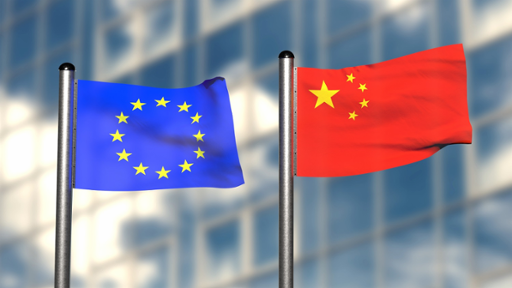
Relations between the European Union (EU) and China have been deteriorating for several years. China's biased growth model has become a serious challenge both to the EU and the world. At the same time, the EU remains wary of Beijing's decisive support of Russia's war of aggression against Ukraine, its assertiveness in the Taiwan Strait and South and East China Seas, and its rising authoritarianism at home. As the 2025 EU–China summit did not produce the results envisaged, the European Commission – with its Chinese counterparts – has established a joint mechanism to monitor trade flows and manage trade frictions, with the mandate to deliver results by October 2026, when the EU Trade Commissioner is expected to visit Beijing. A draft European Parliament recommendation is due to be put to a plenary vote during the October I part-session.
Translations are available for this publication.
Statement of purpose
Own-initiative report: 2025/2117(INI); Committee responsible: AFET; Rapporteur: Hilde Vautmans (Renew, Belgium).
Background
In March 2019, the EU published its EU-China strategic outlook, defining China as a partner for cooperation, a competitor and a systemic rival. Establishing a more balanced and reciprocal economic relationship and taking on security risks in critical assets, technologies and infrastructure figure prominently among the actions recommended by the strategy. However, the approach chosen by China's 15th five-year plan – which started in 2026 – is actually reinforcing these economic imbalances, resulting in a biased growth model (which keeps household consumption down). This growth model has also led to overcapacities in many sectors (such as the automotive sector). This prompted the September 2026 meeting of G20 finance ministers to ask – notwithstanding China's objection – 'to eliminate non-market policies and practices that exacerbate imbalances'.
The support given by President XI Jinping to Russia's war of aggression against Ukraine has led to a further deterioration in bilateral relations. China has slowly become a decisive enabler and dual-use provider, including for goods involved in supply chains for Russian weapons and drones. Relations have also taken a turn for the worse with China's aggressive stance in the Taiwan Strait and the South and East China Seas. At the same time, the Chinese Communist Party has become increasingly authoritarian domestically, and continues the systemic repression of ethnic and religious minorities.
European Parliament position
EU–China political relations also deteriorated following the restrictions imposed by China in 2021 on several MEPs, as well as on the European Parliament's Subcommittee on Human Rights and on over 100 European citizens. Moreover, Parliament has for a long time strongly disapproved of China's transnational repressive activities, including the cross-border application of Chinese law(s), and has been very vocal in condemning human-rights violations in Hong Kong, Tibet and Xinjiang, and in cases such as European Parliament Sakharov-Prize laureate Ilham Tohti and EU citizen Gui Minhai. Furthermore, Parliament has repeatedly underscored the importance of maintaining peace and stability in the Taiwan Strait.
In addition to listing these challenges, the Committee on Foreign Affairs (AFET) draft recommendation on EU–China political relations, scheduled for a plenary vote, insists on the importance for the EU to strengthen itself from within.
Classification
Policy areas: Foreign Affairs
Regions: Asia and Pacific
Committees: Foreign Affairs (AFET)
Statement on the use of AI
Any AI-generated content in this text has been reviewed by the author(s).
Disclaimer
This document is prepared for, and addressed to, the Members and staff of the European Parliament as background material to assist them in their parliamentary work. The content of the document is the sole responsibility of its author(s) and any opinions expressed herein should not be taken to represent an official position of the Parliament.
Copyright
© European Union.
The reuse of this document is authorised under a Creative Commons Attribution 4.0 International (CC-BY 4.0) licence.

https://creativecommons.org/licenses/by/4.0/deed.en
To use or reproduce elements that are not owned by the European Union, permission may need to be sought directly from the respective rightsholders.