
Article page checkbox is not checked in page info.
Making the most of parliamentary diplomacy
Making the most of parliamentary diplomacy Parliamentary Democracy Forum 2026
Rosamund Shreeves, Members' Research Service
Summary
In an increasingly turbulent geopolitical environment, parliamentary diplomacy has the potential to complement more traditional forms of diplomacy to the benefit of the EU and its Member States, citizens and parliaments themselves. The current international context has sparked reflection on the effectiveness of existing tools and frameworks for parliamentary diplomacy and opportunities for its further development.
The concept and added value of parliamentary diplomacy
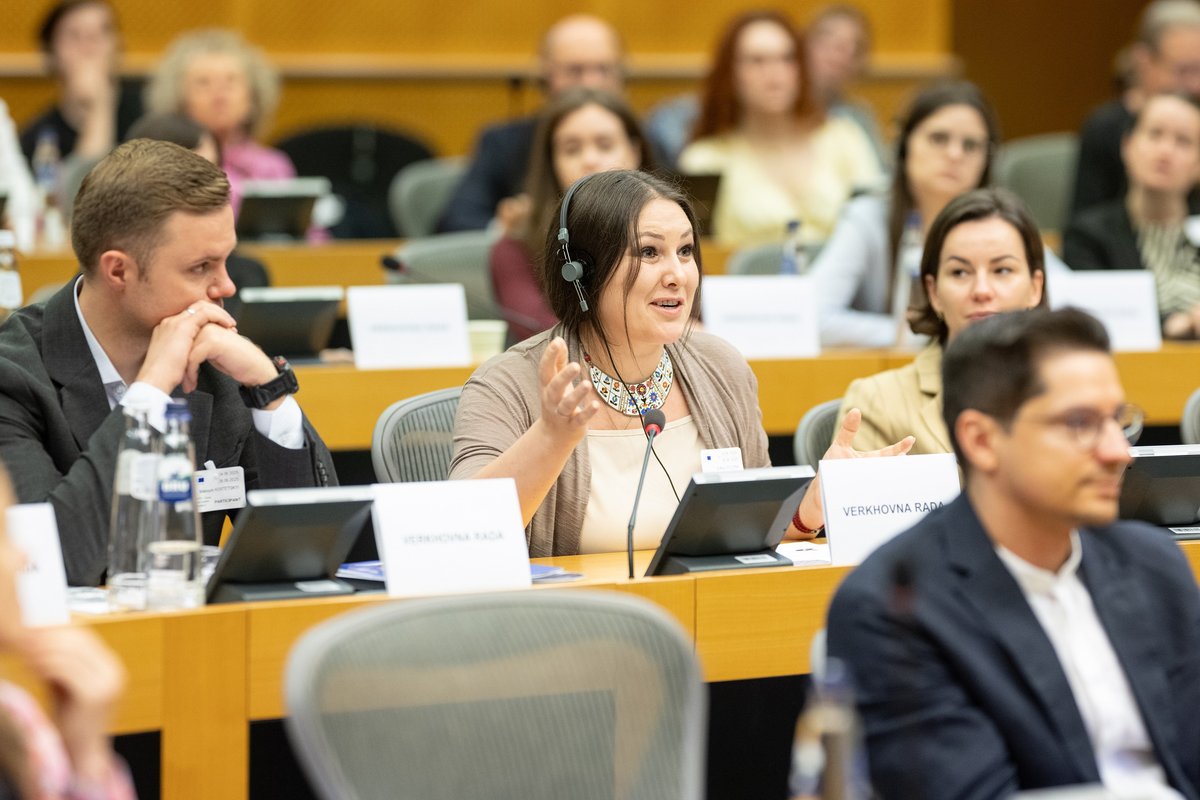
Parliamentary diplomacy describes the range of activities conducted by parliaments or individual parliamentarians to foster understanding between countries, improve scrutiny of the executive, increase the democratic legitimacy of inter-governmental organisations and shape foreign policy. Its recent expansion has complemented the traditional diplomacy undertaken by diplomats and government officials. As elected bodies, parliaments have the political weight to promote dialogue in sensitive situations, while their distance from the executive allows them to communicate with fewer constraints. Parliamentarians can access alternative channels, such as personal relationships with counterparts, transnational party networking, informal dialogue, local stakeholders and international parliamentary institutions. This makes parliamentary diplomacy a resource that can be drawn on when other channels are blocked and an effective means of preventive diplomacy. It is also appreciated for bringing values and principles into international affairs, by promoting democracy, human rights and the rule of law. Faced with global challenges – from democratic backsliding to conflict, climate change to rapid technological development and eroding multilateral governance – parliamentary diplomacy allows legislators to address complex issues that cannot be understood through a national or intergovernmental lens alone. The access it affords to information on international decision-making empowers them to make better-informed decisions on issues affecting constituents, providing direct benefits to parliaments and citizens.
Structures and tools for parliamentary democracy
The means parliaments use to engage in parliamentary diplomacy include structures such as standing committees for external policy and bodies responsible for conducting bilateral, regional or interparliamentary cooperation and democracy support. Presidents and speakers often play a prominent role. Tools include parliamentary instruments (resolutions, debates and budget scrutiny) and diplomatic activities (hosting foreign guests, conducting fact-finding visits abroad, participating in formal bilateral, regional or multilateral parliamentary fora, informal networking, capacity-building with partner parliaments, and engagement with the public and civil society).
Impacts of parliamentary diplomacy
While the impacts of parliamentary diplomacy are hard to quantify, research illustrates its potential and why it matters in EU external relations. The European Parliament is credited with helping to strengthen the EU's credibility in international climate negotiations, shape EU policy towards Taiwan, maintain trans-Atlantic relations and support democracy. Since Russia's full-scale invasion of Ukraine, sustained interparliamentary cooperation has helped to mobilise international support and maintain a unified EU stance. The response of national parliaments, the European Parliament and parliamentary assemblies to tensions around Greenland shows how parliamentary diplomacy can keep communication channels open and promote multilateral, rules-based cooperation on contentious issues.
Parliamentary diplomacy in the EU
The European Parliament's role in EU external action has expanded since the entry into force of the Treaty of Lisbon in 2009. Parliamentary diplomacy is one of the soft powers it exercises to assert itself in this domain. Its resources include 48 standing delegations, comprising MEPs from diverse political groups, which forge relations with parliaments in third countries, regions and regional/international organisations. Capacity-building and mediation for parliaments outside the EU are key to Parliament's work on global democracy support, overseen by the Democracy Support and Election Coordination Group (DEG), established in 2012. Parliament is also represented abroad through its liaison offices (EPLOs) in London and Washington and antennae.
National parliaments in the EU also use bilateral and multilateral mechanisms such as the German Bundestag's 47 bilateral and multilateral parliamentary friendship groups and the Swedish Riksdag's 40 parliamentary friendship associations to conduct parliamentary diplomacy. The French National Assembly sees parliamentary diplomacy as part of France's wider influence strategy and is developing a national doctrine. Belgium illustrates how sub-national parliaments can engage in their own activities.
The framework for inter-parliamentary cooperation between the European Parliament and EU national parliaments, strengthened in the Lisbon Treaty, includes regular inter-parliamentary conferences and ad-hoc joint parliamentary and joint committee meetings on specific topics. The lead role in interparliamentary relations is played by the Conference of Speakers of the European Union Parliaments (EUSC). The Conference of Parliamentary Committees for Union Affairs of Parliaments of the European Union (COSAC) brings members of European Affairs Committees together to address EU policy in general, while the Inter-Parliamentary Conference for the Common Foreign and Security Policy and the Common Security and Defence Policy, created in 2012, is a forum for discussing current issues. Other mechanisms include the Democracy Support Network and Inter-Parliamentary EU Information Exchange.
At global level, the European Parliament is an associate member of the Inter-Parliamentary Union (IPU) and EU national parliaments are among its 183 members. The IPU's 2027-2031 strategy stresses that the challenges now facing the multilateral system require stronger parliamentary diplomacy, including steps to enable parliaments to take quick action to respond effectively in real time to emerging issues.
Improving the effectiveness of parliamentary diplomacy
Benchmarking has identified internal elements that support parliaments to conduct effective diplomacy, such as transparent procedures, inclusive and politically diverse delegations, monitoring and follow-up and good communication with the executive. Increasing attention is being paid to how parliaments and the executive can work towards common policy objectives while retaining their autonomy. In France, the National Assembly is exploring a parliamentary diplomacy framework that would make it part of a coordinated 'Team France'. Likewise, in its 2024 resolution on its role and the role of parliamentary diplomacy in the EU's foreign and security policy, the European Parliament called for a Team Europe pilot programme to ensure a joined-up interinstitutional approach.
Statement on the use of AI
Any AI-generated content in this text has been reviewed by the author(s).
Disclaimer
This document is prepared for, and addressed to, the Members and staff of the European Parliament as background material to assist them in their parliamentary work. The content of the document is the sole responsibility of its author(s) and any opinions expressed herein should not be taken to represent an official position of the Parliament.
Copyright
© European Union.
The reuse of this document is authorised under a Creative Commons Attribution 4.0 International (CC-BY 4.0) licence.

https://creativecommons.org/licenses/by/4.0/deed.en
To use or reproduce elements that are not owned by the European Union, permission may need to be sought directly from the respective rightsholders.