
Article page checkbox is not checked in page info.
Per- and polyfluoroalkyl substances: Tackling 'forever' chemical pollution
Per- and polyfluoroalkyl substances Tackling 'forever' chemical pollution
Vivienne Halleux, Members' Research Service

Summary
The thousands of per- and polyfluoroalkyl chemicals (PFAS) contain carbon-fluorine bonds, one of the strongest chemical bonds in organic chemistry, making them resistant to degradation. The favourable physicochemical properties that make PFAS valuable for countless applications and products pose huge environmental challenges: PFAS are persistent. Due to their persistence and mobility, widespread use and resulting emissions, PFAS are now ubiquitous contaminants, polluting soil and water resources. Remediation is technically challenging and very costly. Human biomonitoring shows PFAS are omnipresent in populations, raising serious health concerns. Given the scale of contamination and remediation limitations, scientists and regulators deem pollution prevention, i.e. regulating PFAS at source, the most sustainable option.
European Union (EU) legislation has increasingly covered PFAS, with decisive Parliament input. However, regulatory steps taken so far are fragmented and cannot effectively address PFAS risks. Due to the sheer number of PFAS, regulating them individually is impractical and inadequate. The EU chemicals strategy for sustainability committed to regulate PFAS as a group. The European Chemicals Agency is assessing a wide-ranging restriction proposal (targeted ban) under the EU Regulation on the registration, evaluation, authorisation and restriction of chemicals (REACH) that covers some 10 000 compounds. At stake are the need to protect citizens' health and preserve essential natural resources; the technical and economic challenges for businesses; Europe's need to catch up on innovation; and PFAS risks for investors and insurers.
The European Chemicals Agency is expected to transmit its final opinion to the European Commission by the end of 2026. Parliament will scrutinise the Commission's draft restriction.
Background
Per- and polyfluoroalkyl substances (PFAS) are a group of several thousand chemicals containing carbon-fluorine bonds, one of the strongest chemical bonds in organic chemistry. These bonds make PFAS resistant to degradation when used, but also in the environment, which has earned them the moniker 'forever chemicals'.
Because of their favourable physicochemical properties (e.g. oil and water repellence, high chemical, physical and temperature resistance and ability to act as surfactants), PFAS are applied in almost all industry sectors and a wide range of consumer products. Products containing or coated with PFAS include carpets, clothing and other textiles, cookware (such as non-stick pans), food packaging (such as fast-food containers and wrappers, grease-resistant paper), electronics, personal care products (e.g. shampoo, dental floss) and cosmetics, cleaning products, etc. In industrial production, PFAS are employed in machinery, filters, lubricants, seals and membranes. PFAS are used in the production of components in semiconductors and medical devices, as surfactants in fire-fighting foams, as co-formulant in plant protection products, biocides, feed additives, pharmaceuticals and paints. A 2020 study identified over 200 use categories and subcategories for more than 1 400 individual PFAS.
The PFAS family
Characterised by their high thermal and chemical stability, PFAS form a diverse group that can be broadly divided into non-polymers and polymers. Non-polymeric PFAS include, amongst many other molecules, perfluoroalkyl carboxylic acids (PFCAs, such as PFOA), perfluoroalkane sulfonic acids (PFSAs, such as PFOS), fluorotelomer-based compounds (e.g. 6:2 FTOH), per- and polyfluoroalkanes (e.g. perfluorooctane), perfluorotrialkylamines and per- and polyfluoroalkyl ether compounds, such as perfluoroalkyl ether carboxylic acids (PFECAs, e.g. HFPO-DA, better known as GenX). Polymeric PFAS include fluoropolymers, side-chain fluorinated polymers and perfluoropolyethers (PFPEs).
The exact number of PFAS is difficult to quantify and is believed to continue growing. Over 4 700 PFAS-related CAS numbers were identified in the OECD's Global Database. The EU REACH restriction dossier covers over 10 000 different compounds. The US Environment Protection Agency's consolidated list, updated in January 2026, encompasses more than 21 000 PFAS.
The same properties that make PFAS valuable for industrial applications and products pose significant environmental challenges. Most PFAS are either persistent themselves or are transformed into persistent compounds in the environment. This has resulted in their accumulation in the environment since they went into large-scale production in the 1940s. Because of their persistence and mobility, combined with decades of widespread use and resulting emissions, PFAS have been found to be ubiquitous environmental contaminants, present from the Arctic to urban rainwater. PFAS have been detected in biota, drinking water, food, air, and human serum, raising concerns due to reported toxicity impacts in both animals and humans.
Scientific research and regulatory efforts have led to a gradual phase out of some PFAS due to their inherent hazards. Action initially focused on certain long-chain compounds, particularly perfluoroalkyl carboxylic and sulfonic acids. The production and use of the most extensively manufactured (and hence most frequently detected) molecules, perfluorooctanesulfonate (PFOS) and perfluorooctanoate (PFOA), are now restricted or banned globally, and the number of PFAS subject to regulations and controls has since increased. Yet generally, regulated PFAS have been substituted with other types of PFAS. As a result, a multitude of alternative PFAS have emerged in the marketplace, of which the presence, transport, fate and effects are less understood.
Due to the sheer number of PFAS, the approach taken so far for risk management – assessing and regulating them individually, or in small groups of closely related substances – is impracticable and inadequate to effectively protect health and the environment. The very high environmental persistence, bioaccumulation, and potential toxicity of the entire PFAS class prompted PFAS scientists to call for a class approach in managing them and to ask for limits to their production and use.1 Under its chemicals strategy for sustainability, the EU has committed to regulate PFAS as a group. The European Chemicals Agency is assessing a wide-ranging restriction proposal under REACH (often referred to as 'universal PFAS restriction') that covers some 10 000 compounds.
Health and environmental concerns
PFAS are released into the environment throughout their entire lifecycle: from PFAS production to use of PFAS in manufacturing, use of PFAS-containing products and disposal. The numerous and diverse emissions and the extensive distribution of entry routes for PFAS (both point-source and non-point-source) have led to a ubiquitous contamination of the environment.
Pollution of drinking water and agricultural soil (through the application of PFAS-contaminated sludge, atmospheric deposition, irrigation, soil additives, use of certain pesticides), is of particular concern. Food and water are the main human exposure pathways to PFAS. Human biomonitoring shows the omnipresence of PFAS in human populations, including in 100 % of young people tested, although the specific molecules and their concentrations vary. Communities in PFAS 'hotspots' have higher exposure and risk of disease. In Europe, there has been an increase in sites identified with high PFAS loads in soil and/or groundwater, often related to the use of aqueous film-forming foams (in fire-fighting training and military bases) or the presence of fluoropolymer production plants. Conservative estimates by the Forever Pollution Project in 2023 suggest nearly 23 000 sites in Europe are contaminated at levels requiring public authority attention, with over 2 300 hotspots where contamination reaches levels considered hazardous to health.
A large body of epidemiological and experimental data exists on the health effects of PFAS, but this data is available for fewer than 50 different PFAS, meaning that data are lacking to adequately assess the impacts of the thousands of other substances in use today.2 PFAS are associated with liver damage, thyroid disease, kidney and testicular cancer (high certainty). In November 2023, the International Agency for Research on Cancer classified PFOA as 'carcinogenic to humans' (Group 1), and PFOS as 'possibly carcinogenic to humans' (Group 2B). Certain PFAS are toxic for reproduction and can harm the foetal development. Some PFAS are also suspected of interfering with the human endocrine (hormonal) system. There is evidence of immunosuppression, diminished vaccine efficacy, and increased risk of infections, allergies, asthma and atopic dermatitis following in utero, infant and early childhood PFAS exposure. A 2022 study linked exposure to PFAS to a dozen diseases. Research that progressed beyond the best-studied substances points out emerging PFAS can give rise to similar concerns.
A 2019 study for the Nordic Council of Ministers estimated health-related costs linked to PFAS exposure to be €52‑84 billion annually across Europe. Quantifiable annual health costs from human exposure to only four well-studied 'legacy' PFAS (the already regulated PFOA, PFOS, PFHxS and PFNA) were estimated at €39.5 billion in a new study for the European Commission.
Once in the environment, it is very costly and impractical to remove PFAS through remediation, if even possible at all. Because of the high chemical and thermal stability of PFAS and their presence as mixtures in environmental matrices, their remediation both in water and soil is extremely challenging. Many existing treatment technologies have proven inadequate, and PFAS often require new technologies or innovative combinations of existing ones. Treatment typically involves separation/concentration of PFAS to facilitate removal from the contaminated medium, followed by destruction. Immobilisation methods can be used to contain the spread of PFAS within soils and into groundwater. While remediation is needed following specific contamination events, managing environmental stocks of PFAS through treatment alone is unaffordable, with current costs to remove and destroy the total PFAS mass released annually into the environment likely exceeding the global GDP of US$106 trillion, according to recent research. A media investigation led by Le Monde estimated the costs of depolluting Europe from PFAS at between €95 billion to €2 trillion over the next 20 years, depending on the scenario considered. The 2026 Commission study expects costs to range from €330 billion to €1.7 trillion by 2050.
Given the scale of PFAS contamination, the technical challenges and high costs of remediation, focusing on pollution prevention appears to be the most effective and sustainable option.
Focus on trifluoroacetic acid (TFA)
Belonging to the group of ultrashort-chain PFAS, trifluoroacetic acid (TFA) is the most consistently and commonly detected substance in environmental monitoring. TFA is used as a basic chemical in the production of fluorinated compounds. In addition, TFA is a degradation product (i.e. formed from the breakdown) of other PFAS notably used as active ingredients in plant protection products, biocides, pharmaceuticals and numerous industrial chemicals as well as in propellants and refrigerants.
Research shows that TFA exposure is widespread and increasing. Highly soluble in water and mobile, TFA easily finds its way into the water cycle. TFA removal from raw waters used for drinking water production is difficult and only technically possible with reverse osmosis. However, this solution is expensive, requires a substantial amount of energy and leads to considerable water loss. For scientists, TFA meets planetary boundary threat criteria. Binding action is thus required to reduce the emissions of TFA and its many precursors to protect future generations from the potential irreversible effects of TFA accumulation.
The European Commission has tasked the European Chemicals Agency (ECHA) and European Food Safety Authority (EFSA) with reviewing the environmental behaviour of TFA coming from biocides and pesticides in soil and water. Their scientific findings are expected by 1 June 2027. EFSA is also reviewing the health-based reference values for TFA, with a deadline set for 31 July 2026.
In June 2026, ECHA's Risk Assessment Committee recommended updating the harmonised classification of TFA as toxic to reproduction (Category 1B), persistent, mobile and toxic (PMT)/very persistent and very mobile (vPvM), following a proposal from Germany. The Risk Assessment Committee's opinion now goes to the Commission for decision.
How PFAS are regulated
Sectoral EU legislation
Owing to the serious concerns they raise, EU legislation has increasingly addressed PFAS, with some already restricted under REACH. As part of the EU chemicals strategy for sustainability, adopted in October 2020, the European Commission committed to present a proposal to restrict PFAS under REACH for all non-essential uses, including in consumer products. The Commission also pledged to address PFAS with a group approach under the relevant legislation on water, sustainable products, food, industrial emissions, and waste (sewage sludge).
Steps taken so far at EU level include:
Chemicals
-
REACH Regulation: provides for restrictions on certain PFAS including C9‑C14 PFCA; PFHxA and PFAS used in firefighting foams. Some PFAS are on the candidate list of substances of very high concern: PFOA, C9‑14 PFCAs, PFHxS, HFPO‑DA (a substitute for PFOA in fluoropolymer production), PFBS (a replacement of PFOS) and PFHpA.
-
CLP Regulation: includes harmonised classification and labelling for some PFAS (PFOA, APFO, PFNA, PFDA, PFHpA, BPAF and 6:2 FTOH). Work is ongoing on PFHxA and, as mentioned, on trifluoroacetic acid (TFA).
-
Persistent Organic Pollutants Regulation (implementing the Stockholm Convention): prohibits manufacturing, placing on the market and use of PFHxS, PFOS and PFOA. Long-chain perfluorocarboxylic acids (C9-21 PFCAs) are about to be included in the regulation, following their listing under the Stockholm Convention in May 2025.
Water
-
Drinking Water Directive: sets standards for some PFAS in drinking water, to be complied with by 12 January 2026 (i.e. a limit value of 0.1 µg/l for a sum of 20 individual PFAS; a limit value of 0.5 µg/l for total PFAS concentration, with a possibility for Member States to use either one or both of these PFAS parameters); and requires the Commission to establish guidelines regarding methods of analysis for monitoring of PFAS (adopted in 2024).
-
Water Framework, Groundwater and Environmental Quality Standards directives: under the recent directive updating chemical water pollutants listed for control in surface waters and groundwater, TFA is added to the group of 24 PFAS initially proposed by the Commission for inclusion in the list of priority substances in surface water, with an environmental quality standard (EQS) based on the sum of substance concentrations. For groundwater, the PFAS standard is aligned with the parametric value defined in the Drinking Water Directive, which implies that any updates for drinking water would automatically apply to groundwater. A separate sum EQS is set for four PFAS (PFHxS, PFOS, PFOA and PFNA).
-
Recast Urban Waste Water Treatment Directive: includes provisions to improve the monitoring of PFAS in the inlets and outlets of urban wastewater treatment plants; based in particular on the monitoring data, tasks the Commission with assessing, when evaluating the directive, the feasibility and appropriateness of developing an extended producer responsibility system for products generating PFAS.
Soil
-
Soil Monitoring and Resilience Directive: provides for increased monitoring of PFAS as soil contaminants; requires Member States to identify sites potentially contaminated by anthropogenic point-source activities, and, if the contamination is confirmed, to ensure that the contaminated site does not pose an unacceptable risk to human health or to the environment (by taking adequate risk reduction measures, including soil remediation).
Industry
-
Industrial Emissions Directive: provides the necessary legal mechanism to control industrial emissions of hazardous substances such as PFAS, but this mechanism has not yet been deployed to set binding limits for PFAS in air, water, or soil.
-
Industrial Emission Portal Regulation: collects the data on industrial releases of two PFAS banned in the EU, PFOA and PFHxS, with few exemptions. The Commission can update the list of pollutants emissions to be reported by Member States through delegated acts.
Food
-
Regulation on maximum levels for certain contaminants in food: contains maximum levels for PFOS, PFOA, PFNA and PFHxS and the sum of PFOS, PFOA, PFNA and PFHxS in eggs, fish meat, crustaceans, bivalve molluscs, meat and offal from farmed and wild animals.
-
European Commission Recommendation on the monitoring of PFAS in food: sets indicative levels for PFAS concentrations in fruit, vegetables, milk and baby food.
Products
-
Packaging and Packaging Waste Regulation: prohibits, from 12 August 2026, the placing on the market of food-contact packaging containing PFAS in a concentration above certain limit values.
-
Cosmetic Products Regulation: prohibits some PFAS in cosmetic products.
-
Plant Protection Products (PPP) Regulation: in May 2025, the Commission took a non-renewal decision on the approval of the active substance flufenacet, which breaks down into TFA (as is typical with PFAS-containing PPPs).
-
Toy Safety Regulation: prohibits the intentional use of PFAS in toys (from 1 August 2030).
While restrictions and other legislation address some of the concerns linked to the use of certain PFAS, they cannot fully and effectively tackle all risks from all PFAS uses (i.e. at the source).
Steps taken at country level
In Europe, countries such as Austria, France and Denmark have already adopted specific action plans on PFAS or are drafting one (Sweden). In Denmark, a national ban on the use of all organic fluorine compounds in paper and cardboard for food packaging has been in force since 1 July 2020. From 1 July 2026, the import and sale to consumers of clothing, footwear and certain waterproofing agents containing PFAS above a certain threshold (i.e. with a total fluorine content of 50 mg F/kg or more) will be prohibited. Denmark also decided to withdraw the approval of a total of 33 pesticides containing active substances that can form and leach TFA into groundwater. Following this decision, Norway, Sweden and the Netherlands initiated reassessment of products containing these active substances. In 2025, France adopted a law banning PFAS in cosmetics, textiles used for clothing, shoes and ski wax from 1 January 2026. To help fund the cleanup of contaminated drinking water resources, the new French law imposes a fee for any installation discharging PFAS into water, at a rate of €100 per 100 grammes.
Worldwide, Canada is moving towards a phased prohibition on PFAS as a class. The United States adopted a three-year PFAS strategic roadmap in 2021, taking action on several fronts. Several American states have banned the use of PFAS in products, including firefighting foams, textiles, food packaging materials, cosmetics (e.g. Maine, California, New-York, etc.). In Asia, Japan, China, and South Korea are also progressively tightening controls on PFAS.
'Universal' PFAS restriction proposal
Source: based on ECHA. Graphics by Samy Chahri, EPRS
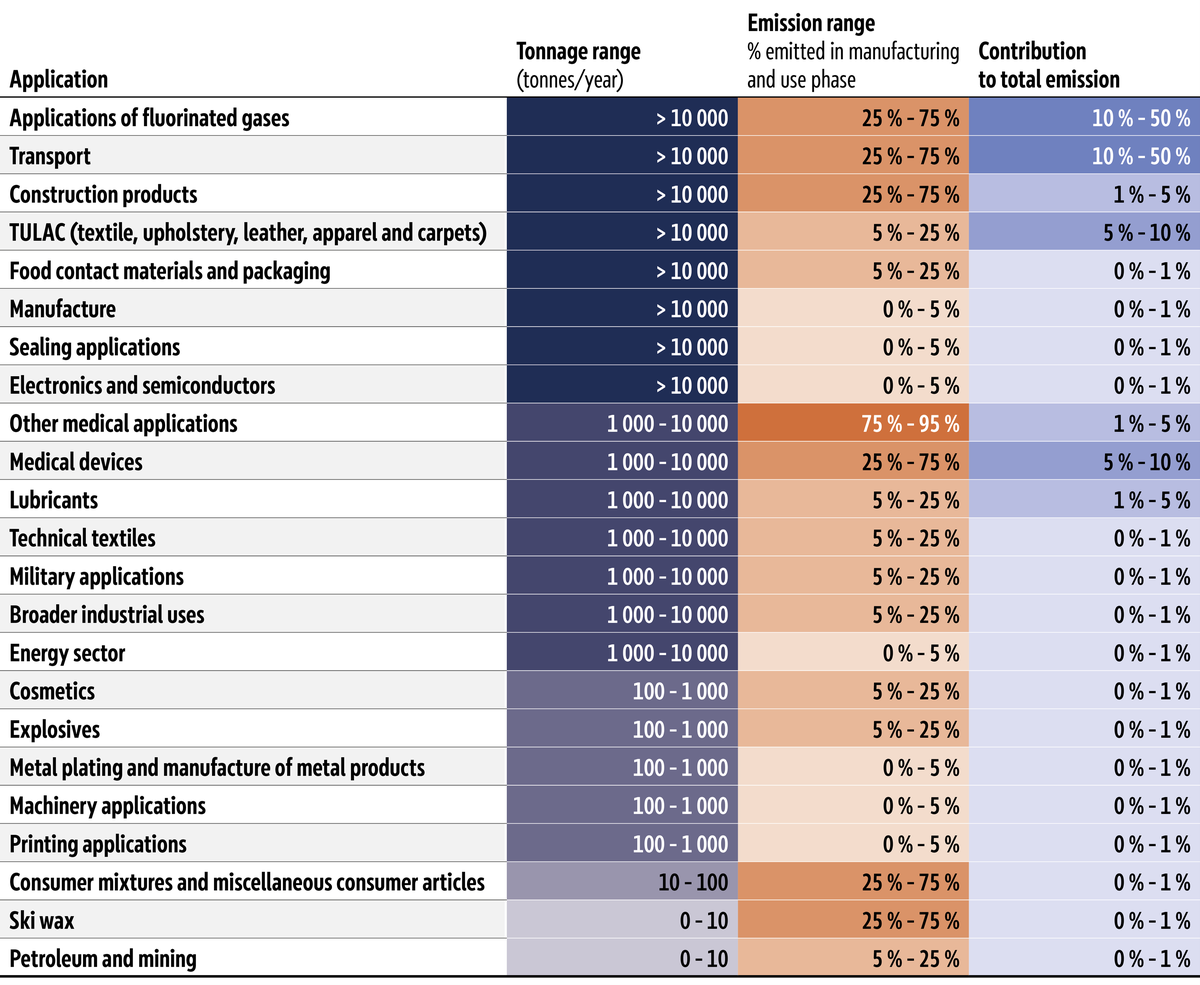
The restriction proposal, prepared by authorities in Denmark, Germany, the Netherlands, Norway and Sweden, was submitted to ECHA in January 2023. The restriction process is progressing along the procedure laid down in the REACH Regulation (Figure 1), irrespective of the targeted revision of REACH announced by the Commission in the chemicals strategy and now abandoned.The restriction proposal builds on the Organisation for Economic Co-operation and Development's definition of PFAS, identifying a chemical structure common to all. It encompasses more than 10 000 PFAS and covers both non-polymers and polymers. All PFAS within scope are either very persistent themselves or degrade into very persistent PFAS in the environment. While this is not homogenous across all PFAS, many trigger additional concerns linked to mobility, eco-toxicity, bioaccumulation, long-range transport and global warming potential, and human toxicity. A group restriction based on structural similarity and equivalent hazard should prevent regrettable substitution (replacement of a hazardous chemical with another that may pose similar or even greater risks to health or the environment), hence future exposure to PFAS not currently in use.The restriction proposed by the five national authorities (the dossier submitters), following assessment of three possible options,3 would prohibit the manufacture, use and placing on the EU market of PFAS substances on their own, and as constituents in other substances, in mixtures and articles above defined concentration limits, with a general transition period of 18 months and use-specific, mostly time-limited derogations (5 or 12 years). The proposed derogations are based on the expected substitution potential (5 years for uses where alternatives are under development but not available at the entry into force of the restriction; 12 years for uses where research and development efforts have not so far identified possible alternatives or where certification processes for alternatives cannot be achieved within a five-year transition period). Specific derogations would apply to second-hand articles, spare parts and recycled materials. Continued use conditional upon emission limits is proposed for PFAS manufacturing to ensure PFAS supply for derogated uses. PFAS used as active substances in plant protection products, biocidal products and medicinal products (human and veterinary) are outside the restriction scope, as they are covered by their respective legislation.Reporting requirements are proposed for 12-year or longer derogations and for all applications of fluorinated gases, to gather data on uses and quantities and monitor any changes. This would, in case of any concerns for a sector, support the Commission in future decision-making (review of the restriction, action under sector-specific legislation). Manufacturers, importers and downstream users of fluoropolymers and perfluoropolyethers making use of any derogation would be required to prepare a site-specific management plan, with information on the identity of the substances and the products for which they are used; justification for use; and conditions of use and safe disposal. The plan should be reviewed annually and kept available for inspection.Unless a specific derogation has been formulated, all uses of PFAS4 are covered by the restriction proposal, regardless of whether they have been specifically assessed and/or mentioned in the dossier or not. To manage the multitude of PFAS applications, the dossier submitters organised the dossier based on sectors, i.e. groups of (economic) activities and/or industrial areas in which PFAS are used in a similar way or related purposes across supply chains. Where applications of PFAS are used in many sectors in a similar way (sealings, machinery, technical textiles, applications of fluorinated gases, etc.), these have been handled as an overarching application applicable to several sectors. Twenty-three sectors/applications, covering numerous sub-uses, have been considered (see Figure 2 below).ECHA's Committee for Risk Assessment (RAC) adopted its opinion on 3 March 2026. The Committee for Socio-Economic Analysis (SEAC) agreed on its draft opinion on 10 March 2026.Both committees support the restriction as the most appropriate regulatory measure to address the risks of PFAS. They find the proposed option is practical and proportionate. Yet, in case derogations are supported by the decision-maker, RAC recommends additional risk-management measures, including site-specific PFAS management plans (applying to all types of PFAS and to all industrial sites where manufacturing and downstream uses of PFAS and PFAS-containing mixtures are allowed to continue), with monitoring of emissions; safe use and disposal instructions; and effective supply chain communication (via labelling of products, safety datasheets/technical datasheets or product passports) to minimise PFAS emissions. SEAC supports the RAC recommendation, however without being able to conclude if the measures are proportionate.
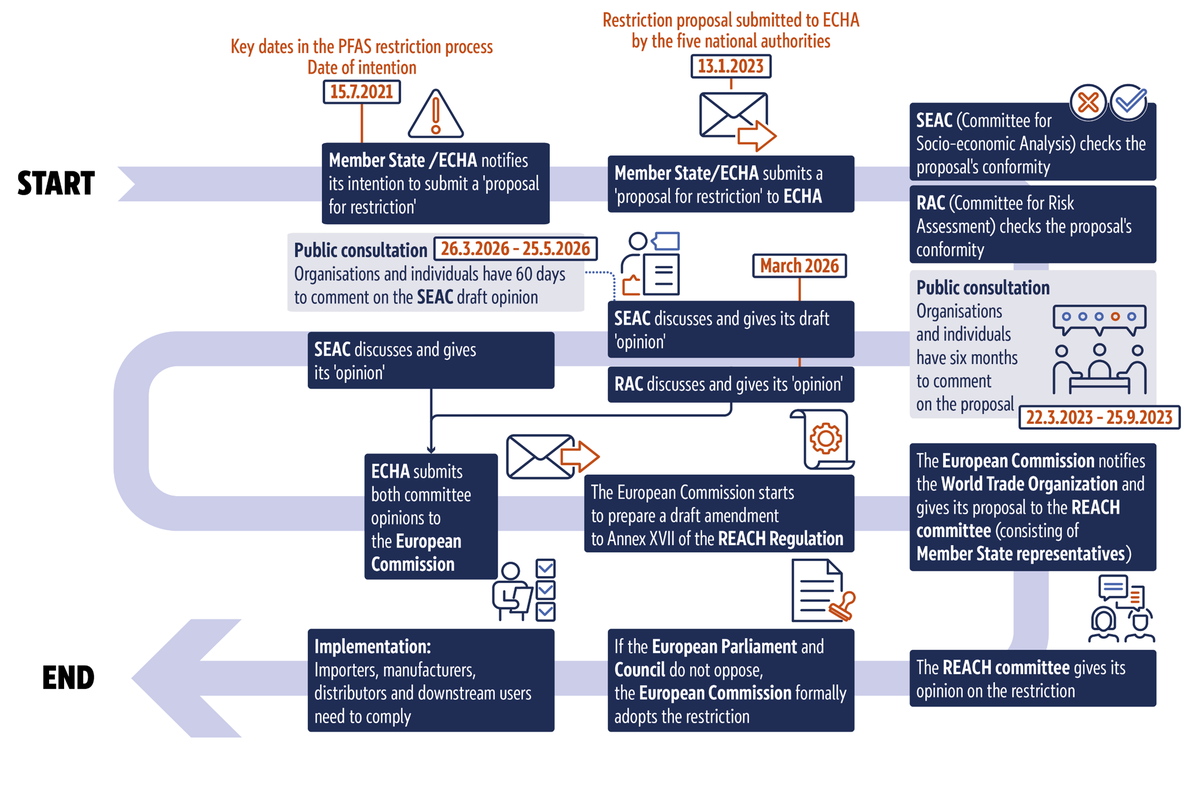
Image source: based on the REACH restriction proposal (background document). Graphics by Samy Chahri, EPRS.
RAC considers that sectoral regulations on plant protection products, biocidal products and medicinal products do not fully address the concerns associated with persistent PFAS emissions into the environment and finds it important to include measures to minimise emissions from the use of PFAS as active substances in these products in the respective sectoral regulations in cases of a derogation. For SEAC, the dossier submitters have not justified the exclusion of these applications from the PFAS ban via a 'time-unlimited' derogation.The two-month stakeholder consultation on SEAC's draft opinion ran from 26 March to 25 May 2026. Over 3 500 contributions were received. After reviewing the consultation comments, SEAC plans to adopt its final opinion by the end of 2026. This adoption will conclude ECHA's scientific evaluation of the proposed restriction. ECHA will then send the compiled RAC and SEAC opinions to the European Commission for decision.Based on the national authorities' proposal and the RAC and SEAC opinions, the Commission will propose a restriction (a draft regulation to amend the list of restrictions in Annex XVII to REACH) for discussion and vote in the REACH Committee, composed of EU Member State representatives. A qualified majority (55 % of EU countries representing at least 65 % of the total EU population) is required for the draft measure to be approved by the committee. Once approved, the draft regulation will be submitted to Parliament and Council for scrutiny (usually for up to three months), with a possibility for them to object to the proposed act if deemed necessary. If objections are raised, the Commission must review its proposal.
Issues at stake
In the July 2025 European chemicals industry action plan, the European Commission committed to presenting a proposal as soon as possible after receiving ECHA's opinion. The Commission clarified that it would:
'consider PFAS ban in consumer uses such as cosmetics, food contact materials and outdoor clothing. Where adequate alternatives in terms of performance and safety are not available, the continued use of PFAS in industrial applications may be allowed for critical applications, such as health, defence, semiconductors, and other strategic sectors, under strict conditions until acceptable substitutes are found. Derogations for uses [would] need to be accompanied by requirements to reduce emissions at all lifecycle stages to limit the release of pollutants into the environment and by clear incentives to innovate'.
This is a shift compared to the initial commitment, stated in the chemicals strategy for sustainability, of restricting PFAS under REACH for all non-essential uses including in consumer products.
Concerns have been raised that the restriction would cause value chain disruption, impact access to medicines and medical devices, or could affect the production of clean technologies, putting EU decarbonisation goals at risk. Researchers and industry have been looking into substitutes that have similar performance characteristics without the persistence and toxicity of PFAS. Alternatives already exist for many applications, from textiles, cosmetics, firefighting foams and food packaging to fluorinated gases in heating and cooling appliances and solar panels. Tools like the ZeroPM alternative assessment database or Chemsec marketplace enable a search for possible substitutes based on use/sector. The OECD also explored alternatives in sector-specific papers. In other areas, uncertainty remains as to which alternatives are suitable. Looking at the availability of substitutes and possible need for derogations is at the core of ECHA's assessment of the restriction proposal.
According to a study from 2023, prepared for the Belgian Federation of the Chemical and Life Sciences Industry, Europe needs to significantly increase its efforts on patents for PFAS substitution. China has emerged as a dominant force, with the largest number of patents and a fast-expanding patent portfolio compared to other major global players. The chemicals industry action plan announces targeted investment in research, innovation for safe and sustainable alternatives; enhanced coordination across EU institutions and Member States, expert networks to share knowledge and solutions; and priority on tackling PFAS in the new EU Chemicals Innovation and Substitution Hubs (launched in March 2026). Dozens of PFAS-related projects are supported under Horizon Europe, exploring PFAS substitution, abatement and remediation.
At the same time, PFAS externalities need to be factored in, starting with the impacts on human health and poorly reversible pollution of (scarce) natural resources. PFAS contaminate soil and water, which are the foundations for agricultural production and food security. PFAS contamination of drinking water supplies is a key societal concern, especially as drinking water is gradually becoming less available due to global warming. Costs of PFAS pollution are typically not borne by polluters, but displaced onto water utilities, municipalities, governments and citizens.
PFAS pollution has become a measurable financial risk for investors and insurers. According to a March 2026 analysis, PFAS-related litigation has expanded rapidly, with rising settlement values, and exposures likely to grow as regulation tightens. The analysis draws a comparison with asbestos, where legal liabilities impacted companies for decades. Europe too is seeing a rise in PFAS litigation, with judgments issued in recent years in lawsuits filed by affected communities of Dordrecht (Netherlands); Ronneby (Sweden); and Veneto (Italy – the first worldwide criminal judgment on PFAS leading to jail sentences). New cases in 2026 involve residents of Zwijndrecht (Belgium) and of the 'chemical valley' near Lyon (France) in complaints against industry and public authorities. In this context of rising litigation and regulation, insurers are increasingly mandating PFAS exclusions across general liability, product liability and pollution policies.
To efficiently address the issue on a global scale, a coordinated global effort, with capacity building in low- and middle-income countries, will be essential to avoid imbalances in the PFAS regulatory landscape, relocation of PFAS hotspots to developing countries and recirculation of PFAS pollution.
European Parliament
As co-legislator, Parliament has been instrumental in securing PFAS restrictions in toys and packaging, assessment of additional quality standards for PFAS in the next review of the lists of surface water and groundwater pollutants, and assessment of a possible extension of the extended producer responsibility obligations to products generating PFAS in urban wastewater in the next review of the Urban Wastewater Treatment Directive. In recent resolutions, Parliament stressed the importance of reducing exposure to harmful substances such as PFAS for cancer prevention; and the need for updated limits on PFAS in drinking water. It called on the Commission to propose to phase out PFAS – starting with consumer goods – linked to harmful effects on human health and the environment, based on scientific evidence, allowing their use where there are no safe alternatives. It insisted that upcoming proposals do not endanger essential uses of PFAS in critical sectors (medical devices, pharmaceuticals, products necessary for the transition to a climate neutral and digital economy). When scrutinising the draft restriction, Parliament will have a key role to play in ensuring that the text lives up to the expectations on the protection of human health and the preservation of vital resources, while taking account of economic and technical challenges for businesses.
Further reading
- Arp, H. et al, The Global Threat from the Irreversible Accumulation of Trifluoroacetic Acid (TFA), Environmental Science and Technology, 2024.
- Brunn, H. et al. PFAS: forever chemicals—persistent, bioaccumulative and mobile. Reviewing the status and the need for their phase out and remediation of contaminated sites, Environmental Sciences Europe, 2023.
- Cordner, A. et al, The True Cost of PFAS and the Benefits of Acting Now Environmental Science and Technology, 2021.
- Costello, M. et al, Sources, Fate, and Plant Uptake in Agricultural Systems of Per- and Polyfluoroalkyl Substances, Current Pollution Reports, 2024.
- European Chemicals Agency, 'Universal' PFAS restriction dossier.
- Global PFAS science panel, website.
- Kwiatkowski, C. et al., Scientific Basis for Managing PFAS as a Chemical Class, 2020.
- Kurwadkar, S. et al, Per- and polyfluoroalkyl substances in water and wastewater: A critical review of their global occurrence and distribution, Science of The Total Environment, 2022.
- Ling, A., Estimated scale of costs to remove PFAS from the environment at current emission rates, Science of The Total Environment, 2024.
- Meegoda, J. et al, A Review of PFAS Destruction Technologies, International Journal of Environmental Research and Public Health, 2022.
- Sunderland, E., A review of the pathways of human exposure to poly- and perfluoroalkyl substances (PFASs) and present understanding of health effects, 2018.
- Uhl, M. et al, PFASs: What can we learn from the European Human Biomonitoring Initiative HBM4EU, International Journal of Hygiene and Environmental Health, 2023.
Endnotes
Classification
Policy areas: Environment
Regions: European Union
Committees: Environment, Climate and Food Safety (ENVI)
Statement on the use of AI
Any AI-generated content in this text has been reviewed by the author(s). [AI tool] was used to [improve the readability of the text (and) broaden the range of sources available to the author (and [other use])].
Disclaimer
This document is prepared for, and addressed to, the Members and staff of the European Parliament as background material to assist them in their parliamentary work. The content of the document is the sole responsibility of its author(s) and any opinions expressed herein should not be taken to represent an official position of the Parliament.
Copyright
© European Union.
The reuse of this document is authorised under a Creative Commons Attribution 4.0 International (CC-BY 4.0) licence.

https://creativecommons.org/licenses/by/4.0/deed.en
To use or reproduce elements that are not owned by the European Union, permission may need to be sought directly from the respective rightsholders.