
Article page checkbox is not checked in page info.
Migrant smuggling across the English Channel: A moving target
Migrant smuggling across the English Channel A moving target
Steven Blaakman and Katrien Luyten, Members' Research Service
Summary
Migrant smugglers play a pivotal role in irregular border crossings into the European Union (EU) and the United Kingdom (UK). The UK has experienced a significant rise in small boat crossings across the English Channel since 2020, prompting the British government to develop measures to address this new form of irregular migration. However, the UK's withdrawal from the EU (Brexit) in 2020 has complicated efforts to manage these crossings. The UK no longer has access to EU migration and asylum databases nor can it return asylum seekers to other EU countries without mutual agreement. While the EU has seen a decline in asylum applications between 2023 and 2025, the UK has not experienced a comparable decrease.
The increase in small boat arrivals is attributed to several factors, including Brexit, the COVID-19 pandemic, heightened border controls, and the commercialisation of the small boat route. These crossings have become the primary recorded method of irregular entry since 2020, accounting for 89 % of detected arrivals by 2025. This has sparked intense public and political debate and prompted calls for stricter measures.
The UK government has introduced various measures to combat migrant smuggling, ranging from closer cooperation with some of the most affected EU countries, in particular France and Belgium, to funding for enhanced border controls and law enforcement cooperation. It has also launched initiatives such as the controversial Rwanda scheme. However, the effectiveness of these measures remains questionable, with critics arguing that they do not address the root causes of migration and may even exacerbate the risks for migrants. The situation highlights the complex challenges of managing irregular migration in the post-Brexit era while seeking comprehensive and humane solutions that address both the immediate and underlying causes, including through access to more legal pathways into the EU and the UK.
Introduction
More than 90 % of irregular crossings of the EU's external borders are estimated to occur with the assistance of migrant smugglers. Smuggling also plays a key role in how irregular migrants arrive to the UK. Although virtually unheard of before 2018, the steep rise in small boat crossings across the English Channel since 2020 has led to a fierce public debate in the UK and prompted the government to tackle this new form of irregular entry. However, the UK's withdrawal from the EU on 1 February 2020 has limited its ability to combat these crossings, as it no longer has access to the EU's migration and asylum databases and is no longer able to send asylum applicants back to EU countries. Unlike the EU, where asylum applications have declined since 2023, as shown in Figure 1, the UK has not seen a significant drop, as shown in Figure 2.
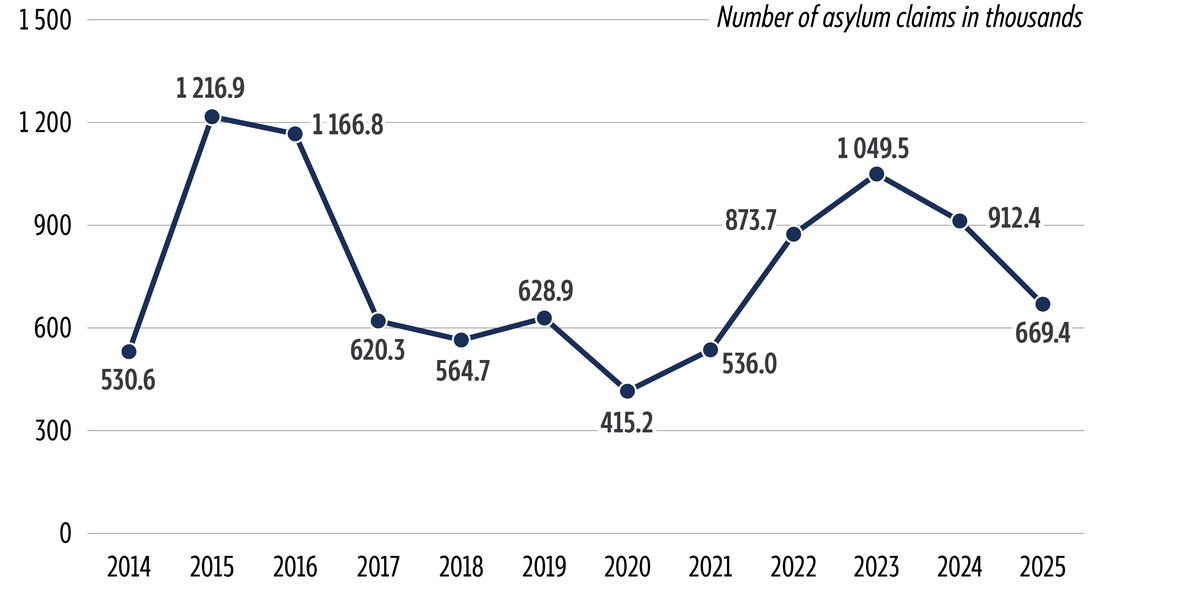
Data source: Eurostat (migr_asy). Graphic by Lucille Killmayer, DataViz, EPRS.
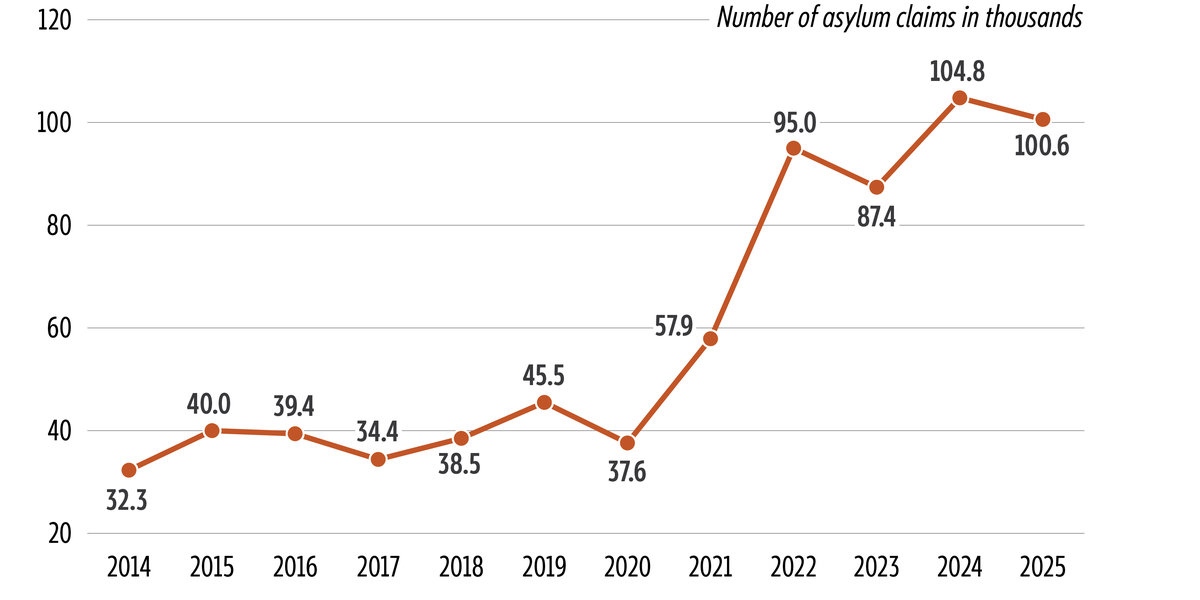
Although the number of asylum applications has significantly increased in the UK since its withdrawal from the EU in June 2016 (Brexit), it still receives fewer applications than EU countries of a similar size, as shown in Figure 3. Data source: Home Office. Graphic by Lucille Killmayer, DataViz, EPRS.
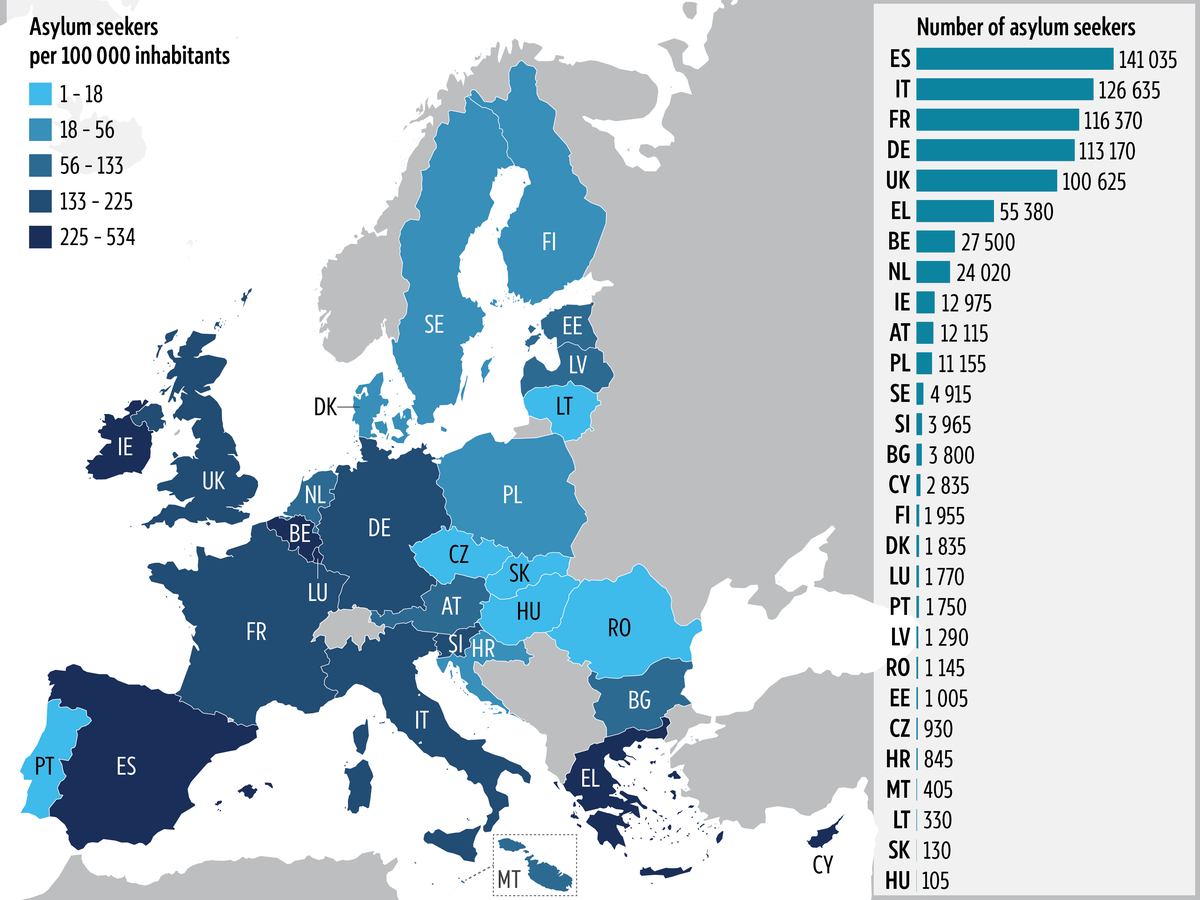
Data source: Eurostat (migr_asy) and the Home Office. Graphic by Lucille Killmayer, DataViz, EPRS.
Due to Brexit and the growing number of small boat arrivals, the UK had to redefine its 'long-standing cooperation on migration with the EU and, in particular, with France and Belgium, the countries most affected by irregular migration through the Channel.
The facilitation of irregular migration is a highly profitable criminal activity, in particular given the relatively low risks incurred by the perpetrators compared with other crimes. This is because the migrant smuggling landscape has become more volatile and unpredictable, for example due to the instrumentalisation of migration but also because it has become harder to cross the EU's external borders illegally due to measures put in place to prevent irregular migration. These crossings place a huge strain on border management systems and require substantial resources from law enforcement and other public authorities. Moreover, this leads to a paradoxical situation where people willingly pay smugglers to help them cross borders while also risking becoming victims at the mercy of the smugglers. Many lose their lives or are at risk of serious harm or exploitation.
Contrary to what media coverage often suggests, the impact of migrant smuggling is not confined to EU Member States at the EU's external borders. All Member States are affected to varying degrees, either as countries of entry , transit and/or destination. The smuggling of migrants by sea – in particular via the Mediterranean – has been the most visible form in the past decade. One of the main reasons why people resort to migrant smugglers is because there are too few not sufficient safe, regular and accessible ways to enter the EU or the UK. The restrictive measures that countries of origin, transit and destination increasingly adopt in order to prevent departures and block crossings, often as part of the agreements and partnerships signed with the EU, are another reason why migrants increasingly resort to smugglers. In some contexts, the use of smugglers is the only possibility for people to reach safety. Following calls for help from the most affected EU Member States, in June 2026 the European Commission adopted an action plan to strengthen migration management along the Channel route.
Situation before Brexit
When the UK was still a member of the EU, it was not part of the Schengen area and was therefore able to carry out border checks on anyone entering the country, including EU nationals. The country also had an opt-out from legislation in the area of freedom, security and justice under Protocol 21 of the Treaty on the Functioning of the EU. This included matters related to migration and asylum, although the UK retained the right to opt into specific pieces of legislation. The UK was bound by the EU's Dublin Regulation, which states that the first safe EU country an asylum seeker passes through is responsible for processing their asylum claim. This allows EU countries to return asylum seekers to the Member State responsible for their claim. From 2008 to 2015, the UK was able to return significantly more asylum applicants under the regulation than it received, as shown in Figure 4. It was only from 2016, the year of the Brexit referendum, that the situation reversed, and the country started receiving more asylum applicants than it was able to return under the regulation.
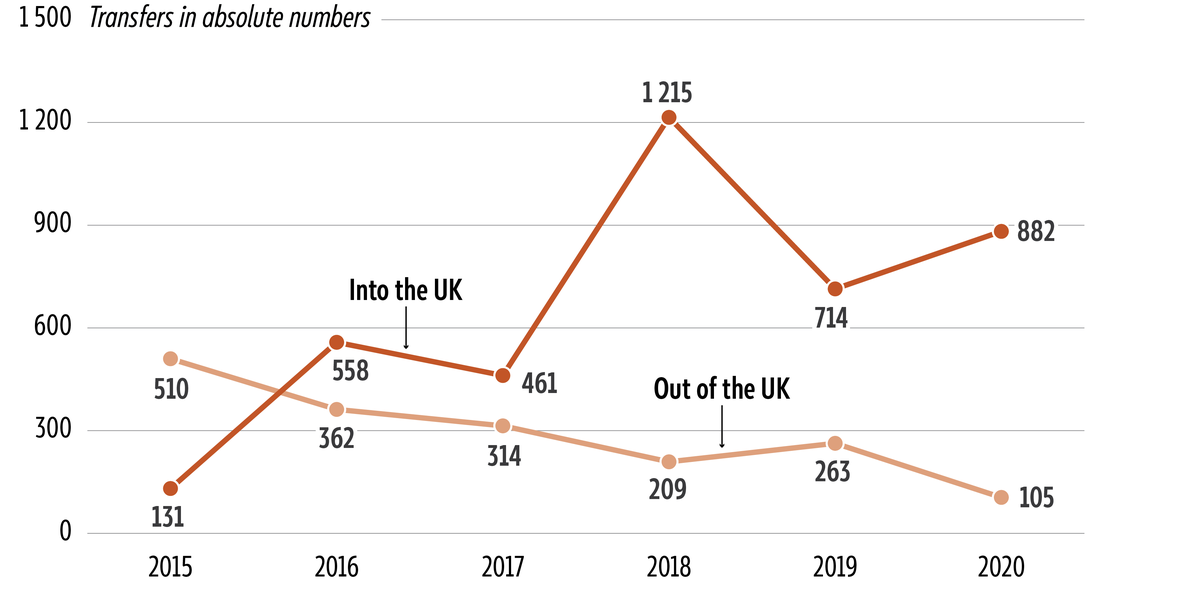
Data source: Eurostat (migr_dubto and migr_dubti). Graphic by Lucille Killmayer, DataViz, EPRS.
Impact of Brexit on the UK's asylum policies
Although the UK continues to grant asylum to those who qualify, Brexit ended its ability to return asylum seekers to EU countries. It also brought to an end the legal route provided by the Dublin Regulation for reuniting asylum seekers with relatives in other EU countries. Although the UK has its own rules for reuniting asylum seekers with family, which have now been stalled, these have less generous eligibility criteria. The British government proposed a new agreement to facilitate family reunion for unaccompanied children, as well as a readmission agreement covering the return of irregular migrants. However, the EU did not seek to replace the relevant provisions of the Dublin Regulation after Brexit.
Brexit also means that the UK no longer has access to the EU's main migration and asylum databases, making it more difficult to check whether asylum seekers are already registered in an EU country. Under the Dublin Regulation, each asylum application is examined by only one EU country to prevent multiple applications from being lodged in different EU countries. However, Brexit created the opportunity for asylum seekers who had their application rejected by an EU country to try again in the UK. In an article published by the think thank UK in a Changing Europe, Cristina Juverdeanu, Lecturer in Politics and International Studies at the University of Leeds, argued that this makes the UK more attractive as a destination for asylum seekers.
Finally, Brexit has also meant that the UK is no longer able to make use of the EU's readmission agreements with non-EU countries and will have to conclude its own deals to be able to return migrants with no legal right to stay in the country.
Arrivals by small boats across the Channel
Attempts to enter the UK by crossing the English Channel in a small boat 1 are a fairly recent phenomenon, as shown in Figure 5. In 2018, only 299 people were recorded as having arrived in this way, according to the Home Office. This number rose sharply, reaching around 46 000 by 2022. In the first three months of 2026, 4 441 people arrived by small boat. Arrivals are heavily influenced by weather conditions.
According to the Home Office, small boats have been the main recorded method of irregular entry into the UK since 2020. By 2025, they accounted for 89 % of detected arrivals via illegal routes (although the Home Office does note that small boats are the most visible of all the irregular methods of entry and are therefore more likely to be recorded). From 2018 to 2025, nationals of six countries accounted for 65 % of all arrivals – Iran (16 %), Afghanistan (14 %), Iraq (10 %), Eritrea (10 %), Albania (8 %), and Syria (8 %).
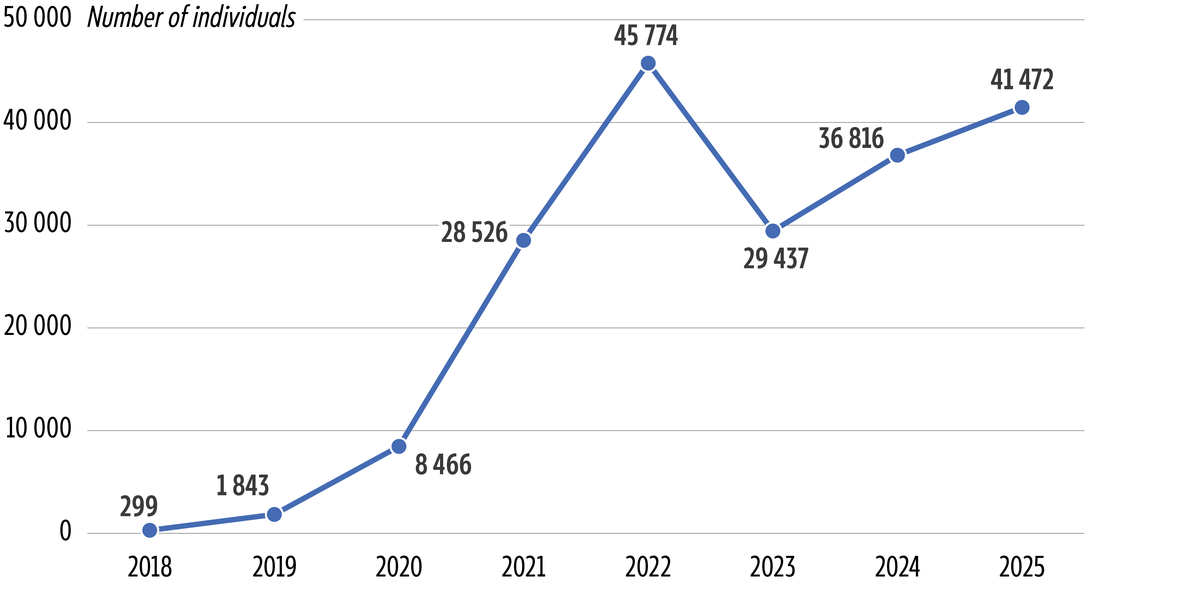
Data source: Home Office. Graphic by Lucille Killmayer, DataViz, EPRS.
So why the shift to small boats? This change has been attributed to various factors, such as Brexit and the Covid-19 pandemic, increased policing and border controls on both sides of the Channel, and the commercialisation of the small boat route. These developments have contributed to a diversification of departure points, not only in France but increasingly also in Belgium, as well as to the consolidation of existing smuggling networks and the emergence of new ones.
How Channel smugglers operate
According to the 2024 report entitled Global Initiative Against Transnational Organized Crime, Iranian and Iraqi Kurdish criminal groups dominate the Channel route, closely working together with Albanian people smugglers. They operate as loose networks with localised operations that specialise in different aspects of the business. A large majority of the migrants make use of smuggling services, but some try to cross independently. The long waiting times in large camps at the French coast that made news headlines in 2015 and 2016 have made way for shorter stays in transit hubs more inland in France, Belgium, the Netherlands and Germany. Migrants are only moved to the coast for the crossing. Once the boats are at sea, the police will not intercept them for fear of casualties. A crossing can take between four and eight hours, depending on the skills of the person navigating the boat. Very often the 'captains' are migrants themselves, who may cross for free in exchange for navigating the boat.
Data source:Home Office. Graphic by Lucille Killmayer, DataViz, EPRS.
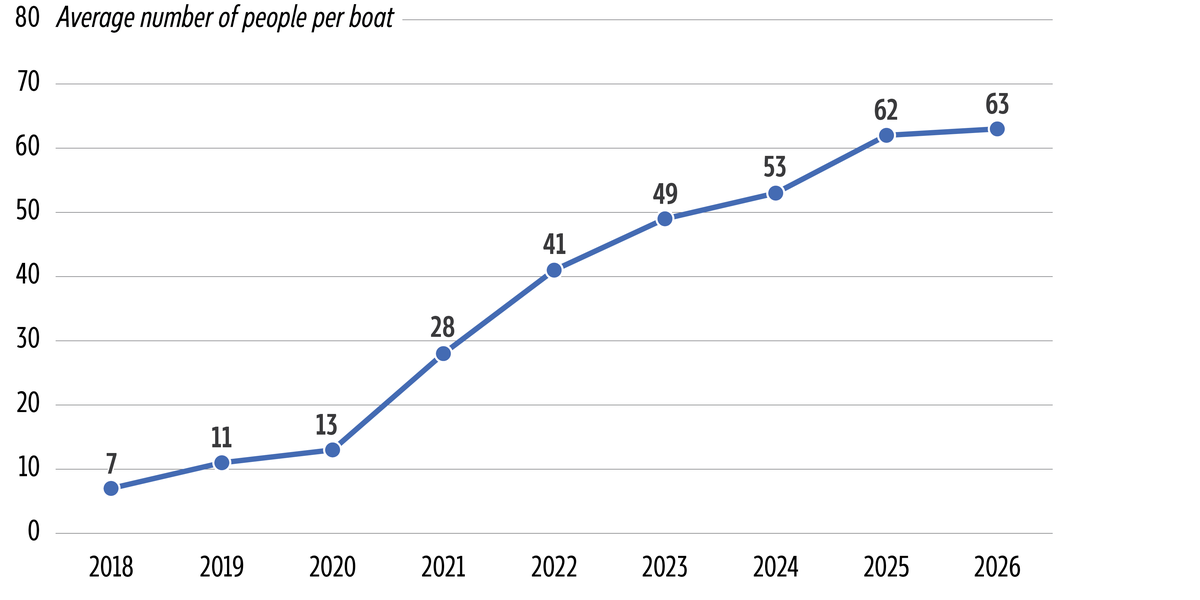
As shown in Figure 6, the average number of people per boat has risen significantly in recent years, increasing the risk of migrant deaths during Channel crossings. Both NGOs and UK government officials have reported an increase in the number of dead and missing during Channel crossing attempts. A total of 162 people were recorded as having died in the Channel between 2018 and 2025, but the death toll is probably higher as not all incidents are reported. Whereas the UK government attributes this increasing number of dead and missing persons to the smuggling networks deploying more dangerous tactics, NGOs see a link with the increased anti-smuggling efforts on both sides of the Channel. They say that the increased pressure on smugglers has led to more risk-taking. As more material is being seized by the police, the quality of the equipment is going down. It is the migrants who bear the largest share of the risks, often at a heavy cost.
Impact of Channel migrant smuggling on France and Belgium
Channel migrant smuggling has different but linked effects on France and Belgium. France remains the main departure and enforcement zone – from the northern coast, especially around Calais and Dunkirk – while Belgium has become a transit, supply and increasingly also a departure country as routes shift eastward. This shift – which started at the beginning of 2026 and is expected to worsen over the summer months, when the weather is more favourable for crossings – is mainly due to increased policing and patrolling in France. Enforcement success in one area often displaces activity rather than ending it.
As the main country of departure, France bears the heaviest operational burden. The impact includes sustained policing costs, some of which are funded by the UK; pressure on coastal communities and the tourism sector; and health and safety risks for migrants as well as for those involved in rescue, law enforcement and reception activities.
However, Belgium is becoming increasingly exposed as smugglers diversify routes and logistics. This creates pressures similar to those experienced in France. However, unlike in France, most migrants still have their temporary stay in France, rather than in Belgium, and are transported to Belgium – sometimes even by public transport – in order to catch a 'water taxi' or 'taxi boat'2 to France or even to take a small boat to the UK directly from the Belgian coast. This is despite the longer Channel crossing and strong offshore currents. Migrants sometimes have to hide in the dunes or in concealed places near the coast until a boat is ready.
Political impact of small boat crossings
Although crossings by small boats account for less than 2 % of total migration flows to the UK, they have led to significant coverage by the media, shifts in public opinion, and political parties calling for stricter measures. According to a YouGov survey published in 2024, 42 % of respondents agreed that people arriving in the UK by small boat from France should be removed from the country immediately and should not be permitted to appeal against their removal through the legal system. Another 15 % felt they should be removed but that they should be able to legally challenge their removal. Removal without appeal was the most popular option in 516 out of 575 constituencies.
A University of Warwick working paper on the impact of small boat crossings found that highly visible migration events such as small boat crossings can influence public support for legal migration routes, including those for family reunification and international students. A paper from the Barcelona Centre for International Affairs found that political competition has kept immigration highly salient, ensuring that it remains high on the political agenda and impossible for both Labour or the Conservatives to ignore.
How the UK government tackles migrant smuggling
The UK government has introduced several measures and launched various initiatives in a bid to reduce the number of irregular migrants arriving by small boats. Regional cooperation for nearby countries dealing with Channel migration pressure (Belgium, France, Germany, the Netherlands and the UK) happens within the framework of the Calais Group. Its meetings are attended by the European Commission, the EU Border and Coast Guard Agency (Frontex), and the EU Agency for Law Enforcement Cooperation (Europol), which act as observers and support operational coordination.
Agreements with France
In response to the increase in crossings by small boats, the UK government has stepped up its cooperation with France. The two countries already have a long history of working together to tackle irregular migration, having concluded several bilateral agreements over the years, including the Sangatte Protocol (1991), the Treaty of Le Touquet (2003), and the Sandhurst Treaty (2018). These agreements focussed mainly on boosting security around the Channel Tunnel and ferry terminals to prevent people from entering the UK by hiding in vehicles.
Since 2019, bilateral agreements have increasingly focused on tackling crossings by small boats. The UK contributes to the cost of France's operations at the shared border, providing £ 541 million from 2023 to 2026 and a further £ 662 million from 2026 to 2029. Under the latest agreement, £ 500 million (€ 580 million) is allocated to strengthening existing controls in northern France, while £ 161 million (€ 187 million) is earmarked for 'new tactics'. Among other measures, the funding supports the deployment of additional staff on the ground and enhanced surveillance capabilities.
In July 2025, the UK and France also agreed on a one-in, one-out pilot scheme. Under the arrangement the UK may return a limited number of migrants arriving by small boat to France in exchange for admitting the same number of migrants with a legitimate claim to enter the UK who have not attempted to cross illegally from France. The UK government said it hoped that the scheme would disrupt smugglers' business model and deter small boat crossings. Launched in August 2025, the scheme led to 377 people being returned to France and 380 being transferred from France to the UK, as of 6 March 2026. According to an article in The Guardian, the pilot scheme has been extended until October 2026, although French media later reported that it would not be extended again after that.
Cooperation with Belgium
Cooperation between the UK and Belgium in the fight against migrant smuggling happens through direct bilateral channels on operational levels (police and judiciary) and is supported through the Calais Group. According to InfoMigrants, Belgium has increased patrols and is using innovative methods, such as the use of night vision and thermal imaging equipment, to prevent small boat departures and intercept as many migrants as possible. In recent years, the UK has allocated nearly € 1.5 million to the Belgian authorities to help stem the crossings. Notwithstanding this, more help is needed, according to the governor of the province of West Flanders. In January 2024, the British and Belgian Prime Ministers announced a new UK-Belgium Law Enforcement Cooperation Agreement that will 'enhance intelligence sharing and surveillance capabilities and could see UK law enforcement officials forward-deployed to Belgium to tackle shared threats, including in counter-people smuggling operations'. It is expected to be signed in 2026.
Policy changes to make the UK a less attractive destination country
The UK government introduced the Illegal Migration Act 2023 to end irregular migration into the UK by removing the incentive for small boat crossings and speeding up the removal of migrants who have no legal right to be in the country. However, many provisions are not yet in force. Many of these provisions may be reformulated in new laws, particularly following the change of government since the act was introduced. Under the Illegal Migration Act, in its original form, only people who had reached the UK in a regular way would be allowed to remain and apply for asylum. Anyone who entered the country without the proper authorisation, would be detained and removed to a safe country without the right to challenge or appeal the decision. Once removed, they would not have the right to re-enter the UK, settle in the UK or obtain UK citizenship.
The act drew criticism from the UN Refugee Agency (UNHCR), which argued that, if adopted, it would amount to an asylum ban.
Rwanda scheme
In 2022, the UK government announced an agreement with Rwanda that would allow some asylum-seekers to be transferred to Rwanda before their claims for asylum were examined. Asylum applicants transferred to Rwanda would have to stay there even if their application proved successful.
The scheme proved highly controversial, amid concerns that compliance with fundamental rights could still be guaranteed. For example, UNHCR argued that the scheme would not be compatible with international refugee law. Following several legal challenges, the incoming Labour government decided to cancel the scheme in 2024.
The original memorandum had made it clear that the scheme was about deterring irregular migration. As the UK was never able to launch the scheme, and no-one was ever sent to Rwanda as part of the scheme, it is hard to predict what the impact would have been. In discussing the scheme's potential impact, the Migration Observatory (a migration research centre at the University of Oxford) pointed out that the deterring effect of asylum policies is often small. In 2022, the Home Office's most senior civil servant wrote to the Home Secretary that 'evidence of a deterrent effect is highly uncertain and cannot be quantified with sufficient certainty to provide me with the necessary level of assurance over value for money.'
The UK government continues to explore the possibility of sending asylum seekers who have had their application rejected to third countries and, according to a statement by the Home Secretary in November 2025, negotiations are ongoing. Similar discussions about 'return hubs' are ongoing in the EU.
EU-UK cooperation
Since Brexit, cooperation between the EU and the UK has reflected the status of the UK as a third country. By leaving the EU, the UK chose to put an end to the free movement of persons between the EU and the UK as from 1 January 2021, and all movements became subject to the EU's and the UK's immigration legislation applicable to all third country nationals.
The EU and the UK signed a trade and cooperation agreement, which entered into force in May 2021. The agreement details arrangements in several areas, among them law enforcement and judicial cooperation in criminal matters, including in the context of cooperation with Europol. However, it does not cover irregular migration. When negotiating the agreement, the parties agreed a non-legally binding joint declaration on asylum and returns, in which the UK stated it wished to approach the most concerned Member States bilaterally on these matters instead.
The EU and the UK work together in multilateral fora, processes and dialogues, including the Global Alliance to Counter Migrant Smuggling. The UK has also signed working arrangements with several EU justice and home affairs agencies, including Frontex, Europol and Eurojust. An example of a successful operation, launched by Eurojust and supported by Europol, targeted a transnational network supplying the nautical equipment used for crossing the Channel.
During their first leaders' summit in May 2025, the EU and the UK agreed to deepen cooperation against migrant smuggling through better information sharing, closer cooperation across key networks, such as the European Migration Network, and with relevant EU agencies, including the EU Asylum Agency, Frontex and Europol and the European Centre against Migrant Smuggling (ECAMS). In a Common Understanding policy paper published in December 2025, the EU and UK authorities stated that they are both committed to jointly addressing challenges related to visa policy, and that the UK's participation in the Khartoum and Rabat Processes, which facilitate policy dialogue with countries along the eastern and western migratory routes, respectively, is being explored. A second EU-UK summit was scheduled to take place on 22 July in Brussels but was postponed because of Prime Minister Starmer's resignation.
Combating Channel migrant smuggling: Beyond enforcement and deterrence
The Migration Observatory identifies three main policy approaches to tackling small boat arrivals: increased enforcement to disrupt smuggling networks; deterrence measures to reduce demand for crossings; and the provision of safe and legal routes for people to claim asylum in the UK. A survey of migrant smugglers conducted by the Mixed Migration Centre found that changes in border security and police behaviour are the primary factors influencing route changes. Disruptions to smugglers' supply chain resulting from law enforcement action have been shown to temporarily halt crossings until a new nautical equipment provider steps in. These findings suggest that hardline policies and enforcement alone do not deter smuggling, and neither does deterrence. Instead, these policies make migrants more reliant on smuggling services. The NGO therefore recommends focusing on targeting the 'real enablers of supply' – by confronting corruption among officials who facilitate migrant smuggling; supporting alternative livelihoods in border and transit communities where smuggling constitutes a major source of income; and targeting high-value members of migrant smuggling networks – while addressing demand by expanding safe and regular migration options.
This view is shared by many legal scholars, as well as international organisations and NGOs working on migration, which believe that an important part of the solution to break the business model of migrant smugglers lies in opening up more legal pathways, rather than making the journey of migrants impossible. In practice, this would mean offering more short-term or seasonal visas to economic migrants and allowing legitimate asylum claims to be processed in safe locations closer to the applicants' home countries. According to the Global Initiative Against Transnational Organized Crime, this would prevent both labour migrants and refugees from using smuggling services and make the smuggling business model less attractive. The Migration Observatory, however, remarks that 'it is likely that legal routes will reduce the use of unauthorised routes only if they allow a very large number of people to access them'. This argument is illustrated by the case of Ukraine, where displaced people fleeing the war received temporary protection. According to the Mixed Migration Centre and the Danish Refugee Council, this experience suggests that offering safe pathways can prevent migrant smuggling to a large extent.
The European Parliament has on several occasions called for more legal and safe pathways for migrants, asylum-seekers and refugees to enter and stay in the EU, notably by establishing resettlement schemes and introducing EU humanitarian visas. The Council of Europe has argued that legal pathways must be coupled with addressing the economic, environmental and political push factors that make people resort to smugglers. It has proposed, for example, making the business of smugglers unprofitable; harmonising penalties, bringing perpetrators to justice – more specifically high-profile smugglers; and going after smugglers' money flows, while protecting vulnerable migrants. This resembles the current policy and legal response of the EU, which is a combination of enforcement, diplomacy, development aid and legal alternatives.
It is clear that there is no magic solution to migrant smuggling, and no single measure will stop migrant smuggling entirely. Recent policy debates have seen both calls for and the implementation of short-term measures, such as closing borders, more repression and criminalising those providing humanitarian assistance. Some have even argued in favour of the UK leaving the European Convention on Human Rights (ECHR) in order to be able to perform pushbacks of migrants. However, this approach carries the risk that human rights are sacrificed in the name of security. Moreover, smugglers adapt routes and methods of operation quickly, exacerbating the risks faced by people on the move. Policymakers must therefore avoid fixing one problem only to create another.
International legislation and human rights instruments
EU Member States and the UK are bound by international anti-smuggling legislation, most importantly, the United Nations' (UN) Protocol against the Smuggling of Migrants by Land, Sea and Air. Adopted in 2000, the protocol supplements the UN Convention against Transnational Organized Crime. All EU Member States (except Ireland) and the UK have signed and ratified the protocol bilaterally, and the EU as a whole signed it in 2006. The Council of Europe is preparing its own legally binding instrument on migrant smuggling.
Following the entry into force of the Lisbon Treaty in 2009, the Charter of Fundamental Rights of the EU acquired legally binding status through Article 6(1) of the Treaty on European Union (TEU). The Court of Justice of the EU plays a central role in interpreting EU legislation and ensuring its uniform application across the EU. All legislation must therefore be read consistently with the Charter, as well as other human rights instruments, such as the European Convention on Human Rights, the UN Universal Declaration of Human Rights, refugee laws, international law of the sea and others.
EU action against migrant smuggling
Dismantling smuggling networks and undermining their business models is a priority for the EU in preventing irregular migration and combating crime. Given its cross-cutting nature across various policy areas – internal security, migration and external policies in particular – the EU tackles this issue from multiple angles. The focus includes modernising and expanding the existing legal framework;enhancing operational, law enforcement and judicial cooperation; strengthening international cooperation and partnerships; protecting vulnerable migrants; and creating additional legal pathways into the EU.
Operational activities to combat migrant smuggling are the responsibility of the Member States. The EU assists them in fighting serious and organised crime effectively to the maximum of its remit, ranging from crime prevention to police and judicial cooperation, which is crucial, given the cross-border and multinational nature of migrant smuggling. Through the EU policy cycle for organised and serious international crime (EMPACT), Member States coordinate common priorities and operational action to address the most important criminal threats affecting the EU, including migrant smuggling. Specialised EU agencies – such as Frontex, Europol and the EU Agency for Criminal Justice Cooperation (Eurojust) – increasingly support law enforcement, border and judicial authorities in their fight against migrant smuggling.
Migrant smuggling is identified as one of the organised crime-related threats to the EU's internal security in both the new European internal security strategy and the European asylum and migration management strategy. The former proposes strengthening the detection, prevention and disruption of smuggling networks. The latter aims to reinforce mechanisms to prevent irregular entry and the abuse of visa-free and visa facilitation arrangements that smugglers can exploit.
Combating migrant smuggling requires international cooperation and coordination. The EU works closely with migrants' countries of origin and transit – as called for in the EU pact on migration and asylum – by means of dialogues and partnerships that create a stronger link between development, visa, and migration policy. The EU has signed dedicated and tailor-made anti-smuggling operational partnerships with partner countries, Member States and UN agencies to tackle smuggling in key locations, such as Morocco, Niger, the Western Balkans and Tunisia. To address route-specific challenges, the EU implements targeted operational measures across the primary migratory corridors. For example, there are specific action plans for the Central Mediterranean, the Western Mediterranean and Atlantic routes, and the Western Balkans. In June 2026, a plan for the Channel route was adopted, following calls from the most affected EU Member States for a more coordinated EU response. It focuses on reinforcing migration diplomacy along the route, disrupting smuggling networks and their criminal infrastructure and strengthening border management, with support from EU agencies and in cooperation with the UK. The Global Alliance to Counter Migrant Smuggling, set up by the European Commission in 2023, brings together all relevant stakeholders, including governments, international organisations, law enforcement and judicial authorities, and online service providers. Its aim is to strengthen international cooperation against migrant smuggling and promote alternatives to irregular migration, including addressing its root causes and facilitating legal pathways into the EU. The UK also collaborates with the EU and the other partners within this framework.
Several initiatives target the digital networks and platforms that smugglers use. One of them, DigiNeX, is a network of digital investigators from the national law enforcement authorities. It is coordinated by Europol and focuses on open-sources monitoring, detection, analysis and disruption of online smuggling activities. Another initiative, the EU Internet Forum, is the EU's main tool for voluntary cooperation with the internet industry to prevent and address the exploitation of the internet for crimes such as migrant smuggling. Europol's Internet Referral Unit contributes to the fight against migrant smuggling by supporting investigations in the digital domain.
EU legislation
In the past decade, the EU has also adopted several legislative measures that improve the fight against migrant smugglers and the protection of their victims. A number of them were announced in the strategic policy for European integrated border management (2023-2027), which provides a shared policy framework for the implementation of an effective EU integrated border management. The mandates of Frontex and Europol have been and will continue to be reinforced and adapted to address the challenges posed by organised crime in general, and migrant smuggling as one of the most serious areas. The amendments to the Europol Regulation, adopted in December 2025, established the European Centre against Migrant Smuggling (ECAMS) as a permanent structure within Europol to ensure better systematic exchange of information, advanced analytics and coordination of efforts. At the same time, the European Commission proposed a new directive laying down minimum rules to prevent and counter the facilitation of unauthorised entry, transit and stay in the EU. Parliament still needs to formally adopt its mandate before negotiations with the Council can start. The proposed directive aims, amongst others, to facilitate the effective prosecution of organised criminal networks responsible for migrant smuggling and to harmonise penalties for individuals and companies.
The Commission has also promised to come up with a new system of sanctions specifically targeted at people smugglers and traffickers. The idea would be to freeze their assets, restrict their ability to move around and to cut off their profits. The UK already has a similar regime in place: the Global Irregular Migration and Trafficking in Persons Sanctions Regulations 2025.
A revision of the Victims Rights Directive is about to be formally adopted. It will improve victims' access to justice, enhance their right to information about available compensation and strengthen their physical protection. In 2021, the Commission proposed to target transport operators that engage in or facilitate migrant smuggling or trafficking in human beings in the EU, but the file has since not moved forward. In the meantime, and given the need to closely involve transport operators in preventing and countering these activities, the Commission presented in 2023 a toolbox of measures to counter the phenomenon.
Moreover, several other laws aimed at combating interconnected crimes – such as money-laundering, corruption, trafficking in human beings and sexual exploitation of children – have been adopted. At the same time, the EU recognises the need to facilitate legal pathways into the EU and address the root causes of irregular migration. It has put in place several laws to attract high-skilled and seasonal workers, as well as students, and to facilitate family reunification. The EU has also set up talent and skills mobility schemes with partner countries, such as talent partnerships and the EU Talent Pool.
Main references
- Beyond restrictions: How migration and smuggling adapt to changing policies across the Mediterranean, the Atlantic and the English Channel, Mixed Migration Centre, March 2025.
- Luyten, K., Understanding EU action against migrant smuggling, EPRS, European Parliament, 2023.
- People crossing the English Channel in small boats, The Migration Observatory, March 2026.
- Small boats, big business: The industrialization of cross-channel migrant smuggling, Global Initiative Against Transnational Crime, 2024.
Endnotes
Classification
Policy areas: Area of Freedom, Security and Justice
Regions: European Union
Committees: Civil Liberties, Justice and Home Affairs (LIBE)
Statement on the use of AI
Any AI-generated content in this text has been reviewed by the authors.
Disclaimer
This document is prepared for, and addressed to, the Members and staff of the European Parliament as background material to assist them in their parliamentary work. The content of the document is the sole responsibility of its author(s) and any opinions expressed herein should not be taken to represent an official position of the Parliament.
Copyright
© European Union.
The reuse of this document is authorised under a Creative Commons Attribution 4.0 International (CC-BY 4.0) licence.

https://creativecommons.org/licenses/by/4.0/deed.en
To use or reproduce elements that are not owned by the European Union, permission may need to be sought directly from the respective rightsholders.