
Article page checkbox is not checked in page info.
The concept of 'climate refugee': Towards a possible definition?
The concept of 'climate refugee': Towards a possible definition?
Maria Margarita Mentzelopoulou, Members' Research Service
Summary
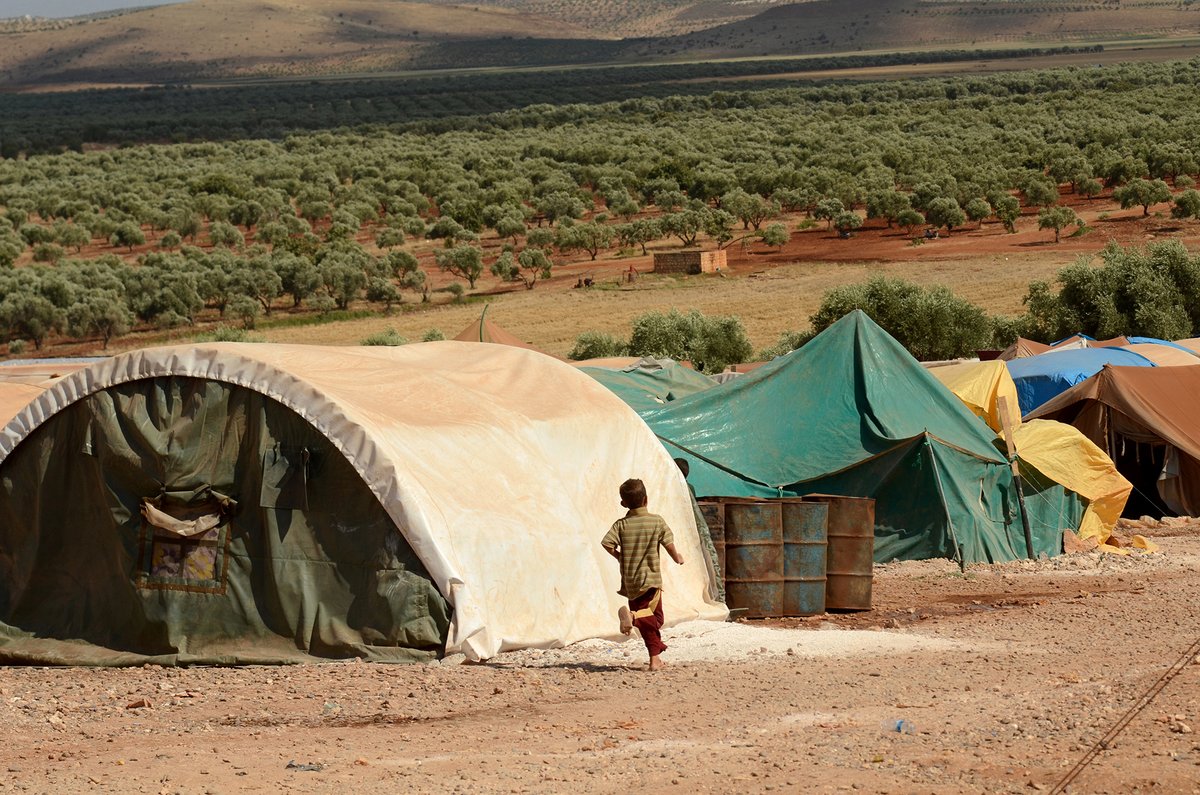
According to recent statistics published by the Internal Displacement Monitoring Centre (IDMC), in 2024 alone there were 65.8 million new displacements globally; 45.8 million of these people were forcibly displaced by floods, windstorms, earthquakes or droughts – the highest annual figure ever recorded by the IDMC. This is nearly double the annual average of the past decade, and ongoing climate change is set to give rise to increasing numbers of 'climate refugees'. Overall, climate change-related weather events accounted for 99.5 % of all disaster displacements in 2024. As stated in the World Bank's Groundswell report, 216 million people could be forced to move internally by 2050 across six world regions.
Despite steps in the right direction, national and international responses to this challenge remain limited, and protection for those affected inadequate. There is no clear definition of a 'climate refugee', nor are climate refugees covered by the 1951 Refugee Convention and its 1967 Protocol. The latter only covers people with a well-founded fear of being persecuted because of their race, religion, nationality, membership of a particular social group or political opinion, and who are unable or unwilling to seek protection from their home countries. This means that climate cannot currently be cited as a reason for seeking asylum or refugee status, although the second objective in the 2018 Global Compact for Migration cites climate as a potential reason for migration. While the EU has not formally recognised climate refugees, it has expressed growing concern and has taken action to support and develop resilience in countries most vulnerable to climate-related stress.
This briefing is an update of an earlier version published in October 2023 by Joanna Apap with Sami James Harju.
Background
Based on a publication by the International Organisation for Migration (IOM), 218 million internal displacements were caused by weather hazards over the last decade (2014‑2024). At the end of 2023, 75 % of forcibly displaced people lived in countries with high-to-extreme exposure to climate hazards. With the projected number of people affected expected to double by 2050, the annual worldwide displacement of millions of people due to environmental disasters needs to be addressed properly.
Since the 1994 International Conference on Population and Development, international migration and its connection with development has been gaining prominence in international discussions. The United Nations (UN) 2030 Agenda for Sustainable Development includes several migration-related targets and calls for regular progress reviews, including using data broken down by migratory status. The lack of a legal definition is particularly concerning, as these individuals can find themselves in a legal limbo owing to their status and need for humanitarian protection not being recognised. Principle 1 of the 1972 Report of the United Nations Conference on the Human Environment (the Stockholm Declaration) states that people have 'a fundamental right to freedom, equality and adequate conditions of life, in an environment of a quality that permits a life of dignity and well-being'. The Stockholm Declaration reflects general recognition of the interrelatedness of human rights and the environment, which is key to addressing this predicament.
Although most people who are forcibly displaced for climate-related reasons remain within their national borders (internally displaced), some go abroad and become externally displaced. Yet, as most of the available data focus on internally displaced persons, it is difficult to develop a clear overview of its scale, which prevents the implementation of an international legal framework to address this issue. However, since the launch of the Nansen Initiative in 2012, the international community has begun to consider external migration for climate reasons.
On 19 September 2016, the UN General Assembly adopted the New York Declaration for Refugees and Migrants, leading to the 2018 Global Compact for Safe, Orderly and Regular Migration (GCM), which acknowledges the urgent situation of migrants displaced because of climate change. In the same year, the 24th Conference of the Parties to the United Nations Framework Convention on Climate Change (COP24) also addressed climate-related displacement. Since the 2015 Paris Agreement, international climate policy has evolved from an acknowledgment of climate-induced mobility to the formal integration of displacement and relocation into global justice frameworks. The UNHCR, in a 2020 article on climate change and disaster displacement, and the European Commission, in its 2019 communication on a European Green Deal initiative, both recognise climate change's role in forced displacement. However, as described earlier, the meaning of the term 'climate refugee' is uncertain both legally and in practice.
In 2022, floods in Pakistan displaced over 10 million people and the Horn of Africa experienced its worst drought in 40 years, leading to widespread famine and migration. In the summer of 2023, temperatures in the Mediterranean and the United States reached record-breaking highs, and floods in Italy killed 14 people and displaced 50 000. Events like these should serve as a reminder that climate-related disasters are not limited to the Global South. According to the 2019 Special report on the ocean and cryosphere in a changing climate by the UN's Intergovernmental Panel on Climate Change (IPCC), scientists estimated that in this century, between 6 000 and 17 000 km2 of land will be lost to rising sea levels and coastal erosion from climate change. This could displace between 1.6 million and 5.3 million people, while rising sea levels pose threats for cities such as Mumbai, Jakarta, Shanghai, New York and Venice, The 2023 IPCC report called urgently for climate-resilient development to integrate adaptation and mitigation and advance sustainable development for all through increased international cooperation.
According to the EM-DAT (emergency events database) and the World Meteorological Organization (WMO), 2024 was a year of record-breaking climate extremes. In addition, a critical trend identified in 2025‑2026 is double displacement. This occurs when refugees who have already fled conflict are forced to move a second time because their refugee camps become uninhabitable due to climate disaster. For instance, in 2024‑2025, floods in Chad and South Sudan destroyed thousands of shelters in camps that were hosting over a million conflict refugees. The Internal Displacement Monitoring Centre (IDMC) also stresses that while Europe has historically faced lower displacement figures compared to other continents, climate change means that climate-related displacement is no longer solely an overseas problem. Between 2008 and 2023, an estimated 413 000 people in the European Union were internally displaced by wildfires: over 317 000 by floods and more than 106 000 by storms. The European countries most affected between 2008 and 2024 were Greece (over 213 000), Spain (nearly 153,000) and France (more than 119 000).
The complex task of defining a 'climate refugee'
Some terms commonly used to describe people displaced for climate-related reasons
The term 'environmental refugee' has been used in position papers by various non‑governmental organisations, as well as in the media and academic literature. This term is associated with the early stages of reflection on the topic before a distinction was drawn between the different types of environmental change and forms of mobility. It was used to raise awareness and focus on the forced nature of the displacement. The use of the term and status of 'refugee' to describe people in this situation has subsequently been criticised, primarily because the term has a specific legal meaning in the context of the 1951 Refugee Convention and international refugee law.
The term 'environmental migrant' is widely used, including by the IOM. Nevertheless, the word 'migrant' might not always be considered appropriate, as it suggests a degree of volition in the decision to move.
One of the most recent terms to gain popularity is 'environmentally/climate displaced person'. This term is descriptive – referring to at least one part of the mobility spectrum (displacement) – and does not necessarily imply responsibility as regards governance. Although there is no internationally accepted legal definition of a 'displaced person', the concept of 'internally displaced persons' (IDPs) is relevant when displacements occur internally.
The term 'climate refugee' has been in the public discourse since 1985, when Essam El-Hinnawi defined 'environmental refugees' as those forced to leave their habitat due to environmental disruption. This definition is also used for 'climate refugees,' although the practical difference remains unclear. A key challenge in securing protection is defining 'climate refugee' while considering the Refugee Convention and previous definitions of 'environmental refugees'.
According to academic researchers, a 'climate refugee' definition should include the following elements: forced migration, temporary or permanent relocation, movement across borders, disruption consistent with climate change, sudden or gradual environmental disruption, and a 'more likely than not' standard for human contribution to the disruption. Initially, the term 'climate refugee' was found to be incorrect by the UNHCR, as it blurred the boundaries between the definition of refugees according to the 1951 Refugee Convention and popular concepts regarding refugees. Furthermore, critics argue that the attempt to expand the definition of refugee to include environmental aspects could lead states to renegotiate and potentially weaken existing protections for those fleeing war and genocide.
The question was whether climate refugees should be the subject of a new treaty or convention; however, there is a shift towards focusing instead on climate mobility and human rights law. The UNHCR argues that those displaced as a result of environmental change could in theory still rely on protection offered by their countries.Traditional refugees could not, as countries are often a source of persecution, thus making an individual 'unwilling to avail himself of the protection of that country', as required by Article 1A(2) of the 1951 Refugee Convention. Yet it is difficult for certain regions struck by recurrent climate disasters (mostly in the Global South, where migration movements mainly originate) to recover, as these events often overlap with existing structural problems, disrupting both reconstruction efforts and the return of those displaced. The endorsement of a new binding convention designed for legal protection and support should be considered. A regional system, such as the Kampala Convention in Africa, may better reflect the reality of state behaviour than a top-down legal framework.
The UNHCR uses four key findings relevant to forced population movement: a) reduction in available water; b) decrease in crop yields; c) risk of floods, storms and coastal flooding; and d) negative overall impact on health (especially for the poor, elderly, young and marginalised). It identifies three impediments to the return of people: legal impediments under human rights law, whereby in forcing return, the host state would expose the individual to a substantial risk of torture, inhuman or degrading treatment or punishment; factual impediments, where there are physical obstacles to return (for instance, no airports, roads or other essential infrastructure); and humanitarian impediments, where there are compassionate and humanitarian grounds for not sending people back. According to the authors, if any of these situations exist, those affected should be classified as forcibly displaced and in need of protection and assistance from another state.
How climate change contributes to increased displacement of people
Climate change can generate 'refugees' in a number of ways, and rising temperatures are known to increase the frequency and intensity of weather-related disasters. While most climate displacement happens internally and people can sometimes return home after a disaster, the growing impact of climate change is making certain areas increasingly uninhabitable.
Despite the difficulties in accurately quantifying numbers, studies show that external migration linked to climate disasters is set to increase in the coming years. In 2019, the IPCC explained that displacement can create competition for food, clean water access and jobs, whilst also exacerbating pre-existing ethnic tensions or gender violence and worsening the situation in sensitive regions affected by wars and violence. The Institute for Economics & Peace published its third annual ecological threat report in October 2022, which measures and monitors the level of ecological threats faced by vulnerable countries, and provides projections for 2050. The report finds that over 1 billion people live in countries where the state's ability to cope with projected ecological events by 2050 is deemed insufficient.
In addition, the IDMC states that 'disasters often overlap with conflict in certain regions'. Among these countries, Afghanistan is the worst affected by natural hazard displacements. In 2022, Afghanis were the second-largest group by nationality of asylum seekers in the EU. Indeed, climate disasters cause over three times more displacements than conflict and violence, while also triggering or worsening local conflicts. People forcibly displaced by adverse climate conditions who encounter stigmatisation and violence where they flee can come under the 1951 Refugee Convention and be granted legal status and international protection.
Shaping an international legal framework to address the protection gaps for climate refugees
The UN human rights treaty bodies recognise the intrinsic link between the environment and a range of human rights, such as the right to life, health, food, water and housing.1 The 1989 Convention on the Rights of the Child states that parties must act appropriately to combat disease and malnutrition 'through the provision of adequate nutritious foods and clean drinking water, taking into consideration the dangers and risks of environmental pollution'. Unfortunately, the rights guaranteed by these conventions are difficult to implement. The consequences of climate change can exacerbate pre-existing violence and conflicts, prompting people to flee.
The non‑binding 1998 UN Guiding Principles on Internal Displacement provide a framework for protecting victims of natural disasters who do not cross an international border. In 2009, the Council of Europe suggested using these principles as a model to develop a global guiding framework for the protection of displaced persons crossing international borders because of climate change and natural disasters.2 Although these guiding principles still do not cover cross-border displacement, they were used to draft the Kampala Convention for the protection and assistance of internally displaced persons in Africa. Under the convention, complementary forms of protection allow states to provide protection on human rights grounds for those facing the prospect of being returned in cases not addressed by the 1951 Refugee Convention and its 1967 Protocol. This protection is subsidiary to the refugee status granted under the convention and may vary widely from one jurisdiction to another. It has also been argued that complementary forms of protection may be relevant for some people forced to move on a long-term or permanent basis.
Promising developments: Climate litigation through a human rights lens
Climate change litigation – an emerging body of environmental law – has had growing traction as a realistic means of bringing both private and public institutions to court for poor mitigation efforts. The role of human rights-based arguments has proved fruitful in a handful of cases, as a way for the public to influence policy change and hold governments accountable for the consequences of climate change. One such case, Urgenda v the Dutch Government (2019), became the first tort climate case successfully brought against a government on the grounds of human rights violations. It concluded that the state had failed to meet minimum carbon-emissions reduction goals set by experts and scientists, thus endangering its own citizens under the European Convention of Human Rights (Articles 2 and 8). As a result, the Dutch government was required to set new, more ambitious emission reduction goals. Similarly, in 2020 the Friends of the Irish Environment won their case, when it found the Irish government's national mitigation plan unlawful, as it lacked ambition and failed to comply with the requirements of a preceding climate act.
Cases like these are slowly transforming the grounds on which climate action can be carried out by ordinary people. However, the majority of claims result in negative outcomes. Litigation relating more specifically to the short-term consequences of climate change and displacement has also seen recent advances. In January 2020, the UN Human Rights Committee ruled that 'countries may not deport individuals who face climate change-induced conditions that violate the right to life'. In September 2022, the UN Human Rights Committee found Australia guilty of failing to protect the indigenous people of the Torres Strait Islands from the consequences of climate change. With their islands slowly becoming submerged, it was found that the island population's fundamental right to be free from interference in their private life and culture had been breached. The Australian government had failed to provide adequate short-term solutions or achieve sufficient progress in long-term efforts to reduce greenhouse emissions.
In 2012, the governments of Norway and Switzerland launched the Nansen Initiative to fill the legal protection gap regarding the status of people externally displaced by climate adversities. In 2015, this consultative process established a non‑binding agenda for the protection of cross-border displaced persons in the context of disasters and climate change, endorsed by 109 states. It paved the way for December 2015's COP21, where the Paris Agreement acknowledged climate change as a threat to humankind and a trigger of human mobility. Building on the endorsement at the end of the 2012 Nansen Initiative process, a platform on disaster displacement – the 'protection agenda' – was launched. This offers a toolbox to better prevent and prepare for displacement before a disaster strikes, helping states to improve their responses to situations in which people are forced to find refuge, either within their own country or across an international border.
Conference of the Parties (COPs)
2015 – COP21: The preamble to the Paris Agreement recognises that climate change is a common concern of humankind. It includes a reference to migrants, asking parties to respect, promote and consider their respective obligations towards migrants, among others, when taking actions to address climate change. It also calls on the Executive Committee of the Warsaw International Mechanism to prepare a task force on displacement, and recognises the dangers of displacement and the fact that climate change is a driver of displacement.
2017 – COP23: Held in Bonn, Germany, COP23 put together a platform – InsuResilience Global Partnership for Climate and Disaster Risk Finance and Insurance Solutions – seeking to reduce the humanitarian impact of climate disasters by helping vulnerable population in their recovery.
2018 – COP24: Held in Katowice, Poland, COP24 encouraged parties (decision text paragraph 5(b)) to continue addressing human mobility through a strategic workstream, fostering enhanced cooperation and facilitation in relation to human mobility, including migration, displacement and planned relocation. It also recommended strengthening 'coordination, coherence and collaboration across relevant bodies under the Convention and the Paris Agreement, and institutional arrangements, programs and platforms, with a view to enhancing understanding of human mobility, both internal and cross-border, in the context of climate change'.
2021 – COP26: Held in Glasgow, Scotland, COP26 sought to establish a preventive framework with defences, warning systems, and resilient infrastructure and agriculture to respond to loss of homes, livelihoods and lives caused by climate disasters, and in that way prevent climate-induced migration.
2022 – COP27: Held in Sharm el-Sheikh, Egypt, COP27 reached a breakthrough agreement on establishing a new loss and damage fund for countries most vulnerable to disasters from climate change, where forced displacement was successfully recognised as a form of 'loss'. It also hosted the launch of the climate mobility pavilion – a space dedicated to discussions on policy solutions for climate mobility and displacement.
2023 – COP28: Held in Dubai, UAE, COP28 officially opened the loss and damage fund, with initial pledges of over US$700 million. In particular, displacement and planned relocation were explicitly recognised as types of non‑economic loss the fund should address, allowing states to apply for funding to relocate communities or support those forced to move by sea-level rise or desertification.
2024 – COP29: Held in Baku, Azerbaijan, COP29 focused on climate-induced displacement and human mobility. Negotiators pushed for climate finance to reach at least US$300 billion annually by 2035. This framework sets a formal target for developed nations to lead in mobilising at least US$300 billion annually by 2035 for climate action in developing countries.
2025 – COP30: Held in Belém, Brazil, COP30 established the Belém action mechanism to ensure that the shift to a green economy does not leave vulnerable workers or displaced populations behind. This 'forest COP' focused on the Amazon rainforest and the human rights of indigenous peoples and local communities on the frontline of environmental degradation.
Since the 2015 Paris Agreement, COPs have increasingly addressed climate displacement. COP24 introduced measures to support affected populations, while COP25 focused on desertification and food scarcity. COP26 emphasised tackling root causes of mobility, but lacked binding targets. COP27 established a funding mechanism for vulnerable nations and launched the climate mobility pavilion, with initial pledges worth roughly €340 million by the EU, although implementation has remained weak. COP28 and COP29 strengthened financial and institutional frameworks, including the loss and damage fund and technical assistance for managed retreat. The first global stocktake at COP28 recognised climate change as a major driver of migration, calling for mobility-inclusive climate action.
In recent years, both the European Court of Human Rights (ECtHR) and the Court of Justice of the European Union (CJEU) have been asked to tackle the human rights risks from climate change. Although the ECtHR does not explicitly provide for a right to a healthy environment or to protection from the adverse effects of climate change, its judgment in Verein KlimaSeniorinnen Schweiz and Others v Switzerland created a human rights-based link to environmental degradation, underlining states' responsibility to combat climate change effectively to protect rights enshrined in the European Convention on Human Rights. Furthermore, in Duarte Agostinho and Others v Portugal and 32 Others , the ECtHR addressed whether states are responsible for climate impacts outside their borders. However, to claim protection, individuals must prove they are personally and particularly affected. In the Duarte Agostinho case, the ECtHR dismissed claims because applicants had not first exhausted domestic remedies.
In 2025 and 2026, the International Court of Justice (ICJ) and the Inter-American Court of Human Rights (I/A Court HR) clarified that the principle of non‑refoulement applies to climate-induced hazards that threaten the right to life. The ICJ's July 2025 advisory opinion found that states have specific obligations under international human rights law to protect the climate. In response to a request by Colombia and Chile, the I/A Court HR stated that people displaced across borders due to the climate crisis are entitled to international protection. The Court urged states to create specific migratory categories, such as humanitarian visas, to prevent people falling into legal limbo. This suggests human rights law is increasingly preventing states from deporting individuals to regions where environmental conditions pose a risk of irreparable harm.
EU response to climate refugees
In the 2019 European Green Deal initiative, the European Commission recognised climate change as a trigger of migration and of other sources of instability. Climate has been acknowledged several times by both the European Commission and the European Parliament as a catalyst for migration. Since 1994, the European Parliament's intergroup on climate change, biodiversity and sustainable development has brought together Members of the European Parliament from all political groups and parliamentary committees to find sustainable solutions. In its resolution of 15 June 2023, Parliament called for 15 July to be designated the EU day for victims of the global climate crisis. Similarly, a resolution of January 2026 explicitly highlighted climate change as a risk multiplier for migration flows, including climate mobility, in the EU's broader geopolitical strategy.
In 2018, the European Commission made a proposal to address the main causes of irregular migration, namely lack of development, demographics, lack of opportunities, climate change and inequality, by establishing an asylum, migration and integration fund. However, with environmental degradation due to climate change an ever-increasing problem closer to home, the EU may be prompted to explore other avenues and policy initiatives for climate change mitigation. In the European Parliament's resolution on the vote on the nature restoration law, Parliament stated that the regulation is a key step in avoiding ecosystem collapse and preventing the worst impacts of climate change and biodiversity loss. Implementation of the EU's biodiversity strategy for 2030 is also underway, with a core objective of increasing resilience against the negative effects of climate change.
In its 2025 report, the Fundamental Rights Agency (FRA) highlights the need for a fundamental rights-compliant approach to the Green Deal, noting that environmental deterioration may have significant health and social impacts to be included when assessing risks to individuals. Further, the new pact on migration and asylum, which officially applies from 12 June 2026, establishes mandatory border procedures and strengthened screening mechanisms. Nonetheless, the new pact does not address climate change as a recognised reason for migration. Emerging arguments suggest that Article 37 – which dictates that a high level of environmental protection must be integrated into all EU policies – can be leveraged to ensure that those displaced are not unjustly returned to hazardous conditions. Furthermore, the Commission is developing a new integrated framework for European climate resilience and risk management to help Member States prevent and prepare for the growing impacts of climate change.
The EU utilises targeted humanitarian funding to address the immediate survival needs of populations displaced due to climate events. By deploying humanitarian impact grants through the International Federation of Red Cross and Red Crescent Societies, the EU provides essential life-saving support, such as the €100 000 allocated to Tanzania following the catastrophic March 2026 floods and the €175 000 provided to Ethiopia to manage the intersection of drought and migratory pressure.
Outlook
The IPCC states that to keep the global temperature rise under 1.5℃ or 2℃ by 2050, approximately 10 gigatonnes of net CO2 per year need to be removed. If the initiatives proposed by the IPCC serve as catalysts for sustainable and implementable solutions, the displacement of millions of people could be avoided by 2050 and their living conditions stabilised. It is, however, imperative to also understand and address climate displacement as a short-term challenge. Regional agreements, such as the Cartagena Declaration, the Kampala Convention and the OAU Convention, may serve as successful blueprints for enhancing international protections for climate-displaced individuals. These regions are shaping humanitarian visa and circular migration schemes that may enable people to move for work or safety during climate crises. Following the recent ICJ advisory opinion, climate displacement is increasingly acknowledged as a breach of state obligations, providing grounds for advocates to sue for protections based on existing human rights.
Another approach could start with a treaty based on the Nansen Initiative, whose 10 principles may address the legal gap regarding the status of people moving as a result of climate hazards in the short and medium term. The EU could lead by example, by establishing a European framework of rights for people forcibly displaced owing to climate hazards, envisaging proper and timely remedial action in support of the victims. The upcoming COP31 in November 2026 in Antalya, Türkiye, has a specific mandate to centre the voices of small island developing states. As stated in the World Bank's Groundswell report, up to 216 million people could be forced to move internally by 2050 across six world regions. By 2050, the UN predicts the world's 15 hottest refugee camps (primarily in Africa) will face over 200 days of hazardous heat per year, rendering them virtually unlivable without a massive infrastructure overhaul.
Main references
- Bilak, A. et al., Global Report on Internal Displacement 2021, Internal Displacement Monitoring Center 2021.
- De Smedt, K. and Faure, M., Compensation for victims of climate change disasters, Policy Department C, Directorate-General for Internal Policies, European Parliament, July 2023.
- Hinkel, J. et al., Special Report on the Ocean and Cryosphere in a Changing Climate, Intergovernmental Panel on Climate Change, 2019.
- Kraler, A. et al, Climate Change and Migration, Policy Department C, Directorate-General for Internal Policies, European Parliament, 2020.
- McAdam, J. and Limon, M., Human rights, climate change and cross-border displacement: the role of the international human rights community in contributing to effective and just solutions, Universal Rights Group, 2015.
- Walsh, B. et al., The cost of doing nothing, International Federation of Red Cross and Red Crescent Societies, 2019.
Endnotes
Classification
Policy areas: Environment | Area of Freedom, Security and Justice | Human Rights
Regions: European Union
Disclaimer
This document is prepared for, and addressed to, the Members and staff of the European Parliament as background material to assist them in their parliamentary work. The content of the document is the sole responsibility of its author(s) and any opinions expressed herein should not be taken to represent an official position of the Parliament.
Copyright
© European Union.
The reuse of this document is authorised under a Creative Commons Attribution 4.0 International (CC-BY 4.0) licence.

https://creativecommons.org/licenses/by/4.0/deed.en
To use or reproduce elements that are not owned by the European Union, permission may need to be sought directly from the respective rightsholders.