
Article page checkbox is not checked in page info.
Military mobility
Military mobility
Jakub Przetacznik, Members' Research Service
Summary
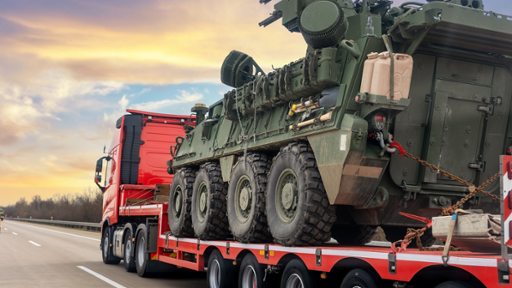
At a time when Russia poses an increased security threat, military mobility – which gives Member States the ability to move troops and equipment across the EU – is an essential enabler for common European security, strengthening deterrence and defence. During the December plenary session, Parliament is due to vote on an own-initiative report on military mobility.
Background
Military mobility is the ability to move troops, weapons and equipment efficiently and quickly across the European Union and is an essential enabler for common European security and defence, as well as for the EU's support to Ukraine. This mobility can be slowed down by cumbersome procedures or lack of proper – dual use (civilian and military) – infrastructure, as identified by the White Paper for European Defence – Readiness 2030. To address these challenges, action to reduce physical, legal and regulatory obstacles is necessary.
The first EU action plan on military mobility (2018) was followed by the action plan on military mobility 2.0 (2022) and the military mobility package (2025). In March 2025, the Council also identified four priority military mobility corridors (northern, central northern, central southern and eastern corridors).
European Commission proposal
On 19 November 2025, the European Commission published its military mobility package, an important step towards a 'military Schengen'. The package aims to remove regulatory barriers (with streamlined, quicker formalities); create an emergency framework – the European military mobility enhanced response system (EMERS) (a simplified notification-based system); enhance the resilience of transport infrastructure (€17.65 billion for military mobility in the next multiannual financial framework (MFF) within the Connecting Europe Facility (CEF)); pool and share capabilities (Solidarity Pool and the possibility to create a military mobility digital information system); and strengthen governance and coordination.
European Parliament position
The TRAN and SEDE committees adopted their joint report on military mobility on 25 November 2025. The report recognises the importance of military mobility for European security and defence, and specifies that, in the context of Russia's war of aggression against Ukraine, addressing the EU's need for enhanced military mobility has become more urgent, as Russia poses a considerable threat to the security of the European Union. In this context, military mobility strengthens both the EU's and NATO's deterrence and defence, for which a capability for fast deployment of troops and military equipment to the EU's eastern flank is essential. The report calls for a significant increase in funding, and welcomes, in this context, the proposal for an increased budget for military mobility in the forthcoming MFF.
Own-initiative report: 2025/2090(INI); Committees responsible: SEDE and TRAN; Rapporteurs: Petras Auštrevičius (Renew, Lithuania); Roberts Zīle (ECR, Latvia).
Statement on the use of AI
Any AI-generated content in this text has been reviewed by the author(s).
Disclaimer
This document is prepared for, and addressed to, the Members and staff of the European Parliament as background material to assist them in their parliamentary work. The content of the document is the sole responsibility of its author(s) and any opinions expressed herein should not be taken to represent an official position of the Parliament.
Copyright
© European Union.
The reuse of this document is authorised under a Creative Commons Attribution 4.0 International (CC-BY 4.0) licence.

https://creativecommons.org/licenses/by/4.0/deed.en
To use or reproduce elements that are not owned by the European Union, permission may need to be sought directly from the respective rightsholders.