
Article page checkbox is not checked in page info.
Legal bases in Article 122 TFEU: Tackling emergencies through executive acts
Legal bases in Article 122 TFEU Tackling emergencies through executive acts
Rafał Mańko, Members' Research Service
Summary
Article 122 of the Treaty on Functioning of the European Union (TFEU) provides for two legal bases, enabling the Council to adopt measures based on a European Commission proposal, without involving the European Parliament in any way. Article 122(1) addresses economic difficulties faced by Member States, and Article 122(2) specifically addresses financial assistance to Member States. It is understood that the Council may resort to Article 122 TFEU in exceptional circumstances. A recent example of the use of Article 122 TFEU is the Commission's 19 March 2025 proposal to establish the security action for Europe (SAFE), aimed at mobilising the Union budget to support and accelerate national investment in defence.
Considered jointly, the two legal bases enshrined in Article 122 TFEU are seen as the basis of an EU 'emergency law'. They have been praised for enabling the Union to react swiftly to unfolding crises, but at the same time, bypassing the European Parliament is seen as limiting democratic legitimacy. In its 2020 resolution on the COVID‑19 pandemic, Parliament called for limiting the use of Article 122 TFEU, and called upon the Commission and Council to revise the Interinstitutional Agreement on Better Law-Making to increase Parliament's role in crisis management decision-making and to enhance the use of the ordinary legislative procedure for adopting emergency response instruments. In this vein, in December 2020, Parliament, Council and the Commission adopted a joint declaration on budgetary scrutiny of new proposals based on Article 122 TFEU with potential appreciable implications for the Union budget. It supplements the Treaty framework by providing for the possibility of budgetary scrutiny of such proposals, with Parliament playing an active role. Moreover, the recent reform of Parliament's rules of procedure has inserted a new Rule 138, under which the Commission will be invited to make a statement to Parliament explaining the reasons for the choice of Article 122 TFEU as legal basis.
This briefing draws on various published sources and should not be taken to represent an official position of the European Parliament.
Introduction
Article 122 of the Treaty on the Functioning of the European Union (TFEU) provides for two legal bases, enabling the Council to adopt – in exceptional circumstances – measures based on a European Commission proposal without involving the European Parliament. Article 122(1) is concerned with economic difficulties faced by Member States, and Article 122(2) specifically addresses financial assistance to Member States. Considered jointly, the legal bases enshrined in Article 122 TFEU are seen as the basis of an EU 'emergency law',1 and the rule was described as a 'crisis provision'.2 They have been praised for enabling the Union to react swiftly to unfolding crises.3 However, concerns have been raised over the lack of Parliament involvement in these non-legislative procedures. Whereas the predecessors of Article 122 TFEU have been used regularly since the early days of European integration, in economic policy, energy policy, agriculture and fisheries, recent years have witnessed a new wave of instruments aimed at tackling financial crises, the COVID‑19 pandemic and its aftermath, or the energy crisis. Some experts speak in this context of a 'paradigm shift', drawing attention to the long-term nature of some of some of the instruments adopted under Article 122 TFEU (such as Next Generation EU).
Origin and evolution of Article 122 TFEU
Treaty of Rome, 1957
Article 122 TFEU has its roots in the early days of European integration, evolving from provisions in the Treaty establishing the European Economic Community (TEEC) signed in Rome in 1957. The predecessor to Article 122(1) TFEU was Article 103(2) TEEC, which provided that:
Without prejudice to any other procedures provided for in this Treaty, the Council may, by means of a unanimous vote on a proposal of the Commission, decide on measures appropriate to the situation.
This provision was further developed in paragraphs 3 and 4, which allowed the Council to adopt directives by a qualified majority vote on a Commission proposal, which would contain 'the particulars of application of the measures decided upon' by a unanimous vote under Article 103(2) EEC. Article 103(4) TEEC extended the scope of the procedures laid down in paragraphs 1‑2 to 'difficulties arising in connection with the supply of certain products'.
The predecessor to Article 122(2) TFEU was Article 108 TEEC, known as the 'balance of payment provision'.4 It applied when 'a Member State [was] in difficulties or [was] seriously threatened with difficulties as regards its balance of payments'.
From Maastricht to Nice, 1992-2001
The 1992 Treaty of Maastricht added a new Article 103a to the EEC Treaty, which replaced the previous Article 103(2):
Without prejudice to any other procedures provided for in this Treaty, the Council may, acting unanimously on a proposal from the Commission, decide upon the measures appropriate to the economic situation, in particular if severe difficulties arise in the supply of certain products.
The former Article 108 TEEC was replaced by the new Article 103a(2), which provided for financial assistance in case of 'severe difficulties caused by exceptional occurrences beyond [the Member State's] control'. Such assistance could be granted by unanimous vote in the Council. However, if natural disaster caused the Member States' difficulties, qualified majority voting (QMV) applied. In both situations, the Council President was to inform the Parliament of the decision on financial assistance. The inclusion of financial assistance in Article 103a(2) TEEC was conceived as 'a counterweight or complement to the no-bail-out clause then introduced in Article 125 TFEU'.5
Under the Amsterdam Treaty, Article 103a was renumbered to 100, but the content was not modified. The Treaty of Nice, which prepared the EU-15 for its widest enlargement to date, modified the Council voting arrangements under Article 100 from QMV to unanimity.
Changes under the Lisbon Treaty
The Lisbon Treaty notably introduced a reference to the 'spirit of solidarity between Member States' (evoking parallels to Article 222 TFEU, known as the 'solidarity clause'). Moreover, a non-exhaustive example of energy shortages was added as an illustration of situations that may trigger Article 122(1).
Legal nature of Article 122 TFEU
An autonomous legal basis for non-legislative acts
Article 122 TFEU is described an autonomous legal basis for adopting non-legislative acts.6 It is a non-legislative legal basis, because it neither prescribes the use of the ordinary, or the special legislative procedures.7 Indeed, under Article 289(3) TFEU, only acts adopted under a legislative procedure (ordinary or special) are legislative acts. Article 122 TFEU enables the Council to adopt acts directly under the Treaty, rather than indirectly, on the basis of a delegation contained in a basic legislative act, as is the case for delegated and implementing acts.
A study commission by the European Parliament's Committee on Constitutional Affairs points out that the EU treaties do not prescribe a general hierarchy between legislative and non-legislative acts, in the sense that any legislative act is automatically superior to any non-legislative act.8 This hierarchical relationship is true in the case of delegated and implementing acts (which must conform to the legislative acts on the basis of which they were adopted). However, this does not mean that executive acts adopted in an autonomous non-legislative procedure, such as envisaged in Article 122 TFEU, are hierarchically inferior to other legislative acts adopted using other legal bases (such as, for instance, Article 114 TFEU, which provides for the general legal basis for harmonisation in the Union's internal market).
A self-standing legal basis: Comparison with Articles 43 and 78
Some legal bases for non-legislative acts in the Treaties are not self-standing, but are linked to a primary legal basis for adopting legislative acts. Article 43 TFEU (implementation of the common agricultural policy), for instance, contains two interlinked legal bases: one for the ordinary legislative procedure (OLP) in paragraph 2, and another for a non-legislative procedure in paragraph 3. In that case, the same Treaty article provides for a primary legislative legal basis (Article 43(2) TFEU) and a secondary executive legal basis (Article 43(3) TFEU).9 An analogous setting can be found in Article 78 TFEU (common asylum policy), where paragraph 2 likewise established a legislative legal basis, and paragraph 3, an executive (non-legislative) legal basis.10 That executive legal basis is clearly limited in scope – Article 43(3) is concerned exclusively with 'fixing prices, levies, aid and quantitative limitations and (...) the fixing and allocation of fishing opportunities', whereas Article 78(3) concerns 'emergency situations' faced by the Member States, especially a 'sudden inflow' of third-country nationals.
In both Article 43 and 78 TFEU, the executive legal basis is not self-standing, because it complements the legislative legal basis provided for in a preceding paragraph of the same article of the Treaty. Thus, Article 78(2) TFEU provides for the ordinary legislative procedure (OLP) to be used to lay down 'a common European asylum system' and Article 43(2) TFEU prescribes the OLP for establishing 'the common organisation of agricultural markets (...) and the other provisions necessary for the pursuit of the objectives of the common agricultural policy and the common fisheries policy'.
That the non-legislative legal bases in Articles 43 and 78 are not self-standing, but interlinked with legislative legal bases, has important practical consequences for judicial review of the Commission and Council's use of those bases. Specifically, the executive legal bases cannot be used when the legislative version should be, and each legal base should be used within the scope given in the Treaty.11
By contrast, the non-legislative legal basis provided for in Article 122 is not only fully autonomous, but also entirely self-standing, because the article in question does not provide for a legislative legal basis to which the executive one would be complementary, as is the case in Articles 43 and 78. Rather, it contains two legal bases for non-legislative acts, one in paragraph 1 and a distinct basis in paragraph 2. Therefore, the acts adopted on the basis of Article 122(1) and 122(2) TFEU can be described as 'autonomous executive acts',12 in contrast to delegated and implementing acts which are non-autonomous, with their content and validity dependent on their basic acts (of a legislative nature). This autonomous nature means that the Council acts adopted under Article 122(1) or 122(2) TFEU cannot be subject to judicial review as to their conformity with a legislative act, because they are on the same level in the hierarchy of the sources of EU law (and therefore different to delegated and implementing acts, which are on a lower level by definition).
Scope of application of Article 122 TFEU
Article 122(1) TFEU): Measures appropriate to the economic situation
'Without prejudice' clause: Relation to other legal bases in the Treaties
The wording of Article 122(1) begins with a clause 'Without prejudice to any other procedures provided for in the Treaties...'. To say that Article 122(1) is 'without prejudice' to other rules amounts to saying that it is 'independent from (...) and parallel to' 13 any other similar procedures, rather than being in a lex specialis or lex generalis relationship to them.14 The AFCO study considers that the 'without prejudice' formula means:
the legal basis in Article 122 TFEU could at least also be relied on to adopt measures which, given their content and purpose, would come under another legal basis were it not for the context in which they are to be adopted. [...] Only if the context necessitates recourse to Article 122(1) TFEU would that recourse be justified. Urgency of the measure to be adopted, which could present itself also outside emergency situations, is just one possible factor which could define that context. However, to ensure the effet utile of Article 122(1) TFEU, recourse to that legal basis should not be a priori restricted to situations in which urgent action is required' 15
Some authors take the view that 'without prejudice' should be understood more narrowly, as referring to other provisions based on solidarity between Member States.16 Others argue that the 'without prejudice' clause means that 'Article 122(1) TFEU can be used instead of a specific legal basis in the Treaties when this is required because of the urgency of the economic situation'.17 The Council Legal Service took a similar view in 2020, stressing:
he introductory words 'without prejudice to any other procedures provided for in the Treaties' underscore the exceptional and temporary nature of measures under Article 122(1) TFEU, as recourse to that provision may not undermine or circumvent the use of other legal basis laid down in the Treaties for use in 'normal times'. 18
Others point out that the Court of Justice of the European Union (ECJ) has interpreted the 'without prejudice' clause as requiring an emergency element, including when invoking for what is now the predecessor of Article 122(1) TFEU.19
Relevance of 'crisis' or 'emergency'
As the AFCO study underlines, 'it is important to note that the ... wording [of Article 122(1) TFEU] is very open ended and is not textually restricted to the existence of a crisis or emergency, since the Council is empowered to adopt "the measures appropriate to the economic situation".'20 The rule gives a non-exhaustive example of 'severe difficulties arise in the supply of certain products, notably in the area of energy.' Another author remarks that Article 122(1) is a 'general clause enabling the Union to respond to diverse economic challenges', which 'must not call into question the fundamental competence of Member States for general economic policy'.21 In that author's view, this provision 'does not authorise arbitrary interventions in this domain; rather, it serves solely as an instrument for crisis prevention or mitigation and is thus an exceptional measure'.22 Moreover, the 'economic situation' mentioned in the wording of Article 122(1) is, according to the same author, one 'that is problematic or risks becoming so'.23
In its opinion on the 'Next Generation EU' package, the Council Legal Service pointed out that the proper context for the systemic interpretation of Article 122(1) is its second paragraph, and on this basis considered situations of urgency or emergency are likewise required to trigger the legal basis in paragraph 1:
The wording of Article 122(1) does not mention expressly the condition of urgency as is the case for Article 122(2). However, the two paragraphs need to be read jointly and on the basis of the specific purpose of Article 122 in the system of the Treaties: both contextual and systemic methods of interpretation point therefore at an 'emergency rationale' that applies to the whole Article. 24
Moreover, the Council Legal Service expressed the view that the example of 'severe shortages', which is purely illustrative (non-exhaustive), should nonetheless be understood as 'set[ting] the threshold of relevance' of the economic situation in a Member State allowing exercise of the legal basis of Article 122(1) TFEU.25
The purpose and object of Article 122(1) TFEU is explicitly expressed in its wording, and pertains to addressing the (problematic) 'economic situation' of the Member State concerned in a 'spirit of solidarity between Member States'. It has been underlined that the reference to solidarity in Article 122(1) 'produces binding effects' – the institutions are obliged to 'weigh the interests involved in the light of that principle, taking into account the interests of relevant stakeholders and both of the Member States and of the European Union as a whole'.26
The systemic analysis of Article 122 TFEUreveals that its first paragraph may not be used to provide financial assistance, because that is only possible under the second paragraph.27 More specifically, it has been argued that paragraph 2 constitutes a lex specialis to paragraph 1, and therefore financial assistance is excluded from the notion of a 'measure'.28 Interpreting Article 103 TEEC – a predecessor to today's Article 122(1) TFEU – in 1972, the ECJ ruled that:
by empowering the Council to 'decide upon the measures appropriate to the situation', without obliging it to do so, Article 103 conferred on that institution a wide power of discretion to be exercised in accordance with the 'common interest'. 29
Economic character and consequences of the measures
The legal basis for Article 122(1) TFEU comes under Chapter 1 – 'Economic policy' within the TFEU's Title VIII on 'Economic and monetary policy'. Therefore, a systemic interpretation of the legal basis leads to the conclusion that – as the Council's Legal Service has underlined – 'Measures under Article 122(1) TFEU must therefore be economic in nature.'30 The Director-General of the Commission Legal Service, writing privately, expressed the same view, noting that all measures under Article 122(2) are per se economic (as they are financial), whereas in the case of Article 122(1) this requirement should be given a broad meaning, encompassing non-economic measures that 'produce significant economic consequences'.31
Temporary application and the question of permanent instruments
Under the pre-Lisbon wording of Article 103(2) TEEC, the ECJ underlined that the recourse to that legal basis should be solely temporary, and that another appropriate legal basis should be used at a later stage.32 Whether this requirement should also be applied to today's Article 122 TFEU is a subject of debate. The Council Legal Service considers:
as confirmed by the case law, measures adopted under Article 122(1) TFEU must be temporary. It cannot be used for the purpose of regulating a matter on a permanent basis or to replace the ordinary financing of EU policies, since this would encroach on the relevant substantive legal bases provided for in the Treaties. 33
A more nuanced approach is proposed in the AFCO study, which claims:
the first paragraph of Article 122 TFEU is textually not limited to crises or emergencies and that it is a legal basis distinct from that in the second paragraph ..., means that suggestions to the effect that Article 122 TFEU (as a whole) can only be relied on in crisis situations and can (therefore) only give rise to temporary measures, should be approached with caution. Indeed ... the Council has just recently relied on Article 122(1) TFEU to adopt two permanent framework instruments: one in relation to emergency support and another in relation to the supply of crisis-relevant medical countermeasures in the event of a public health emergency. 34
Under this reading, the instrument adopted under Article 121(1) TFEU, does not have to be temporary as such. However, the examples mentioned (Council Regulation 2016/369 on the provision of emergency support within the Union; and Council Regulation 2022/2372 on a framework of measures for ensuring the supply of crisis-relevant medical countermeasures in the event of a public health emergency at Union level), even if they are permanent instruments, are nonetheless designed to tackle temporary situations. Therefore – even if in force indefinitely – the measures would apply temporarily, rather than permanently. Others propose a similar interpretation, noting 'the temporary requirement is not an impediment to develop frameworks allowing to deal with emergencies, whereby the respective emergency powers and requirements are triggered only when certain conditions materialize.'35 Therefore, 'measures [under Article 122 TFEU] must be specifically designed to be activated on a temporary basis, and their activation to address a given emergency situation must necessarily be limited in time.'36 By contrast, –other authors referring specifically to Next Generation EU see the establishment of permanent mechanisms under Article 122 as overstretching the competence norm, going beyond its intended scope of use.37
Article 122(2) TFEU: Financial assistance in case of difficulties
The wording of Article 122(2) identifies its scope of application as including a situation in which 'a Member State is in difficulties or is seriously threatened with severe difficulties caused by natural disasters or exceptional occurrences beyond its control...'. Thus, two alternative scenarios are covered: 1) actual difficulties; 2) a 'serious threat' of severe difficulties, which are caused either by: a) natural disaster, or b) exceptional circumstances beyond the Member State's control. Given that the second limb of Article 122(2) which mentions a, 'serious threat' requires that the difficulties must be severe, a contrario the actual difficulties in the first limb of that provision ('is in difficulties') may also be more moderate (below the threshold of severity). The object of paragraph 2 is the granting of Union financial assistance to the Member State concerned. This financial assistance is provided from the Union budget, not from other Member States.38 Article 122(2) TFEU is considered a lex specialis with regard to Article 122(1) TFEU, i.e. a 'more specific legal basis'.39 However, resorting to both paragraphs (i.e. to both the general and specific legal bases at the same time) is also possible, as illustrated by the SURE instrument (Regulation 2020/672), which entailed both financial assistance (based on Article 122(1)) and collective guarantees for the repayment of loans (based on Article 122(2)).40
As the AFCO study underlines: 'Differently from paragraph 1, paragraph 2 very clearly constitutes a crisis legal basis that can only be relied on in emergencies.'41 Other authors add that this legal basis 'is therefore not suitable as a legal basis for instruments that would address permanent challenges'.42 A key piece of legislation adopted solely on the basis of Article 122(2), Council Regulation (EU) No 407/2010 of 11 May 2010, which remains in force, established a European financial stabilisation mechanism. In the Pringle case, primarily concerned with the legality of the European Stability Mechanism Treaty, the ECJ confirmed obiter that Article 122(2) was indeed an appropriate legal basis for the provision of ad hoc financial assistance.43
On the type of measures that can be provided under Article 122(2), one author notes 'the term 'assistance' itself is fairly broad and can include both loans and non-repayable subsidies.'44 Indeed, this legal basis was first used in 2010, when it served to establish the European Financial Stability Mechanism (Council Regulation 407/2010), which enabled loans to be granted to Ireland and Portugal, when faced with a sovereign debt crisis.45
Procedures under Article 122 TFEU
Treaty framework
Article 122 envisages non-legislative procedures,46 because the rule specifies neither the ordinary nor the special legislative procedure. Therefore, the rules on legislative procedures (e.g. Article 294 TFEU) do not apply to Article 122. However, the rule on QMV in the Council (Article 238(3)(a) TFEU) does apply, as it is a horizontally applicable measure, not solely confined to legislative procedures. From 2014, QMV requires a double majority of 'at least 55 % of the members of the Council representing the participating Member States, comprising at least 65 % of the population of these States'. Additionally, a blocking minority is defined under the same rule as including 'at least the minimum number of Council members representing more than 35 % of the population of the participating Member States, plus one member, failing which the qualified majority shall be deemed attained'.
Article 122(1) TFEU provides for the following procedural arrangements: 1) the Commission proposes a Council measure; following which 2) the Council adopts the measure in line with QMV. No additional elements or participants are envisaged. Article 122(2) TFEU provides for the following procedural arrangements: 1) the Commission proposes to the Council to grant financial assistance to a Member State; 2) the Council decides on the financial assistance by QMV; 3) the President of the Council informs the European Parliament of the decision taken. No additional elements or participants are envisaged, and Parliament is not engaged or even informed at any earlier stage.
Other applicable procedural standards and rules
Joint Declaration of 16 December 2020: Budgetary scrutiny of proposals
In 2020, Parliament, Council and the Commission adopted a joint declaration on budgetary scrutiny of new proposals based on Article 122 TFEU, with potential appreciable implications for the Union budget. Whereas a joint declaration does not amount to a legally binding interinstitutional agreement (Article 295 TFEU), it nonetheless falls within the scope of the institutions' duty of mutual sincere cooperation (Article 4(3) TEU). In the preamble to the declaration, the three institutions 'acknowledge that Article 122 TFEU constitutes a legal basis for adopting measures to address specific crisis situations that may entail potential budgetary implications, which are capable of impacting the development of Union expenditure within the limits of its own resources' (paragraph 1).
Moreover, the three institutions explicitly describe Parliament and Council as 'the two branches of the budgetary authority', which exercise their respective budgetary powers under the Treaties and should both, therefore, 'deliberate on the budgetary implications of such envisaged acts where those implications are likely to be appreciable'. To make this possible, the Commission 'should provide all relevant information necessary to assist the European Parliament and the Council in their deliberations' (paragraph 2 of the preamble).
The operative part of the joint declaration has five points. Points 1 and 2 define its scope of application as covering 'arrangements for a procedure of budgetary scrutiny (...) between the European Parliament and the Council with the active assistance of the Commission', which is to be followed in respect of Commission proposals brought to the Council under Article 122 TFEU, if they have 'potential appreciable implications for the Union budget.' Under point 3, the Commission undertakes to accompany proposals under Article 122 TFEU with an assessment of the budgetary implications of the proposed legal act, including whether those implications will be 'appreciable (...) for the Union budget'. Based on this assessment, both Parliament and Council may request to initiate the procedure of budgetary scrutiny. Points 4 to 6 lay down the procedural details. Firstly, it takes place before a joint committee involving Parliament and Council representatives, with Commission participation. Secondly, Parliament and Council undertake to 'engage in a constructive dialogue with a view to seeking a joint understanding of the budgetary implications of the envisaged legal act having due regard to the urgency of the matter'. Finally, the timeline of the procedure should not exceed two months, although this period can be reduced if the act needs to be adopted before a specific date or the matter is urgent.
European Parliament Rules of Procedure: New Rule 138
The most recent reform of the Parliament's Rules of Procedure, which entered into force in July 2024, added a new Rule 138 concerning the use of Article 122 TFEU as a legal basis for a Commission proposal. According to Rule 138(1), when the Commission plans to adopt a proposal for a legal act based on Article 122, the President of the European Parliament invites the Commission President 'to make a statement to Parliament explaining the reasons for the choice of that legal basis, as well as outlining the main objectives and elements of the proposal.' The rule provides that the Commission statement should be made prior to the Commission's formal adoption of the proposal, or – if the Commission does not comply with this request – it should 'be included in the draft agenda of the first part-session following the adoption of the proposal by the Commission, unless the Conference of Presidents decides otherwise'. A debate may follow the statement. Moreover, should the statement not be included in the agenda of the first part-session following the adoption of the Commission proposal under Article 122, the committee responsible for the subject is to invite the Commissioner responsible to provide the information initially requested from the Commission at one of its forthcoming meetings.
Rule 138(2) provides that the Committee on Legal Affairs (JURI) is to verify whether the choice of Article 122 as a legal basis was correct. Should this not be the case, Parliament could initiate proceedings before the CJEU (Rule 155(3)-(5)). The appropriate procedure would be an action for annulment of the Council act adopted under Article 122 TFEU. The criteria for bringing an action for annulment include violation of the Treaty, e.g. by choosing an inappropriate legal basis or not following the procedure attached to the legal basis chosen. However, a mere Commission violation of the Parliament's Rules of Procedure is not an independent ground for annulment.
Rule 138(3) mandates activation of the budgetary scrutiny procedure, provided under the 2020 joint declaration, in situations where the proposal 'has potential appreciable implications for the Union budget'. Parliament's delegation to the joint committee convened will include: one member of its committee responsible for budgetary issues from each political group and one member from any committee responsible for the subject. Rule 138(4) provides that at the earliest three months after the entry into force of the legal act based on Article 122 and at appropriate intervals thereafter, Parliament's President will invite the Commissioner responsible to report on the implementation of the legal act concerned and on the necessity to maintain its provisions in light of the Treaty requirements.
Use of Article 122 TFEU
By 2010, the Council had adopted a total of 137 acts under Article 103 TEEC. Council used Article 103a(1) TEEC four times (once to amend an older act, and three times to repeal them), and used Article 100(1) TEEC (post-Nice) and Article 122(2) TFEU (post-Lisbon) once each.47 In that period, the predecessors to Article 122 TFEU were used in economic, energy, fisheries and agricultural policy, and in the context of the application of Community law in the former German Democratic Republic, following reunification with West Germany.48 Since 2010, Article 122 TFEU has been used to tackle: the migration crisis (Regulation 2016/369 on emergency support); the COVID‑19 crisis (Regulation 2020/521 activating emergency support), to mitigate COVID-related unemployment through the SURE instrument (Regulation 2020/672); and to establish the Next Generation EU instrument (Regulation 2020/2094 establishing a European Recovery Instrument); and to tackle the energy crisis (Regulations 2022/1369, 2022/1854, 2022/2576, 2022/2577, 2022/2578).49
Commenting on recent use of Article 122, the AFCO study remarks:
The recent legal acts adopted pursuant to Article 122 TFEU arguably constitute a paradigm shift because through these crisis measures, the EU is indirectly pursuing an economic policy. Of course, this policy is not a fully-fledged one as that would be clearly incompatible with the competence division reflected in Article 5 TFEU. Instead, economic policy is pursued in a secondary fashion whereby the main objective of the Article 122 TFEU measures (nominally) remains crisis response, as also evidenced by most of these measures' temporary nature. 50
Commenting on the use of Article 122 specifically as legal basis for Next Generation EU, another author observes a 'willingness by the EU institutions to use this provision as more than a simple crisis management tool'.51
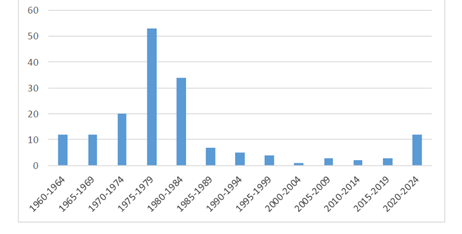
Source: M. Chamon, The Use of Article 122: Institutional Implications and Impact on Democratic Accountability , European Parliament, 2023, p. 17.
Most recent proposal - SAFE instrument
On 19 March 2025, the Commission proposed a Council regulation establishing a 'SAFE instrument' for the defence industry. This is the first time the Article 122 legal basis has been invoked since 2023 (see table). The proposal mentions Article 122 TFEU, but does not specify which of the two legal bases (paragraph 1 or 2) is intended. The goal of the proposed regulation would be, in part, to 'provid[e] financial assistance to Member States allowing them to carry out urgent and major public investments in support of the European defence industry' (article 1 of the proposal). It therefore appears that Article 122(2) TFEU is intended as one of the legal bases, given that it is appropriate for provision of financial assistance to the Member States from the Union budget (see above). The total amount of aid to be disbursed under the SAFE instrument is set at €150 billion (article 6 of the proposal). Justifying the choice of Article 122 TFEU, the Commission referred to 'the current exceptional security context' and the Member States' 'need to make urgent and massive investments in the EU's defence manufacturing capacities'.
European Parliament position
Parliament addressed the question of the use of Article 122 TFEU as a legal basis in its resolution of 12 July 2023 on the COVID‑19 pandemic (2022/2076(INI)). Parliament expressed its concern that 'during the pandemic, the executive branch had the upper hand in emergency decision-making, which undermined Parliament's prerogatives and ability to conduct political oversight', and consequently called on the 'Commission and the Council to limit the use of Article 122 TFEU and to increase parliamentary control, including the European Parliament's legislative initiative in emergency response actions, and co-decision for various instruments to bolster the legitimacy of emergency response actions' (paragraph 364). Moreover, Parliament called for 'a revision of the Interinstitutional Agreement on Better Law-Making with a view to increasing the role of Parliament in the decision-making process during crisis management, including the use of Article 122 TFEU and in particular for empowering the European Parliament to propose new legislation for emergency response actions, and to enhancing the ordinary legislative procedure for the various instruments for emergency response actions, so as to bolster the legitimacy of emergency response actions and therefore to enhancing democratic legitimacy and parliamentary oversight' (paragraph 596).
Main references
- Calleja, D., Rusche, T.M., Shipley, T. 'EU Emergency - Call 122? On the Possibilities and Limits of Using Article 122 TFEU to Respond to Situations of Crisis.' Columbia Journal of European Law., 2024, vol. 29.
- Chamon, M., The Use of Article 122: Institutional Implications and Impact on Democratic Accountability, European Parliament, 2023.
- Leino-Sandberg, P., Ruffert, M. Next Generation EU and its constitutional ramifications: A critical assessment. Common Market Law Review 2022, vol. 59, issue 2.
Endnotes
Classification
Policy areas: EU Democracy, Institutional and Parliamentary Law
Regions: European Union
Committees: Constitutional Affairs (AFCO)
Disclaimer
This document is prepared for, and addressed to, the Members and staff of the European Parliament as background material to assist them in their parliamentary work. The content of the document is the sole responsibility of its author(s) and any opinions expressed herein should not be taken to represent an official position of the Parliament.
Copyright
© European Union.
The reuse of this document is authorised under a Creative Commons Attribution 4.0 International (CC-BY 4.0) licence.

https://creativecommons.org/licenses/by/4.0/deed.en
To use or reproduce elements that are not owned by the European Union, permission may need to be sought directly from the respective rightsholders.